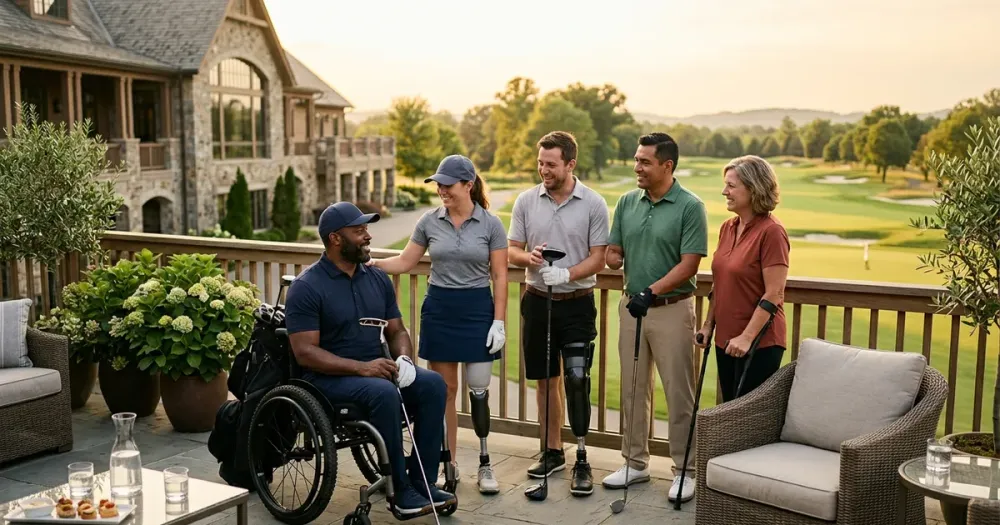
On a bright Monday morning at Woodmont Country Club, Jack Bonifant prepared to tee off in his fifth consecutive U.S. Adaptive Open. His focused determination was emblematic of a larger transformation unfolding in golf. The 2026 U.S. Adaptive Open is not merely a tournament; it is a powerful statement reshaping how the game embraces accessibility and challenges long-held perceptions of who can compete.
Unlike mainstream professional tournaments driven by prize money and sponsorships, this event operates without a purse or financial rewards. The USGA underwrites the significant costs, emphasizing community and inclusion over profit. That commitment is crucial in spotlighting adaptive athletes who have historically been sidelined from golf’s competitive spotlight.
The Adaptive Open as a Catalyst for Change
The U.S. Adaptive Open convenes 96 mostly amateur golfers from across the globe, each with unique physical challenges—from limb loss to intellectual impairments. Players like Max Togisala, who won the seated players category by shooting a 67 from a specialized VertaCat golf cart, demonstrate not just skill but the adaptability of golf itself. Jordan Thomas, a double-leg amputee who claimed low score honors in the men’s lower-leg category, described the event as “absolutely our Super Bowl” and emphasized its unmatched atmosphere.
This tournament serves as a vital platform that elevates adaptive golf, giving it the structure and visibility usually reserved for traditional professional events. Its existence challenges outdated views that have long excluded disabled athletes from meaningful competition and community within golf.
Profiles in Perseverance and Competitive Spirit
Jack Bonifant’s continued participation signals more than personal ambition; it reflects a growing adaptive golf movement. Max Togisala’s performance, including tying his personal record, underlines the competitive depth in the field. Meanwhile, players like Meredith Dwyer and Juan Postigo, who use custom prosthetics, showcase the technical and physical innovations enabling athletes to compete at high levels.
On the other end of the spectrum, Kody Conover, who has Down Syndrome, brings joy and energy that transcends scores, reminding the golf community of the sport’s inclusiveness potential. These diverse stories converge into a larger narrative: golf can be reimagined to welcome all players.
USGA’s Commitment Beyond the Scoreboard
The USGA’s dedication to this event, despite the lack of financial return, reflects a broader mission to unify and grow the sport. Amenities such as travel stipends, player dining, and trophies underscore their support and respect for adaptive athletes. USGA President Kevin Hammer called it “the single most joyful event I’ve ever attended,” highlighting the emotional and cultural significance beyond the competition.
This approach stands apart from the commercialized professional circuit, focusing on empowerment, community, and the pure joy of golf. It also sets a precedent for other governing bodies to prioritize inclusion and accessibility.
Inspiring the Future of Adaptive Golf
The U.S. Adaptive Open plants seeds for the sport’s future by demonstrating that golf can be adapted successfully for players facing diverse challenges. It raises awareness about the sport’s flexibility and sends a clear message: “You should play the game. You don’t have to give it up,” as seated ladies category competitor Annie Hayes put it after making her first-ever eagle.
For many athletes, the tournament is about more than titles; it’s about reclaiming joy, community, and identity through golf. These elements are essential for sustained growth in adaptive golf and broader acceptance within the sport’s culture.
Why the U.S. Adaptive Open 2026 Highlights and Impact Matter Now
This year’s event occurs amid a broader reckoning in sports about inclusion and representation. The U.S. Adaptive Open exemplifies how golf can lead by example, reshaping its traditions and expanding its reach. It challenges fans and the industry to rethink what golf excellence means and who gets to define it.
By spotlighting athletes who overcome physical and intellectual challenges with resilience and skill, the event enriches the sport’s narrative and inspires a new generation of players and fans.
The next major pressure point will be the continued expansion of adaptive golf events worldwide and how governing bodies incorporate these athletes within their competitive frameworks. Watching how the USGA and other organizations build on this momentum will reveal if golf truly embraces a more inclusive future. For a broader view, explore our coverage of amateur golf news and championship coverage.
Source: as reported by All The Golf
All facts and quotes are credited to their originating outlets. Learn more about our sourcing policy.