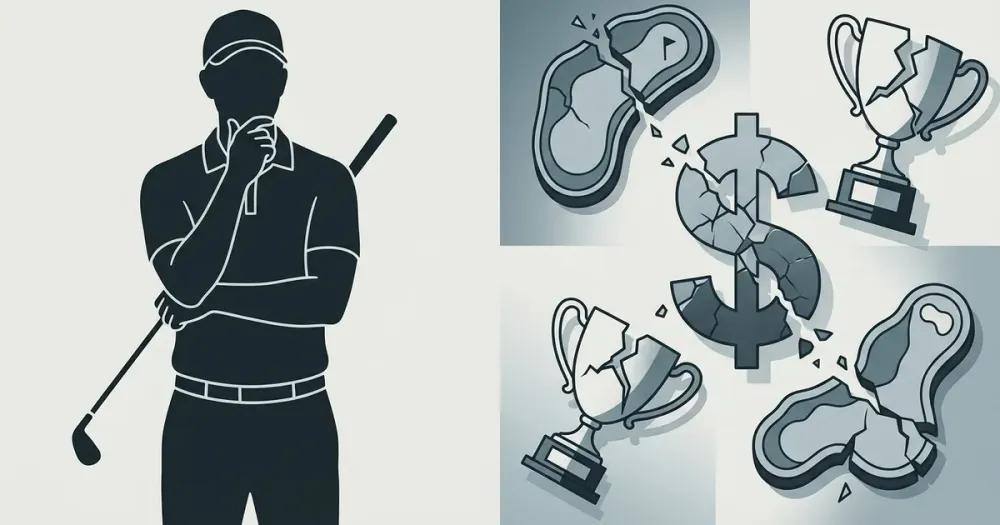
Rory McIlroy has openly expressed regret over how LIV Golf squandered its massive financial backing, calling the capital spent “wasted” and suggesting the league missed a chance to change professional golf for the better. Speaking at the Bloomberg New Economy Forum in New Delhi, the four-time major champion reflected on the Saudi-backed league’s collapse and what it means for the sport’s fractured landscape.
McIlroy’s blunt assessment shines a different light on the ongoing saga. While LIV Golf’s bankruptcy and player defections dominate headlines, the deeper issue lies in how the breakaway league deployed its resources. “LIV had probably like half of a good idea that was executed pretty poorly,” McIlroy said. “They had a lot of capital, but I think a lot of that capital was wasted in some ways, and I think they could have used that money a lot more strategically.”
This matters now because LIV’s failure to wisely invest its billions has prolonged the division in pro golf rather than healed it. The league’s original backer, the Saudi Arabian Public Investment Fund (PIF), intended LIV as a soft-power initiative to disrupt the PGA Tour’s dominance. But as McIlroy points out, the money mostly enriched players already earning well instead of building partnerships with golf’s governing bodies or growing the sport strategically.
Why Rory McIlroy LIV Golf Money Regret Cuts to the Core
McIlroy and Tiger Woods were among the earliest and most vocal opponents of LIV Golf’s emergence in 2022. Their stance wasn’t just about defending turf; it was about protecting their legacies and the sport’s unity. McIlroy explained, “Tiger and I, at the very start back in 2022 when this thing kicked off, we were certainly the two that were maybe the most vocal against it. But we were probably the two that had the most to lose as well in terms of our stature within the PGA Tour.”
Both stars foresaw how LIV’s approach would fracture professional golf, siphoning off top talent and splintering competition without offering a sustainable alternative. McIlroy noted LIV could have taken a very different path: “They could have partnered with some of the governing bodies of the game, and they certainly could have done better things with it instead of just enriching tour pros that were already making a lot of money.”
The Money Trail Is Not the Point. The Incentive Is
Despite filing for Chapter 11 bankruptcy, LIV Golf is aiming to relaunch with a 17-event schedule backed by $300 million in financing from BC Partners Global. Yet the league is hemorrhaging players. Jon Rahm’s recent exit was followed by David Puig and Adrian Meronk. Sergio Garcia’s contract was terminated, and many others are seeking to leave. The loss of the PIF’s deep pockets has turned LIV from a formidable competitor into a precarious venture.
The DP World Tour has further complicated LIV’s comeback by banning players who sign up for LIV 2.0 from competing on their circuit. CEO Guy Kinnings made it clear that golfers must choose one or the other, signaling the end of any double-dipping. McIlroy sees this as a natural closing of a chaotic chapter: “It’s either you play LIV 2.0, and you can’t play the DP World Tour, or you play the DP World Tour, and you can’t play LIV 2.0. But I think this period of trying to double dip and do both is over.”
Why This Rule Changes Who Gets Access
The PGA Tour’s stance on reintegration remains uncertain. CEO Brian Rolapp has not provided clarity on when or how LIV players might return, with the “Returning Member Program” that welcomed Brooks Koepka now closed. Players like Xander Schauffele acknowledge the complexity, noting divided opinions among Tour members about welcoming former LIV players back.
McIlroy, however, advocates for unity. “A rising tide lifts all boats,” he said about allowing LIV players to rejoin the PGA Tour. His view underscores a desire to heal the sport’s divisions, even as the wounds remain fresh.
The Detail Most Fans Will Miss
Behind the headlines about bankruptcy and player defections lies a strategic failure. LIV Golf’s billions weren’t just spent unwisely—they missed an opportunity to build bridges and grow the game’s global footprint in partnership with existing institutions. Instead, the money fortified a short-lived splinter league that alienated fans, players, and organizers alike. That is the real cost McIlroy is pointing to.
As the 2026 golf season moves forward, all eyes will be on whether LIV Golf can reinvent itself amid financial struggles and growing isolation. The PGA Tour, DP World Tour, and players face decisions that will shape the sport’s competitive landscape for years. McIlroy’s candid reflections remind us that money alone doesn’t buy success or unity—it requires a vision that serves the game, not just the bankroll.
What to watch next: With the October 25 deadline for players to commit to LIV 2.0 approaching, the golf world awaits critical roster decisions that could define whether the fractured pro golf ecosystem inches toward reunification or remains divided. The coming weeks will also reveal if LIV’s restructuring plan can hold and what role, if any, ex-LIV players will have on the PGA Tour moving forward. For a broader view, explore our coverage of LIV Golf news and results.
Source: as reported by All The Golf
All facts and quotes are credited to their originating outlets. Learn more about our sourcing policy.