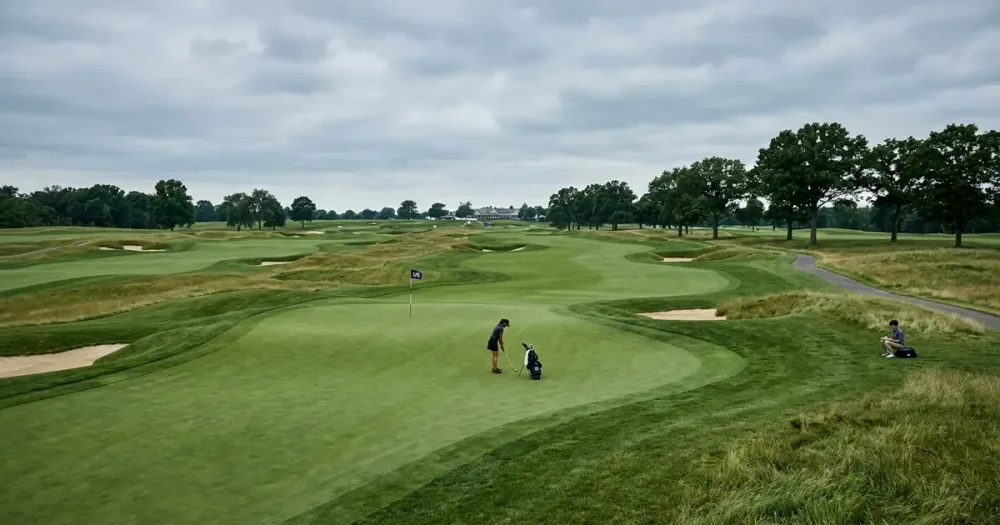
Imagine a 12-year-old junior reporter named Paighton standing on the Shinnecock Hills driving range, not firing off the usual tough tournament questions but instead asking Kristoffer Reitan which superpower he’d want to compete better. His answer? The Flash — a nod to the grueling physical and mental demands of the U.S. Open on players. This moment of levity and genuine curiosity cuts through the intense atmosphere of the tournament and offers a fresh, human perspective rarely seen in standard golf coverage.
Paighton’s Perspective Brings a Refreshing Lens to the U.S. Open
At a major like the U.S. Open, where debates rage about equipment limits and distance control, it’s easy to overlook the simple humanity of the players. Paighton’s role as a junior reporter, sponsored by USGA partner Sentry, flips that script. Her bright-eyed questions and infectious enthusiasm remind everyone—fans, players, media—that golf is still a game enjoyed by kids and adults alike. Her presence at Shinnecock Hills injected an uplifting energy into the media space, providing a break from the usual grind and seriousness.
Kristoffer Reitan’s ‘Flash’ Answer Reveals the Grind Behind the Glory
When Reitan said he’d want to be The Flash to teleport across the long, hilly Shinnecock course, it wasn’t just a cute answer. It highlighted how physically exhausting this venue can be. Walking the sprawling grounds, often in tough weather and under fog delays, wears players down. The mental strain of staying sharp after long waits and unpredictable schedules adds to the challenge. Paighton’s playful question, and Reitan’s thoughtful reply, shed light on an aspect of tournament life that often gets lost behind scores and stats.
Adam Scott’s Advice: Fun Over Power for Junior Golfers
Paighton’s interview with Adam Scott brought another valuable insight, especially for young LPGA Tour hopefuls. Scott emphasized the importance of enjoying the short game—chipping and putting—over simply trying to hit the ball as far as possible. “If they can enjoy chipping and putting, then golf becomes really easy for young kids,” Scott said with a smile. This advice flips the common obsession with distance, underscoring that mastery and enjoyment of the game’s finer skills build a stronger foundation for lasting success.
Xander Schauffele’s Pride in His Support Team Reveals Tour’s Hidden Bonds
Another moment that stood out was when Paighton asked Xander Schauffele what he was most proud of in his career. His answer wasn’t about trophies or earnings but about the people who have stayed with him through thick and thin—his uncle as manager, a longtime caddie who’s also a close friend, and a consistent putting coach. This reveals the often unseen emotional and relational backbone behind professional golf success, a reminder that the LPGA Tour and PGA Tour alike are communities as much as competitions.
Why the LPGA Tour U.S. Open Junior Reporter Perspective Matters
This glimpse through Paighton’s eyes offers more than just cute quotes. It humanizes the players, highlighting their endurance, relationships, and approach to the game. For fans of the LPGA Tour and golf in general, it’s a reminder that beneath the elite athleticism and high stakes lies a shared love of golf’s challenges and joys. These moments also underscore how young players and fans relate to the sport, a crucial element for the tour’s growth and connection with its audience.
What to Watch Next
Keep an eye on how junior reporter programs like Paighton’s evolve in future majors. Their unique perspective could influence how golf events engage younger audiences and shape storytelling around players’ mental toughness and personal journeys. Meanwhile, players will continue navigating Shinnecock’s demanding layout, with physical stamina and team support proving just as vital as swing mechanics. For a broader view, explore our coverage of LPGA Tour news and results.
Source: as reported by All The Golf
All facts and quotes are credited to their originating outlets. Learn more about our sourcing policy.