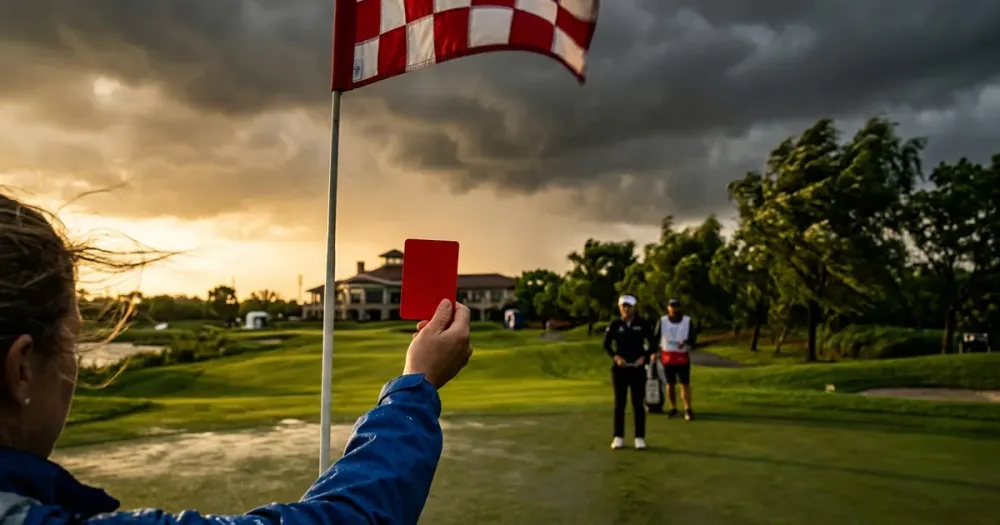
At the 2026 Buick LPGA Shanghai, the landscape of professional women’s golf was visibly altered when the LPGA handed out multiple two-stroke penalties for slow play. Among those affected was Carlota Ciganda, a well-known Solheim Cup competitor, whose penalty turned a par into a double bogey during a critical moment at the Sheshan Golf Club. This enforcement not only shifted the leaderboard but marked a decisive step in the LPGA’s rigorous new approach to pace of play—a move that could redefine player conduct and tournament rhythm across the sport.
LPGA’s New Pace Policy: From Warning to Two-Stroke Penalty
The LPGA’s pace-of-play regulations, updated in 2025, embody a graduated enforcement strategy aimed at keeping rounds moving efficiently. Initially, officials issue warnings when groups fall behind schedule. If improvements aren’t made, timing begins, usually allowing about 40 seconds for each shot with some flexibility through a banking time system. Should a player violate timing rules repeatedly, penalties escalate from warnings to one-stroke and then two-stroke penalties.
At the Buick Shanghai, the LPGA applied this policy stringently. Carlota Ciganda and Yealimi Noh were both penalized two strokes for slow play, a rare and firm move signaling the tour’s intent to enforce its standards without exception. While the exact sequence of Ciganda’s infractions remains undisclosed, her history with pace warnings—including a past disqualification at the 2023 Evian Championship—illustrates the tour’s growing intolerance for delays.
Why This Matters: The LPGA’s Pace Crackdown and Its Ripple Effects
This crackdown comes at a time when pace of play has become a significant concern within professional golf circles. Slow rounds frustrate players, fans, and broadcasters alike, threatening golf’s appeal in an era demanding more dynamic sports viewing experiences. By enforcing penalties decisively, the LPGA is sending a clear signal that slow play will no longer be tolerated as a mere inconvenience but treated as a competitive disadvantage.
Moreover, the LPGA’s stringent enforcement is influencing other governing bodies. Both the PGA Tour and the USGA have been observing these developments closely and are considering adopting similar policies to tighten pace controls. This could lead to a broader cultural shift across men’s and women’s professional golf.
Player Strategy and Tournament Dynamics Under New Pressure
Strict slow-play penalties introduce a new layer of pressure on players’ decision-making. Beyond shot execution, competitors must now manage their time meticulously to avoid costly penalties that can instantly change leaderboard positions. For example, Ciganda’s two-stroke penalty transformed a manageable hole into a double bogey, yet her immediate response with back-to-back birdies showed resilience—a trait that may become increasingly crucial as pace enforcement intensifies.
Strategically, players might adjust how they approach complex shots or course management, balancing precision with speed. This could spark subtle but meaningful changes in tournament outcomes, where pacing becomes as pivotal as skill.
LPGA Slow Play Penalties Buick Shanghai 2026: What This Means for Fans and the Sport
For fans, this enforcement means watching faster, more engaging rounds without frequent delays. It also sets expectations for players to maintain competitive tempo, potentially increasing the drama as penalties loom for those who linger. Understanding the LPGA’s policy clarifies why penalties are assessed and how seriously pace of play is now treated.
According to All The Golf, the enforcement at Shanghai is a landmark moment for the tour’s pace-of-play policy, emphasizing accountability and efficiency. This approach could redefine how tournaments are experienced and how players prepare mentally and physically for competition.
What to Watch Next
The upcoming final round at the Buick LPGA Shanghai will be a crucial test of how players adapt to these stricter pace rules under pressure. Beyond this event, the LPGA’s continued application of penalties will reveal whether the policy successfully accelerates play without compromising performance. The broader professional golf community will be watching closely, as similar policies may soon affect top-tier tournaments worldwide. For a broader view, explore our coverage of LPGA Tour news and results.
Source: as reported by All The Golf
All facts and quotes are credited to their originating outlets. Learn more about our sourcing policy.