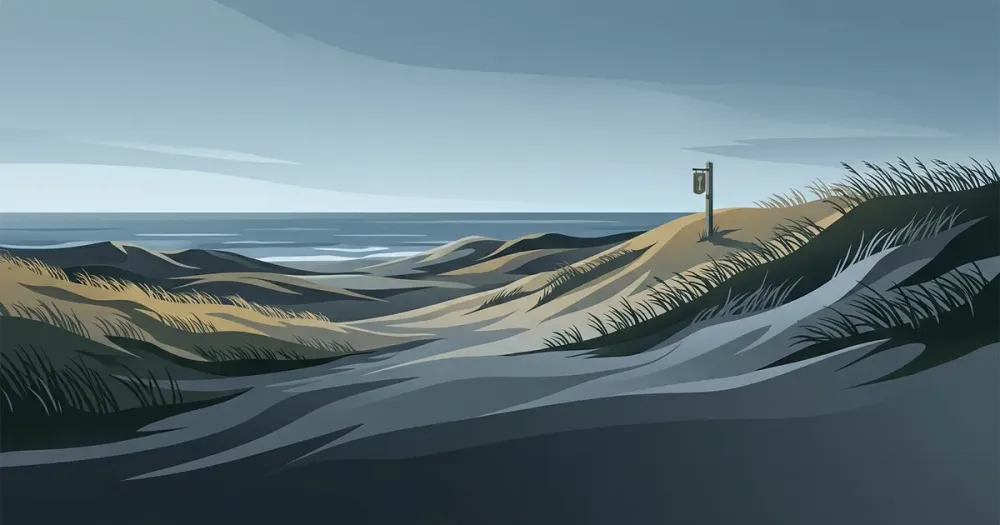
The 1896 U.S. Open at Shinnecock Hills was no ordinary tournament. Set along the windswept Atlantic coast, the course had just expanded from 12 to 18 holes, introducing new and unusual obstacles that tested golfers’ skills and patience alike. Players faced everything from cop bunkers and ditches to railroad tracks and telegraph wires that could literally knock a ball from the air. The coastal winds, reminiscent of British links courses, added an unpredictable element rarely seen in American golf at the time.
These conditions weren’t just quirky details; they symbolized the growing pains of golf in the United States. As the sport shifted from a novelty to a serious competition, the 1896 Open exposed both the promise and challenges of American golf’s early development.
The 1896 U.S. Open Marked a Leap in Participation and Prestige
Held on July 18, 1896, at Shinnecock Hills Golf Club on Long Island, New York, the championship was only the second edition of the U.S. Open. Yet, it showcased a significant uptick in engagement. The field swelled to 35 professionals, more than triple the previous year’s number, alongside 58 amateurs, nearly twice as many as before. Hundreds of spectators flocked to the course, signaling growing public interest in competitive golf.
The United States Golf Association (USGA), which had been formed less than two years earlier with Shinnecock among its founding clubs, was keenly aware of this transition. Hosting both the U.S. Amateur and the U.S. Open at Shinnecock underlined the club’s emerging role as a cornerstone of American golf history.
Course Expansion Brought New Challenges and Unique Hazards
Architect Willie Dunn’s expansion of Shinnecock Hills from 12 holes to a full 18 stretched the course to 4,423 yards. This was relatively short by modern standards but formidable then, especially given the terrain and unusual obstacles. Players had to negotiate cop bunkers—mounded sand traps designed to resemble natural dunes—along with ditches that complicated approach shots.
Perhaps most striking were the railroad tracks cutting across the course and telegraph wires overhead. A number of golfers found their shots interrupted by these features, with some balls even knocked off course mid-flight by the wires. Such obstacles underscored the evolving nature of golf in America, where courses were often laid out in less isolated settings than the traditional links of Scotland.
Coastal Winds Added a Links-Style Test Uncommon in U.S. Golf
Shinnecock’s proximity to the Atlantic Ocean brought winds that could blow fiercely and shift unexpectedly. On the morning of the Open, a strong breeze followed a summer rain, complicating play and challenging competitors to adjust their strategies in real time. This links-like atmosphere was unusual for American courses, which generally lacked such exposure, making the 1896 Open a valuable test of adaptability and shot-making under pressure.
Competitors had to consider wind direction and strength on nearly every shot, a factor that could turn an accurate swing into a costly error. This element introduced a tactical depth more commonly associated with British golf and helped shape American players’ understanding of course management.
Prize Money and Professionalism Reflected Golf’s Nascent Stage in the U.S.
The winner’s purse of $150—identical to the previous year—highlighted the sport’s modest financial rewards during this early era. While small by today’s standards, this sum represented a significant step toward legitimizing golf as a professional pursuit in the United States.
Moreover, the tournament featured a mix of American and immigrant players, including professionals from Scotland and England who brought experience from golf’s birthplace. Their presence underscored the transatlantic roots of the game and the gradual emergence of American talent amid seasoned veterans.
Why the 1896 U.S. Open at Shinnecock Hills Still Matters
More than just a competition, the 1896 Open encapsulated the transitional phase of golf in America. It showcased a sport growing pains—adapting to new course designs, grappling with environmental challenges, and negotiating issues of access and professionalism. The obstacles players faced, from infrastructure intrusions to fierce coastal winds, symbolized the broader hurdles in establishing golf’s foothold on American soil.
This tournament also helped cement Shinnecock Hills as a historic venue that would continue to influence U.S. golf for generations. Its unique layout and setting forced players to expand their skills beyond straightforward shot-making, blending power, precision, and strategy in an environment that was unfamiliar yet demanding.
According to All The Golf, these aspects of the 1896 U.S. Open at Shinnecock Hills continue to resonate, reminding us that the game’s history in the U.S. is as much about adaptation and innovation as it is about scores and champions.
What to Watch Next
Looking ahead, the trajectory set by this early Open points toward an increasingly competitive and diverse American golf scene. The imminent 1897 U.S. Open, rumored to be hosted at Chicago Golf Club where the 1896 winner was a professional, promises to test whether golf’s growing pains have given way to maturity. As the sport expands geographically and in popularity, course design and environmental factors like those at Shinnecock will remain key influences on how championships are won and lost.
Fans and historians alike should keep an eye on how American golf continues to forge its identity, balancing tradition with innovation amid shifting challenges on and off the course.
Understanding the 1896 U.S. Open’s unique conditions offers valuable insight into the early development of the sport and why Shinnecock Hills holds a special place in golf’s American story.
What this means: The 1896 U.S. Open at Shinnecock Hills was a pivotal moment in American golf, exposing players to new course design challenges and environmental factors that shaped the sport’s evolution in the U.S. It matters now because it illustrates how golf matured through adaptation to unique obstacles, both natural and man-made. For a broader view, explore our coverage of golf majors coverage and results.
Source: according to All The Golf
All facts and quotes are credited to their originating outlets. Learn more about our sourcing policy.