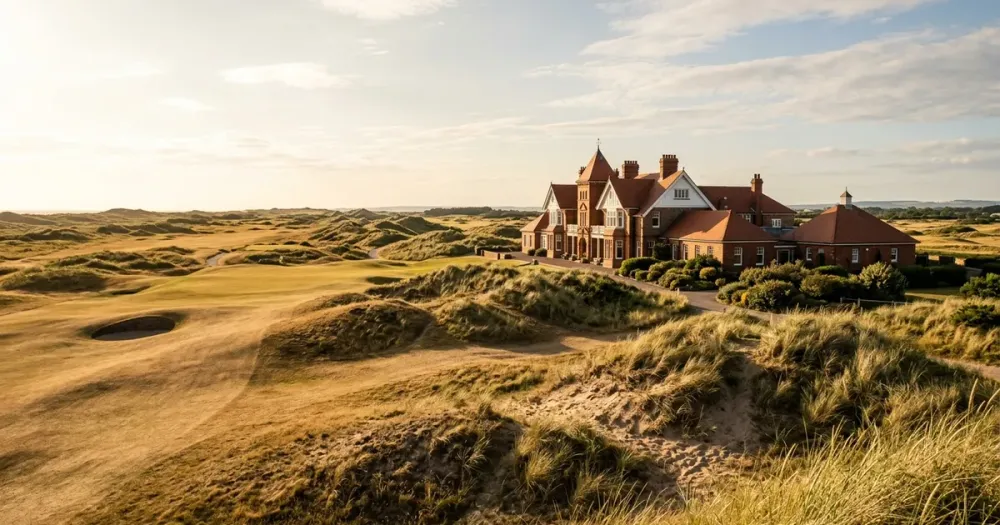
The 154th Open Championship at Royal Birkdale is unfolding under unusual circumstances that could redefine the usual playbook at this historic links course. Warm temperatures and dry weather have baked the Merseyside coastline, leaving fairways firm and greens fast—conditions that contrast sharply with the often soggy, wind-whipped environment The Open is known for. This shift is stirring uncertainty around favorites Scottie Scheffler and Rory McIlroy, both grappling with questions about their current form. Meanwhile, lesser-known contenders see a fresh opportunity to capitalize on what might become a very different kind of Open.
Royal Birkdale’s Firmer Face: How Dry Conditions Shift Strategy
Traditionally, Royal Birkdale is a demanding links test, renowned for its towering dunes, narrow fairways, heavy rough, and compact greens averaging just 5,000 square feet. Success here hinges on precision off the tee and a deft short game to handle severe green fall-offs. Yet this year’s unusually dry spell is transforming the course. The rough is baking out, turning brown and less punitive, while the fairways have hardened. Players like Justin Rose have noted that aggressive tee shots over corners, accepting the risk of running 60 to 80 yards out of the rough, might pay off more than usual. The course is playing more like a classic links with firm surfaces that reward running the ball close to pin placements and mid- to short-iron approaches.
Wind remains the great variable on England’s northwest coast, and gusts can still dramatically influence shot-making. But the firmness means distance control, especially on small, elevated greens renovated to sharpen challenge, will be paramount. Jon Rahm highlighted this, pointing out how some holes are reachable with mid to long irons off the tee, while others—like the 502-yard 13th and 508-yard 18th—demand careful play into the wind. This year’s course setup also includes notable changes, such as extending the par-3 fourth and replacing the old par-3 14th with a lengthy par-5 602-yard hole, altering strategic calculations.
Scottie Scheffler’s Struggles Cast Doubt on Defending Title
Scottie Scheffler, the reigning Open champion and early-season winner, enters Birkdale without a victory since January and after his first missed cut in nearly four years at the Scottish Open. His performance there raised concerns: he hit just 11 of 24 fairways and 23 of 36 greens in regulation, needing 1.8 putts per hole in the second round. That’s a red flag at Royal Birkdale, where hitting fairways is critical given the narrow landing areas and penal rough.
Though Scheffler’s consistency in recent starts—four runner-up finishes and mostly top-25 placements—signals he is not playing poorly, his inability to convert opportunities may prove costly on a course demanding precision and patience. His hunger for a win remains intense, but adapting to the firmer, faster conditions while regaining sharpness off the tee will be crucial if he hopes to defend his Claret Jug.
Rory McIlroy’s Driving Accuracy and Momentum Offer Hope
Rory McIlroy showed encouraging signs at the Scottish Open, tying for seventh and posting a 6-under 64 on Sunday. He improved his driving accuracy to 61.5%, ranking first in strokes gained off the tee (5.981). That’s significant because missing fairways at Royal Birkdale is a recipe for trouble. Yet questions linger about his overall consistency, especially given his limited tournament schedule this season—only 10 events on tour so far.
McIlroy aims to capture his first Claret Jug since 2014, but his past performances at Birkdale have been a mixed bag. The key for him will be maintaining this newfound control off the tee and translating it into solid approach shots on firmer greens that demand precise distance control. If he can sustain this form, he could be a formidable contender despite other uncertainties.
Underrated Contenders Poised to Exploit Conditions
With the course playing firm and fast, players who excel in approach accuracy and scrambling could thrive. English golfers, in particular, carry an added incentive: no Englishman has hoisted the Claret Jug since Nick Faldo in 1992, and none has won on English soil since Tony Jacklin in 1969. Matt Fitzpatrick, who leads the tour in strokes gained approach (.846) and around the green (.533), and Tommy Fleetwood, a Southport native and FedEx Cup champion warming up after a winless season, are both well-suited to these conditions. Justin Rose, familiar with Birkdale since his amateur days when he tied for fourth at the 1998 Open, remains a steady threat at 45.
Other sleepers include Chris Gotterup, who has thrived this PGA Tour season, winning three events and showing strong links aptitude, and Viktor Hovland, who despite some inconsistency, has demonstrated resilience and the game to contend if he peaks this week. Ludvig Åberg, with solid major finishes but ongoing questions about closing, could leverage his precision game in this demanding setup. South Korean Tom Kim, fresh off a Scottish Open victory and known for his iron play and scrambling ability, also fits the profile of a player who could flourish on Royal Birkdale’s firm turf.
English Hopes and the Host Country Edge
English players have extra motivation to end a decades-long home drought at The Open. Familiarity with the course and local conditions, combined with the firm, dry setup that rewards precise iron play and strategic risk-taking, could provide a mental and tactical advantage. Tommy Fleetwood’s Southport roots and Matt Fitzpatrick’s recent form highlight this potential. If the wind cooperates and the rough remains less punishing, aggressive yet controlled play could spark a breakthrough for the English contingent.
Royal Birkdale’s transformation this year creates a layered challenge: adapt to fast, firm conditions that invite aggression but punish inaccuracy, manage shifting winds, and execute a short game capable of navigating elevated, small greens. This mix makes the 2026 Open Championship a compelling test of both form and strategy.
As All The Golf reported on July 12, the winner here will need to mix shotmaking precision with smart course management more than ever.
Looking ahead, the key pressure point to watch is how players adjust their tee strategies and approach shots under these firm conditions once the tournament begins Thursday. Early rounds will reveal who can best navigate this altered Royal Birkdale and who might seize the opportunity to rewrite the narrative of the 2026 Open.
That adaptation will shape the race for the Claret Jug and potentially shift the balance away from the favorites toward a new major champion. For a broader view, explore our coverage of golf majors coverage and results.
Source: as reported by All The Golf
All facts and quotes are credited to their originating outlets. Learn more about our sourcing policy.