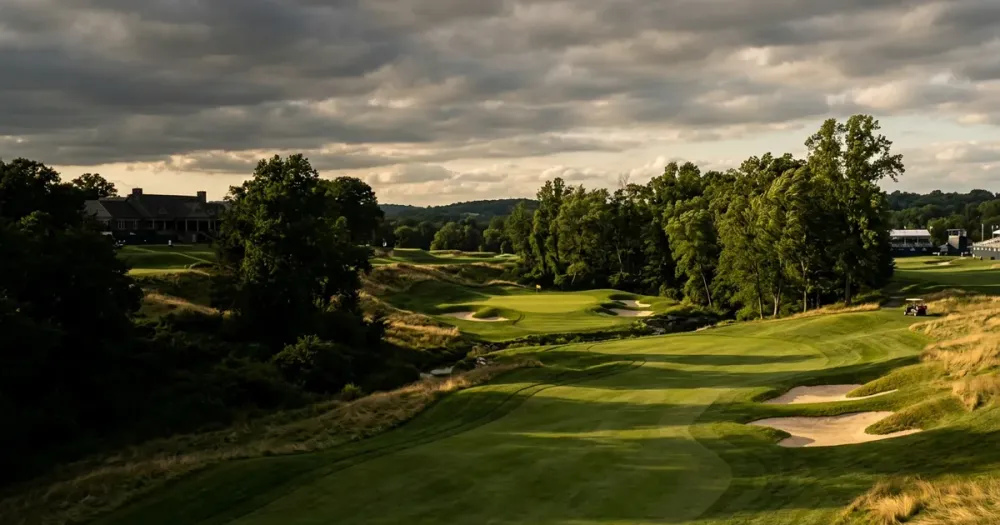
The 2026 PGA Championship at Aronimink Golf Club has emerged as a stern test for the world’s top golfers, with the course setup playing a pivotal role in keeping scores low and the leaderboard congested. As of the tournament’s halfway point, the leaders sit just 4-under par amid nearly impossible pin placements and brisk winds, highlighting how the 2026 PGA Championship Aronimink course setup is demanding precision and patience like few other major venues.
What Sets the 2026 PGA Championship Aronimink Course Setup Apart?
Aronimink’s design, a classic Donald Ross layout, is known for its subtle undulations and strategic green complexes. But in 2026, the PGA of America has amplified these challenges with pin locations perched on steep slopes and edges that drop off sharply, forcing players to hit precise approaches into small, treacherous targets. Rapid green speeds combined with a consistent 15-20 mph wind have turned scoring into a chess match rather than a free-flowing attack.
Why This Matters: Stakes and Strategy in Play
The implications of this setup are substantial. Unlike recent PGA Championships where winning scores have soared past 20-under, this year’s leader is sitting at just 4-under after 36 holes. The tight scoring and 27 players within four shots of the lead mean that every shot counts, and the difference between a birdie and a bogey can be razor-thin. For players chasing major glory, mastering this setup is crucial.
Pin Placement: The Most Difficult in PGA Tour History?
World No. 1 Scottie Scheffler described the pins as the toughest he’s encountered, even harder than those at U.S. Opens or Oakmont. The PGA of America’s decision to position holes on slopes and crowns demands a level of shotmaking that few courses require. Players must target 4-iron approaches into 10-foot circles and wedge shots into tiny pockets, with failure often resulting in costly misses. This approach limits scoring opportunities and extends the pace of play, which clocked over five and a half hours for the second round.
How the Course Design Influences Play: Yardage and Layout
Aronimink is a par-70 course stretching approximately 7,200 yards. Its par 4s are not overly long, which means players rarely face long irons into greens, instead requiring mid to short irons with pinpoint accuracy. Manufactured greens with significant slopes provide both a visual spectacle and a strategic challenge, rewarding those who can read breaks and manage spin well.
Player Performance Under Pressure
Despite the harsh conditions, some players have managed to thrive. Scheffler, though struggling with his driver early in the second round, recovered to regain control and sits within striking distance of the lead. Meanwhile, lesser-known contenders like Maverick McNealy and Alex Smalley share the lead at 4-under, illustrating how the setup can level the playing field and allow emerging talents to shine. However, many big names, including Bryson DeChambeau and Viktor Hovland, missed the cut, underscoring the course’s unforgiving nature.
Golf Tips for Tackling Aronimink’s 2026 Setup
For golfers looking to understand what it takes to score on this course, the key lies in precise approach shots and superior green reading skills. Given the pin placements, players should focus on hitting the center of greens rather than attacking tucked pins aggressively. Controlling spin and trajectory to hold greens on slopes is vital, as is patience to avoid costly mistakes around the greens. The wind factor makes club selection critical, favoring shots that can hold up rather than ballooning into hazards.
What this means for the weekend is a likely continuation of tight scoring and strategic golf. Players who manage the course’s complexities and adapt to the brutal pin setups will have the best chance to emerge victorious.
The History and Future of Aronimink as a Major Venue
Aronimink has a rich history as a championship venue, designed by Donald Ross and previously hosting USGA events and the PGA Championship in 1962. The 2026 setup reflects a modern twist on Ross’s strategic design, emphasizing precision and mental toughness. Its role in major golf tournaments is poised to grow, especially as the PGA of America demonstrates a willingness to test players with demanding conditions.
What to Watch Next: The Final Rounds at Aronimink
As the tournament progresses, the key storyline will be how players navigate the punishing pin positions and variable winds on the weekend. Will Scottie Scheffler’s patience and steady play allow him to surge forward? Or will a dark horse capitalize on the course’s challenges to seize the Wanamaker Trophy? With 27 golfers within four shots and multiple former major champions in contention, the 2026 PGA Championship at Aronimink promises a thrilling finish.
According to All The Golf, the PGA of America’s deliberate course setup is shaping a tournament that rewards strategic excellence over sheer power, a shift that could influence how future majors are staged on similar classic courses. For a broader view, explore our coverage of golf majors coverage and results.
Source: according to All The Golf
All facts and quotes are credited to their originating outlets. Learn more about our sourcing policy.