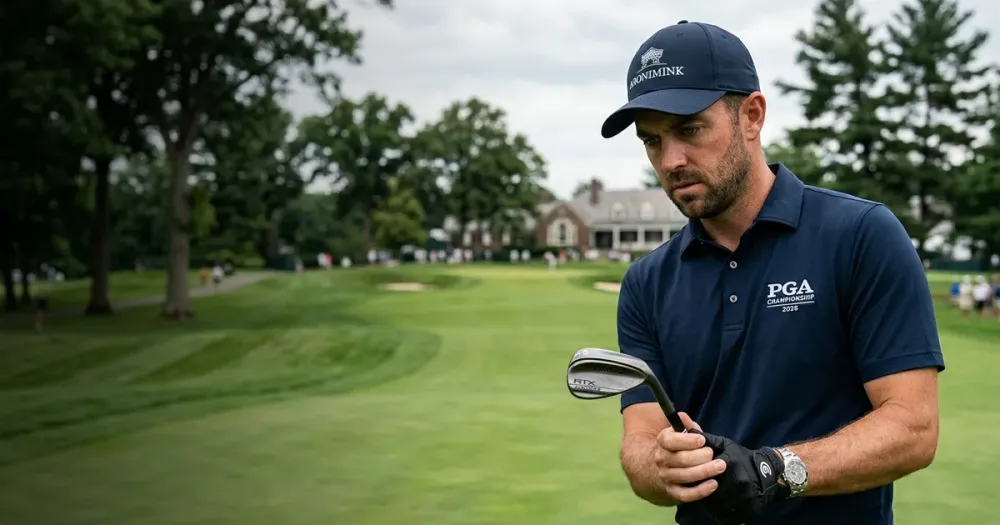
The 108th PGA Championship at Aronimink Golf Club isn’t just another major—it’s a fresh test that could redefine how players approach distance and precision in major championship golf. This week, 156 golfers face a course whose real challenge isn’t in the length off the tee, but in mastering its famously tough, undulating greens. That’s the 2026 PGA Championship Aronimink greens challenge in a nutshell.
With the largest major field teeing off outside Philadelphia, the stakes couldn’t be higher. The winner claims the Wanamaker Trophy, a hefty payday, and a rare place in golfing history. For stars like Scottie Scheffler and Rory McIlroy, who have dominated majors recently, the pressure to perform on these tricky greens is immense. And with players from both the PGA Tour and LIV Golf in the mix, the tournament also spotlights ongoing shifts in golf’s power dynamics.
Greens That Demand More Than Just Power
Aronimink’s greens are the centerpiece of the course’s difficulty. Designed by Donald Ross and recently renovated by Gil Hanse, these putting surfaces feature severe slopes, mounding, and tricky pin placements that punish even the slightest miscalculation. As Keegan Bradley, a past winner at Aronimink, puts it, "You really need to control your distances and land the ball in the right spot." This isn’t a course where raw power off the tee guarantees victory.
So, what this means is that players with precise wedge and short iron play hold a distinct advantage. The greens’ challenge shifts the focus toward accuracy and distance control on approach shots, making mid-to-long irons less effective. Golf IQ here involves understanding how to attack a 165-yard shot to a tucked pin on a severely sloped green—players need to factor in both distance control and spin to keep the ball from rolling away from the ideal putting area.
Scottie Scheffler and Rory McIlroy: The Distance Duel Meets Precision Test
While Aronimink has wide fairways and fewer punishing roughs, the 174 bunkers and the greens create a unique balance. According to Mark Schlabach, this setup favors big hitters like McIlroy and Scheffler, who lead the tour in strokes gained off the tee. McIlroy, for instance, tops the PGA Tour with 0.854 strokes gained off the tee and 1.703 strokes gained tee-to-green, highlighting his ability to set up scoring opportunities.
Yet, even for these heavy hitters, the greens could be the great equalizer. Controlling short-iron distance into the greens is what will separate the contenders from the rest this week. It’s not just about blasting drives; it’s about where players land the ball on these severe surfaces. A Sunday pairing featuring these two would be a master class in blending power with finesse—a spectacle golf fans have long awaited.
Jordan Spieth’s Career Grand Slam Quest Meets Aronimink’s Unique Test
Jordan Spieth arrives in Philadelphia aiming to complete the career Grand Slam, a feat that eludes many greats. However, his recent form and past struggles at the PGA Championship raise questions about his ability to conquer Aronimink’s demanding greens. Spieth himself acknowledges the need for improved consistency, especially in controlling distance into the pins.
Many experts, including Paolo Uggetti, remain skeptical about Spieth’s chances here. The PGA Championship’s typical setups haven’t favored Spieth’s style, and Aronimink’s greens don’t offer an obvious advantage to his game. Still, his ability to manage distance and adapt to the green complexes will be crucial if he hopes to challenge for the title.
LIV Golf Players and the Stakes Beyond the Course
The presence of 11 LIV Golf players, including Bryson DeChambeau and Jon Rahm, adds another layer to the tournament’s narrative. With the Saudi-backed league’s uncertain funding beyond this season, major performances could validate LIV’s place in the golf world or hasten its decline. DeChambeau and Rahm’s length off the tee aligns with Aronimink’s design, but their ability to handle the greens will be a key factor.
Rahm’s history at the PGA Championship includes a top-10 finish last year, showing he can contend. But with LIV’s future up in the air, how these players prepare and perform could shift, affecting their competitive edge in majors if their playing opportunities become limited.
Dark Horses: Brooks Koepka and Chris Gotterup Fit the Greens Challenge
Among under-the-radar contenders, Brooks Koepka stands out as a multiple PGA Championship winner who understands how to navigate major setups. His recent form shows signs of a resurgence, driven by improved driving and iron play, which are essential for Aronimink’s demands. Koepka’s confidence and mental state might just be the difference-maker this week.
Chris Gotterup, meanwhile, is statistically one of the best fits for Aronimink’s course characteristics, second only to McIlroy according to Data Golf. His ability to shape shots and control ball flight suits the precision needed on these greens, suggesting he could be a surprise factor if he maintains his form.
Why This Course Changes the Major Equation
Aronimink doesn’t rely on brutal length or punishing rough to separate contenders. Instead, it tests players’ strategic shotmaking and green-reading skills. This means equipment choices—like wedges that offer spin control—and practiced distance control become paramount. For the average fan curious about golf tips, the takeaway is clear: mastering approach shots under pressure on hilly greens is what wins here.
In a major where golf rankings and tour status mix—PGA Tour, LIV Golf, and LPGA’s growing influence on golf culture—the Aronimink greens challenge underscores a shift in what elite golf looks like. It’s less about who bombs it longest and more about who can dial in those delicate wedge shots and putts on rolling, deceptive surfaces.
As reported by All The Golf, the 2026 PGA Championship at Aronimink is shaping up to reward precision over power, making this week’s tournament a fascinating study in golf's evolving demands.
What to watch next: Keep an eye on how players handle the weekend pin placements on Aronimink’s greens. The scoring swings could hinge on who best controls their wedge distances and reads the slopes under pressure, setting the stage for a memorable finish. For a broader view, explore our coverage of golf majors coverage and results.
Source: as reported by All The Golf
All facts and quotes are credited to their originating outlets. Learn more about our sourcing policy.