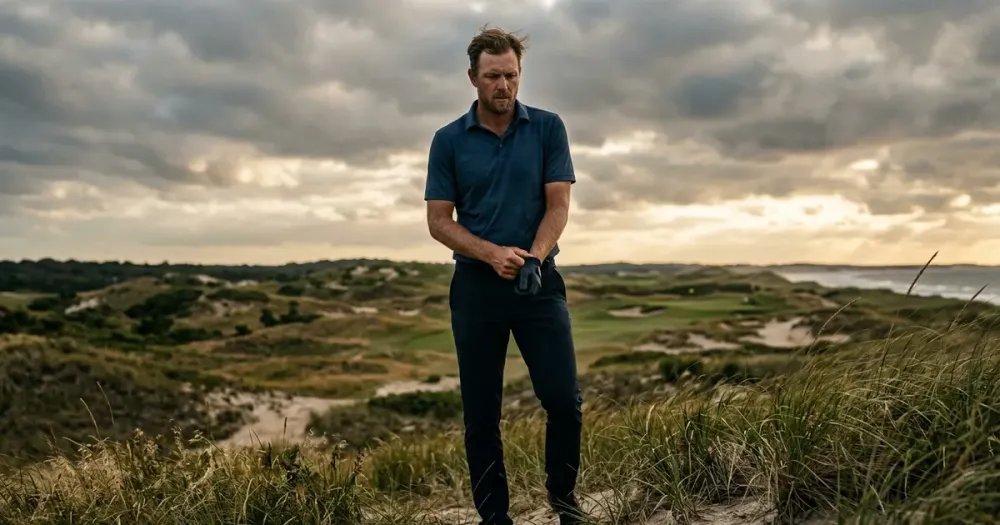
Brooks Koepka is confronting an unusual challenge as he prepares to defend his U.S. Open title at Shinnecock Hills: a sudden weakness and numbness in his left hand’s pinkie and ring fingers caused by a flare-up of his ulnar nerve. Despite feeling no pain, this odd symptom has compromised his grip strength, threatening to disrupt the swing mechanics that made him a five-time major champion. Koepka’s struggle is not just physical—it’s a mystery that unfolded quietly but could have major consequences for his performance in the 126th U.S. Open.
Unpacking the Grip Problem: What Koepka Is Facing
Koepka first noticed the symptoms while watching television on a Friday night, a sudden onset of numbness and weakness that puzzled him. The issue worsened during warmups, forcing him to withdraw from the RBC Canadian Open just before the final round. The left hand, critical for controlling the club and maintaining a consistent swing path, showed diminished grip strength particularly in the pinkie and ring fingers. Yet, remarkably, Koepka reported no pain—a symptom profile that baffled both player and medical staff.
Medical imaging ruled out new damage to his neck, where Koepka had previously herniated his C5 and C6 vertebrae in 2021. Instead, the diagnosis focused on an aggravated ulnar nerve, which runs along the inner arm and is vulnerable to irritation from repeated elbow bending and overuse—common in a golf swing. According to the Cleveland Clinic, ulnar nerve flare-ups can cause numbness and weakness without necessarily producing pain, a nuance that explains Koepka’s experience.
Why a Nerve Flare-Up Can Upend a Pro Golfer’s Game
The ulnar nerve controls fine motor skills and grip strength in the hand. For an elite golfer like Koepka, even a slight loss of strength or subtle numbness can disrupt club control and timing. Grip pressure affects not only power but also shot direction and feel—especially on delicate shots around the greens. Koepka described feeling as if his fingers were "coming off the golf club" during the swing’s transition, a sensation that can lead to inconsistent contact and missed scoring opportunities.
What makes this different from typical injuries is the absence of pain. Pain often signals the brain to adjust or protect the limb, but numbness and weakness without pain can be more insidious, making it harder for players to instinctively compensate. Koepka’s comment that he "almost would prefer there was a little bit of pain" highlights this paradox.
Koepka’s Familiarity with Shinnecock Hills Adds Pressure and Hope
This medical setback comes with added stakes: Koepka won back-to-back U.S. Opens at Shinnecock Hills, including a dramatic 2018 victory where he closed with a 68 and edged Tommy Fleetwood by one stroke. His intimate knowledge of the challenging course counts as a strategic advantage, but the physical issue raises questions about whether he can replicate that form.
Since rejoining the PGA Tour in January after his stint with the LIV Golf League, Koepka has posted six top-25 finishes in 12 starts, suggesting his game remains strong despite the recent setback. He expressed confidence in his ball striking and putting heading into the U.S. Open, emphasizing the need for creativity around Shinnecock’s demanding layout.
Brooks Koepka Ulnar Nerve Injury U.S. Open 2024: What To Watch
Koepka’s recovery trajectory will be crucial in the coming days. He has reported gradual improvement, saying, "It's getting better day by day," and that his grip strength, although not at 100%, is "good enough" to compete. Watching how his hand responds under pressure during practice rounds and in tournament conditions will be key. The interplay of nerve health, grip control, and shot execution could determine whether Koepka can defend his title or if the ulnar nerve flare-up will prove a hidden, yet significant, hurdle.
As Shinnecock Hills demands precision and strategic shot-making, Koepka’s ability to manage this nerve issue while leveraging his course experience will be a compelling storyline. Fans and analysts alike will be watching closely to see if one of golf’s most formidable competitors can overcome an invisible adversary on one of the sport’s toughest stages.
According to All The Golf, Koepka has undergone thorough medical scans that have ruled out new neck injuries, zeroing in on the ulnar nerve as the source of his grip problems. This clarity allows a more focused approach to treatment and adaptation, but the timeline remains uncertain.
What comes next is a test not just of physical recovery but of mental resilience and tactical adjustment. The U.S. Open’s brutal conditions will magnify any weakness, making Koepka’s hand health a storyline with real competitive stakes. For a broader view, explore our coverage of golf majors coverage and results.
Source: as reported by All The Golf
All facts and quotes are credited to their originating outlets. Learn more about our sourcing policy.