Inside the players’ lounge at Royal Birkdale during the third round of the Open Championship, a quiet, charged moment unfolded that would ripple through the tournament. Bryson DeChambeau, standing in the fescue grass on the 5th hole, made a subtle movement — stepping on the grass near his ball as he prepared to play his next shot. Around him, fellow pros exchanged glances. No words were spoken, but the tension was palpable. Rory McIlroy, watching alongside others, later described it as a moment when they all realized something was off.
This brief incident set off a chain reaction that reshaped the leaderboard, strained player relationships, and sparked a broader debate about sportsmanship and rule enforcement in professional golf.
What Actually Happened on the 5th Hole?
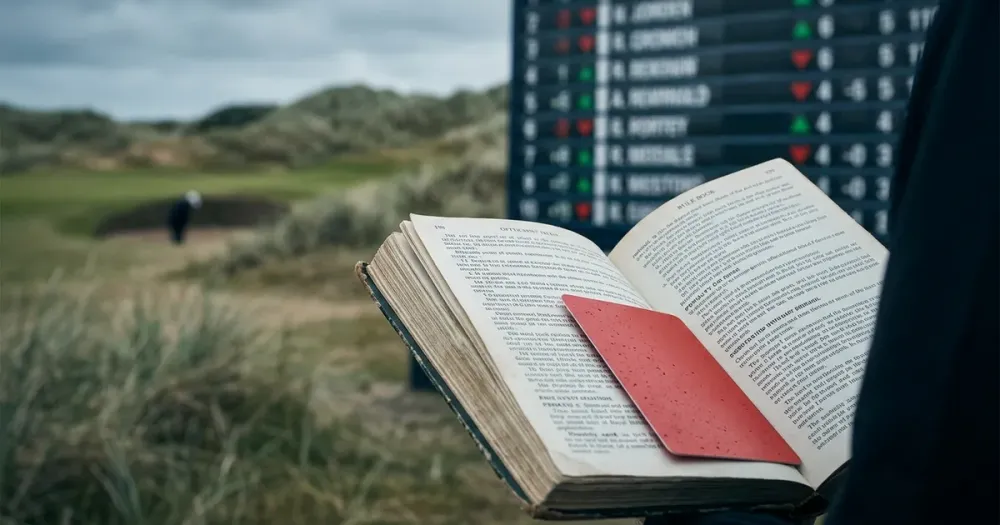
DeChambeau’s tee shot found the rough to the right of the fairway on Royal Birkdale’s 5th hole. As he sized up the shot, he took a step on the grass surrounding his ball. Under Rule 8.1b of the Rules of Golf, a player cannot improve the area around the ball by pressing down or altering the lie. Cameras caught the sequence, and after the round, officials questioned whether DeChambeau’s movement had indeed improved his lie.
After a tense discussion involving DeChambeau and the rules committee, the R&A ruled that he had breached the rule, imposing a two-stroke penalty. This decision dropped DeChambeau from second place and just one stroke behind the leader to a tie for fifth, three shots off the lead.
Why the Penalty Shifted More Than Just the Scoreboard
The penalty’s impact extended beyond numbers. DeChambeau’s mindset was visibly affected, and uncertainty loomed over whether he would continue in the tournament. His agent, Brett Falkoff, told reporters late Friday that DeChambeau was undecided about playing on Saturday, emphasizing, "He’s a lot of things, he’s not a cheater." Ultimately, DeChambeau did return to the course, but the incident left a mark on the tournament atmosphere.
Rory McIlroy’s Reaction: A Window Into Player Friction
Rory McIlroy didn’t hold back in his critique. After his own third-round play, he said, "Yeah, look, I won’t pretend to be up here and defend Bryson. I’m not particularly fond of him. I think a lot of it’s performative. I think a lot of it’s for attention." McIlroy also criticized the delay caused by the incident, saying, "To hold the tournament hostage like that, and to have all of us, players, volunteers, everyone waiting on him to depart, I didn’t feel like it was a great look."
Watching the moment live, McIlroy recalled the shared reaction in the players’ lounge: "As soon as he made the step into the ball, we all sort of looked at each other and we were like, that didn’t seem right. When I heard that he was called in by the rules officials, I think we all — it was pretty obvious for why." He added that whether DeChambeau’s action was careless or intentional was secondary, but the penalty was justified.
Why This Bryson DeChambeau Open Championship Rules Controversy Matters
This incident is more than just a rules violation; it highlights the tension simmering beneath the surface among top pros. DeChambeau and McIlroy have a history of public friction, including previous major tournaments where their interactions—or lack thereof—were noted. This rules controversy has amplified those tensions, putting a spotlight on how interpretations of intent, sportsmanship, and rule enforcement collide under the microscope of major championship golf.
Golf’s self-policing culture is at the heart of the debate. McIlroy noted the impossibility of policing every shot when many go unrecorded, but when clear evidence exists, enforcement becomes unavoidable. The incident raises questions about consistency in rule application and how players navigate the fine line between aggressive play and fair conduct.
The Detail Most Fans May Miss: The Role of Intent in Rules Enforcement
DeChambeau’s agent emphasized that his client is not a cheater, spotlighting a crucial nuance: golf rules hinge on whether a breach was intentional or careless, but penalties often stand regardless. This distinction matters because it shapes how fans and players perceive the fairness of penalties and the character of those involved.
In this case, the two-shot penalty under Rule 8.1b is automatic if the lie is improved, no matter the intent. Yet, this technicality fuels debates about sportsmanship and whether the rules should account more for context and intent, especially in high-pressure moments.
What to Watch Next
Looking ahead, the fallout from this rules controversy will linger as the Open continues. DeChambeau’s response in upcoming rounds will be scrutinized, but so will his interactions with peers like McIlroy. The next test comes with the leaderboard tightening and the pressure mounting toward the final round, where every shot counts and past tensions can either fuel performance or fracture focus.
Golf fans should also keep an eye on how the R&A and other governing bodies handle similar incidents going forward. The balance between strict rules enforcement and preserving the spirit of the game is delicate—and this episode at Royal Birkdale could influence future policy and player conduct discussions.
All The Golf reported this evolving story, capturing a rare moment when a rules call at a major did more than shift scores—it shifted the mood and dynamics of the entire tournament.
What this means: This episode reveals how critical rule enforcement is not just for fairness but for the relationships and reputations within professional golf. It also shows how a single moment under the microscope can change the course of a championship and deepen existing player rivalries. For fans, understanding the fine print behind penalties adds a new layer to watching the game. For a broader view, explore our coverage of golf majors coverage and results.
All facts and quotes are credited to their originating outlets. Learn more about our sourcing policy.