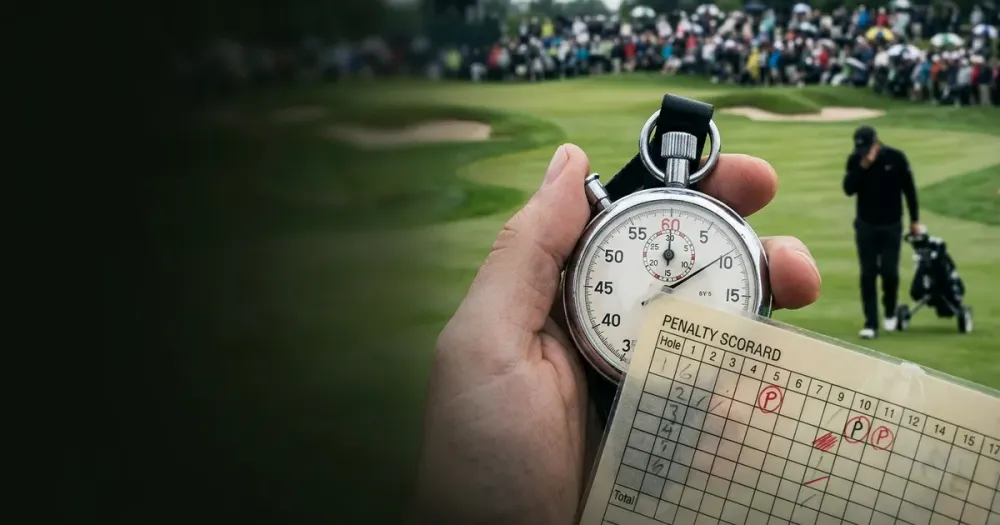
Garrick Higgo’s two-stroke penalty for arriving late to his PGA Championship opening tee time last week was more than a timing mishap—it shaped the outcome of his tournament. Scheduled to tee off at 7:18 a.m. ET, Higgo arrived at 7:19 a.m., triggering a penalty under Rule 5.3a of the Rules of Golf that added two strokes to his first-hole score. This seemingly small delay underscored how strict adherence to timing rules holds real consequences for players in major championships.
When Seconds Matter: The Stakes Behind Higgo’s Penalty
At first glance, one minute past the tee time might seem trivial. But in professional golf, timing is everything. Higgo’s late arrival meant an instant two-stroke penalty, which shifted the dynamics of his round. Had he been more than five minutes late, disqualification would have followed. Instead, he faced a penalty that ultimately contributed to missing the cut by a single shot after a second-round 76. This penalty highlights how rules govern not just fairness but directly affect a player’s access to weekend rounds and prize money.
The Caddie’s Role and the Fallout from the Penalty
Higgo’s caddie, Austin Gaugert, took responsibility for the late arrival, admitting on Instagram that he fell short in preparing Higgo for competition timing. Their partnership ended shortly after the PGA Championship, with Higgo switching to Nick Cavendish-Pell for the CJ Cup Byron Nelson event. This split illustrates how even marginal lapses in tournament protocol can strain professional relationships and impact player support systems.
Golf’s Timing Rules: How They Work and Why They Matter
Rule 5.3a dictates that arriving late to a tee time results in penalties to maintain order and fairness in competition. Arriving within five minutes late triggers a two-stroke penalty; beyond five minutes, players face disqualification. This system is designed to keep play moving smoothly across packed schedules on golf courses often hosting fields of 156 players. For players, understanding these rules is a critical part of their tournament strategy, akin to managing golf equipment or course conditions.
What This Means for Players and Fans
For golfers, the Higgo penalty is a reminder that precision off the course matters as much as on it. Managing arrival times and pre-round routines is as important as club selection or reading greens. For fans, it explains why tournament officials enforce timing rules so rigidly, even if the penalties sometimes seem harsh. It underscores that golf’s competitiveness is not just about strokes gained on the course but also about flawless adherence to regulations governing tournament flow.
Behind the Scenes: The Pressure of Major Championship Protocol
Higgo was on the adjacent practice green when his tee time arrived, casually transitioning to the first tee—a moment captured and scrutinized. His relaxed approach, which included not arriving 10 minutes early as many players do, ended up costing him vital strokes. This incident reveals a tension between player routines and the stringent expectations of major championships. The pressure to balance warm-up habits with punctuality is subtle yet crucial.
As reported by Golf.com, Higgo openly admitted his casualness: “I was obviously too casual, yeah.” His candidness adds a layer to the story, showing how even the most talented players can be undone by small procedural lapses.
What to Watch Next: Higgo’s Bounce-Back and Tour Timing Trends
Moving forward, attention will focus on how Garrick Higgo adjusts his approach to timing and caddie partnerships. His performance at upcoming tournaments like the CJ Cup Byron Nelson will reveal if lessons were learned. Additionally, the broader tour will be watching how players handle timing protocols, especially in high-stakes majors where the smallest margins can derail a week. For a broader view, explore our coverage of golf majors coverage and results.
Source: as reported by Golf.com
All facts and quotes are credited to their originating outlets. Learn more about our sourcing policy.