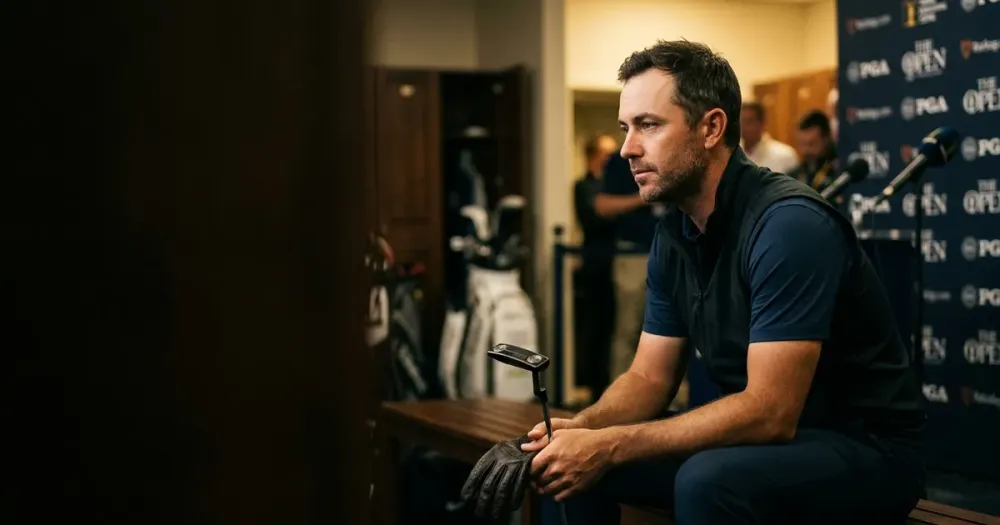
Jordan Spieth’s quest to complete the career Grand Slam at the 2026 PGA Championship is back in the spotlight, but his approach this time around isn’t what you’d expect. At Aronimink, Spieth revealed a surprising strategy: to win, he plans to try not to win. Instead of letting the immense pressure of capturing his final major get to him, he’s focusing on treating this PGA Championship like any other tournament. This mindset matters because a victory would make him just the seventh player in history to claim all four majors, a feat that would instantly cement his legacy.
Why Spieth’s 2026 PGA Championship Strategy Defies Conventional Wisdom
Spieth’s three major victories—the 2015 Masters, the 2015 U.S. Open, and the 2017 Open Championship—set the stage for a career Grand Slam that has eluded him for nearly a decade. Despite coming close in 2017, the PGA Championship trophy has remained out of reach. This year, he’s approaching the event with a mindset that seems counterintuitive: instead of focusing on the outcome, he’s emphasizing preparation and execution hole by hole.
“The easiest way to do that is to not try to, in a weird way,” Spieth explained during his press conference. His focus is on getting ready for the first hole, having a solid game plan, and attacking each shot as it comes. This approach aims to keep the mental pressure from spiraling, a common pitfall when chasing a milestone as significant as the career Grand Slam.
Context Matters: The Stakes Behind Spieth’s Game Plan
Winning the PGA Championship isn’t just about another major title for Spieth—it carries historical and personal significance. Joining the elite club of Grand Slam winners places him alongside legends like Tiger Woods and Rory McIlroy, who completed his Slam just last year at the Masters. Yet Spieth views his journey differently. Where McIlroy’s win was marked by dramatic final-round heroics and widespread celebration, Spieth expects a quieter acknowledgment, shaped by his unique path and extended period of contention.
His recent form supports this optimism. After not winning a tournament since 2022, Spieth has recorded four top-12 finishes this season, including a notable T12 at the Masters. These results suggest his game is sharpening, positioning him well to contend at Aronimink.
Treating the PGA Like Any Other Event: A Mental Reset
One of the biggest challenges for any player chasing a major milestone is managing expectations. Spieth’s “try not to win” approach is essentially a mental reset. By focusing on the process rather than the prize, he reduces the risk of choking under pressure. This method aligns with principles often recommended in golf tips for managing nerves—stay present, control what you can, and avoid fixating on results.
His confidence comes from recent experiences where he was in contention at majors but didn’t feel the pressure differently than usual. “It didn’t feel any different than any other majors, so I wouldn’t expect it if I get there this week,” Spieth said. This steadiness could be crucial on a challenging golf course like Aronimink, known for demanding precise shot-making and strategic thinking.
What This Strategy Means for Spieth and the PGA Championship
In practical terms, Spieth’s plan means focusing on course management, leveraging his trusted instructor’s guidance, and executing each shot with intent rather than emotion. The PGA Championship’s format—a 72-hole stroke play event with a deep field—rewards consistency and mental toughness. Spieth’s approach to break down the tournament into manageable parts aligns well with this format.
Moreover, his connection to the PGA of America, through his instructor and Ryder Cup experiences, adds layers of motivation beyond just the Grand Slam. Winning here would grant Spieth lifelong privileges, such as playing in the event indefinitely, enhancing the personal significance of the title.
Why This Grand Slam Would Feel Different
Spieth’s perspective on what a Grand Slam victory would mean is refreshingly grounded. Unlike McIlroy’s dramatic breakthrough at Augusta, Spieth sees his potential win as the culmination of years spent close to contention, with the grind of periodic challenges shaping his outlook. This nuance highlights the diversity in how golf’s biggest achievements resonate with players, influenced by their individual journeys and mental frameworks.
Should Spieth pull off this victory, it wouldn’t just be another major win—it would rewrite narratives about persistence, mental strategy, and the evolving nature of elite golf careers.
As reported by Golf.com, Spieth’s unique 2026 PGA Championship strategy isn’t just a quirky talking point. It reflects a sophisticated understanding of how mental approach can influence performance on one of golf’s grandest stages.
What to Watch Next: The Final Stretch at Aronimink
The weekend at the 2026 PGA Championship will reveal whether Spieth’s unconventional strategy holds under pressure. Watch for how he navigates the tough par-4s and demanding greens, especially in the final rounds where mental resilience counts most. His ability to stay present, execute his plan, and avoid the trap of “trying too hard” might just determine if he completes his career Grand Slam and ends a nine-year major drought. For a broader view, explore our coverage of golf majors coverage and results.
Source: as reported by Golf.com
All facts and quotes are credited to their originating outlets. Learn more about our sourcing policy.