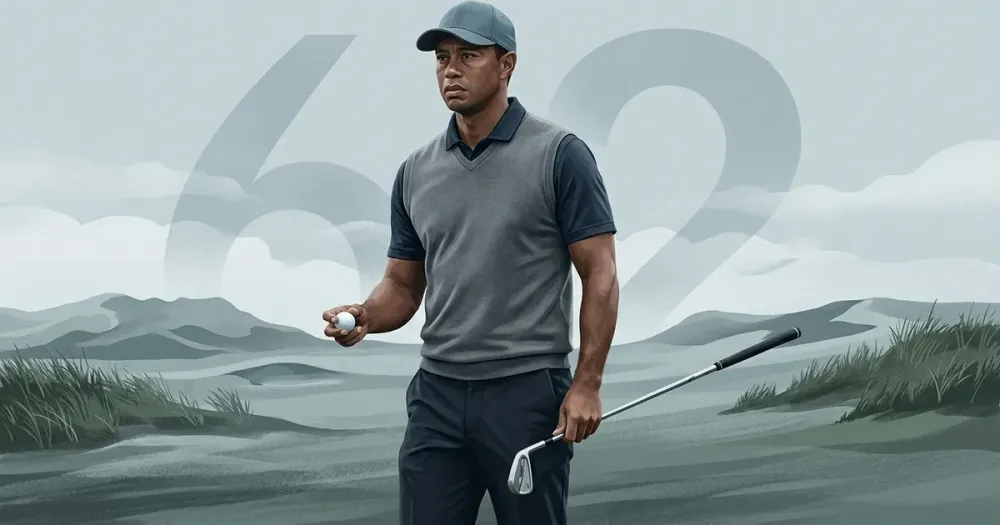
Lucas Herbert’s 62 at the 2026 Open Championship was nearly a record-breaking round. Walking off the 18th green at Royal Birkdale, the 30-year-old Australian felt the sting of just missing the major single-round scoring record of 61. His final putt lip-out denied him history, but Herbert’s deep understanding of golf’s past made the moment especially poignant.
Just 22 minutes later, Sam Burns matched Herbert’s 62, tying the major record. Yet unlike Herbert, Burns was unaware of the significance of his round until after it ended. Their shared scores spotlighted a rare dual achievement but revealed contrasting mindsets on what greatness feels like in golf’s biggest moments.
Lucas Herbert’s Near-Miss Fueled by Golf Lore
Herbert knew early in his round that something special was unfolding. “I’m too much of an optimist,” he said after his round. “I thought it when I hit it to about five feet on the 3rd hole. I’m a golf nerd anyway, so I know all the numbers, all the records, everything like that.”
That knowledge isn’t casual for Herbert. As a kid in Australia, he once woke up early to watch Chad Campbell attempt a major-record 62 at Augusta National. Though Campbell finished with a 63, it sparked a belief in Herbert about what was possible in professional golf.
On Friday, Herbert birdied nine holes and avoided any bogeys until the last. As he approached the final hole, he was on track for a 61, the lowest round in major championship history. The putt to break that record stopped just short, sliding past the cup and leaving Herbert with a 62.
“It’s pretty tough when you’ve got a putt for the major-championship record,” Herbert admitted. “I’m absolutely disappointed, and at the same time, so proud of today. It’s holding two emotions there at the same time.”
Sam Burns’ Surprising Tie, With Golf Elsewhere on His Mind
Burns, meanwhile, approached his round with very different priorities. Only days before, he had been preparing to withdraw from the Open because his wife Caroline was nine months pregnant with their second child. When she gave birth to their daughter Belle on July 3, Burns was able to travel to England and tee it up.
“[Caroline] is just amazing, superhero,” Burns said. “If it wasn’t for that, I wouldn’t be here.” With family on his mind and limited practice, Burns hardly focused on the scoring record as he played.
He birdied three straight holes late in his round and needed one more on the 18th to match the major record. His third shot from the bunker on 18 trickled down to the hole and dropped, but Burns had no idea the significance of a 62 until later.
“I had no idea until they told me up there,” Burns said. “I didn’t realize that was the case.” Despite his historic score, Burns was more measured in his reaction, saying, “I would say I’m not a huge fan of links golf. I just haven’t played well on links golf. It’s not something I’m very familiar with.”
The Dual 62s That Highlight Major Championship Rarity
Before Friday, only five players had ever shot 62 in a major championship round. Herbert and Burns became the sixth and seventh, joining an elite list separated by decades and courses.
The rarity of this feat underlines the challenge of scoring so low in majors, where courses are set up to test every aspect of a player’s game. Herbert’s round, shaped by his historical awareness and emotional investment, contrasts with Burns’s round, played amid personal upheaval and with less focus on records.
Both rounds tie the major championship single-round scoring record, but the stories behind them reveal how history can feel very different depending on who is living it.
Why Lucas Herbert’s 62 at the 2026 Open Championship Resonates
Herbert’s near-record round goes beyond just numbers. It illustrates how a deep connection to golf’s history can shape a player’s experience on the course. His optimism and reverence for the game’s milestones added emotional layers to his performance that a casual observer might miss.
For Herbert, the idea that a child somewhere might be inspired or even disappointed by his near-record 62 is a reminder that golf’s stories often ripple beyond the leaderboard. It’s about legacy, possibility, and the moments that define a career.
Meanwhile, Burns’s round highlights a different side of professional golf: the balancing act between life’s demands and elite competition. His 62 is remarkable not just for the score but for the context—a new father making a surprise run at history with little preparation.
According to All The Golf, these contrasting perspectives enrich the narrative of the 2026 Open, showing that behind every score is a unique human story.
What to Watch Next
Looking ahead, both Herbert and Burns face the challenge of maintaining momentum from their historic rounds. The next major test will be how they translate these performances into sustained success in upcoming tournaments. For Herbert, the focus will be on channeling his historical passion into consistent results. For Burns, balancing family life and competitive golf remains a key factor.
The next rankings update and season’s remaining events will reveal if these rounds were turning points or isolated flashes of brilliance. Golf fans should watch closely as these two players navigate the pressures and opportunities that come with joining major championship lore.
What this means is that while a 62 is a headline, the deeper significance lies in how players approach history and pressure differently. Why it matters now is that these moments remind fans of the rich, personal stories behind every stroke at the highest level. For a broader view, explore our coverage of golf majors coverage and results.
Source: according to All The Golf
All facts and quotes are credited to their originating outlets. Learn more about our sourcing policy.