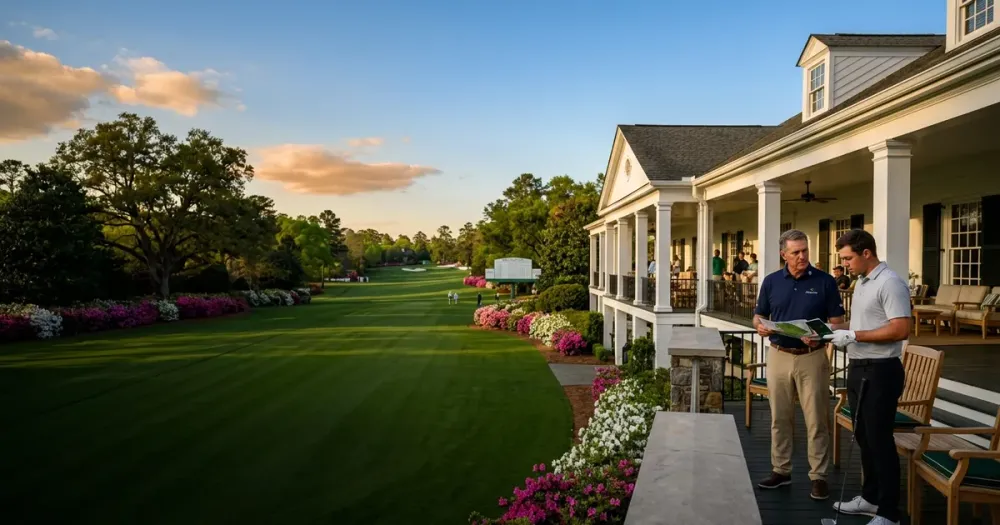
At the 2026 Masters, the relationship between players and their coaches is more crucial—and more complex—than ever before. Unlike previous decades when golfers often faced the course solo, today’s professionals arrive not just with caddies but entire support teams, including swing coaches, putting gurus, and mental coaches, all playing their part in real time during the tournament. This shift is not just about technology or instruction; it’s about how players manage the unique challenges of Augusta National under pressure.
Why the Masters Player Coach Relationship 2026 Is Unlike Any Other
The Masters, held each spring at Augusta National Golf Club, is renowned for its pristine conditions and challenging layout. Yet the practice environment there is a world apart from the course itself. The practice range is wide and flat, with only a handful of targets and trees, while the course features uneven lies, pine straw, and shifting grain on the greens. Players often remark that their range performance doesn’t translate to the course, especially amid the tournament pressure.
What makes the 2026 Masters setting unique is how players and coaches work together during the event. On a typical Thursday afternoon, multiple players can be found on the range, each accompanied by an instructor armed with technology like Trackman devices. This intra-tournament coaching, where adjustments and diagnostics happen after rounds, has become far more common over the past 10 to 15 years, especially at Augusta.
From Lone Cowboys to CEOs of Their Own Teams
Back in the ‘90s, stars like Tiger Woods and Ernie Els often practiced alone during tournaments. The image of a solitary golfer, sometimes without even a caddie nearby, was part of the sport’s mystique. Today, the professional golfer is more akin to the CEO of a small company, leading a team of specialists who help refine every aspect of their game.
Adam Scott, a veteran on tour, notes that while not every player brings a large staff, many have multiple coaches focusing on swing, putting, chipping, and even psychological preparation. However, Augusta limits the number of coaches who can join players on the range during tournament days to just one main swing coach, which adds a layer of strategy to the player coach relationship 2026.
The Mental Game: Why Coaches Can't Be on the Course
Despite this tight integration off the course, mental coaching and in-round adjustments remain the domain of the player and caddie. Coaches can’t make calls or offer advice on the course, so players must rely on their caddies to manage that pressure. This separation highlights a key tension: while the pursuit of perfection on the range is relentless, it can be counterproductive. Players often need to accept imperfection and focus mental energy on course management rather than swing tweaks during competition.
Adam Scott reflects on his own evolution, from early career days when coaching was rare during tournaments, to phases where he had frequent input, and now to a more balanced approach where communication is regular but less constant. Rory McIlroy’s recent Masters win exemplifies this. Last year, McIlroy’s success came with his caddie, Harry Diamond, by his side rather than a swarm of coaches. Their partnership on the course was enough to secure victory.
The Tech Factor: How Equipment and Data Fuel Coaching
One aspect that distinguishes the Masters player coach relationship in 2026 is the use of advanced golf equipment and analytics tools. Swing coaches often carry tablets and Trackman devices to analyze ball flight, club path, and impact in real time. This data-driven approach allows for pinpoint adjustments in the brief windows between rounds, helping players adapt faster to course conditions and personal performance fluctuations.
While these tools enhance fine-tuning, they also raise questions about how much data is beneficial under pressure. The balance between technology and feel remains delicate, especially on Augusta’s challenging greens and uneven lies.
What This Means for Players and Fans
Simply put, the Masters player coach relationship 2026 shapes how golfers prepare and perform during the tournament. With coaches present during practice rounds and post-round sessions, players get immediate feedback and can experiment with adjustments. For fans, this means watching athletes who are not just relying on raw talent but on a sophisticated support network merging expertise, technology, and psychology.
Understanding this relationship clarifies why some players seem to struggle to translate range success to the course and why others thrive with minimal coaching interference. It also highlights the evolving role of coaches in professional golf as the game becomes increasingly complex.
As the LPGA and other tours continue to emphasize coaching and support teams, the Masters remains a prime example of how player-coach dynamics influence outcomes on the grandest stage.
Looking Ahead: The Future of Player-Coach Collaboration at Majors
With the Masters as a bellwether, the trend toward integrated coaching teams during tournaments is likely to grow. The challenge will be balancing the need for technical input with the mental resilience required to compete under pressure. Golf tips that work on the practice range don’t always translate to Augusta’s undulating fairways and grainy greens, and coaches must help players navigate that gap without overwhelming them.
For 2026 and beyond, the player coach relationship at the Masters will remain a key factor in who emerges victorious, as well as how the sport adapts to new technologies and evolving player needs.
As reported by Golf.com contributor Michael Bamberger, this shift reflects a broader transformation in professional golf, where coaching is no longer a luxury but an essential piece of the puzzle. For a broader view, explore our coverage of golf majors coverage and results.
All facts and quotes are credited to their originating outlets. Learn more about our sourcing policy.