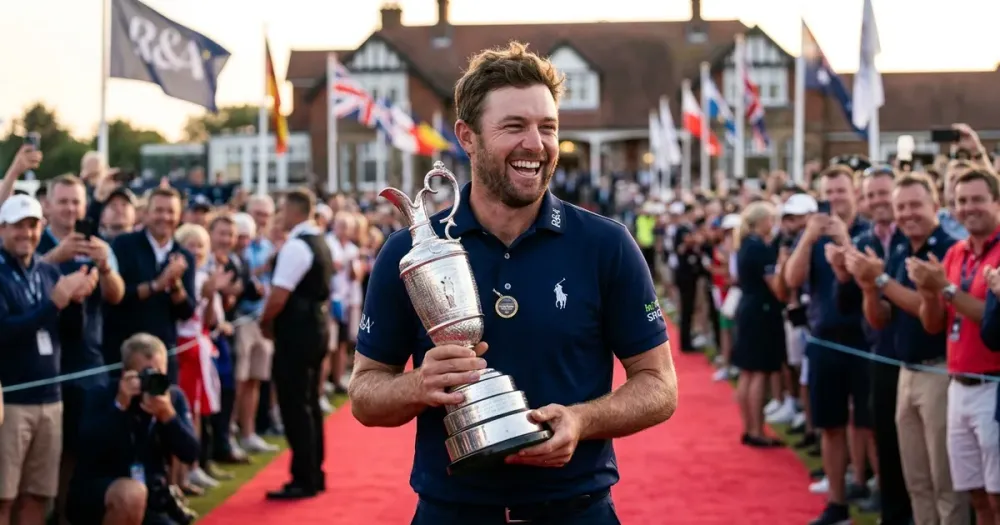
During the 2026 PGA Championship at Aronomink Golf Club, delays stretched the round far beyond the usual, with some groups taking up to five hours to complete 18 holes. This slow pace of play has drawn attention not only to the players but also to the tournament conditions and enforcement methods. For fans and players alike, the stakes are high: slow play threatens the viewing experience, tournament integrity, and the rhythm of competition.
Who’s Really to Blame When the Clock Runs Out?
At the heart of the PGA Championship 2026 pace of play issues lies a complex web of factors. The tournament posted an official pace-of-play chart outlining strict time limits per hole and total round durations. Groups of three were allotted 16 minutes on a par-4 first hole and up to 19 minutes for the par-5 16th, with a total of 4 hours and 44 minutes to finish 18 holes.
Yet many groups exceeded these marks dramatically. One group reportedly took 5 hours and 40 minutes to complete their round, a stretch that rivals a cross-country flight. Gusty winds, challenging pin placements described as "absurd" by Scottie Scheffler, and a demanding course setup contributed to the slow pace. The players’ deliberate routines compounded the delays, but they were not the sole cause.
Warning on the Clock: When Enforcement Meets Player Pushback
Justin Thomas, Keegan Bradley, and Cameron Young were issued a pace warning early in their second round after falling out of position relative to the pace chart. This "on the clock" status triggers a sequence of penalties for repeated slow play, culminating in disqualification.
Thomas contested the timing, questioning whether static "time par" standards can fairly accommodate variables like wind and pin difficulty. He argued that as long as his group didn’t hold up those behind them, the enforcement should be more flexible. Despite the tension, the warning appeared to refocus the group, which quickly caught up to the group ahead.
Why Pace of Play Rules Struggle on Tough Courses
Chris Gotterup, world No. 10, noted that while the pace limits are fair in principle, the reality of a brutally difficult course setup makes four-and-a-half-hour rounds almost impossible. This PGA Championship’s tough greens and demanding conditions defy easy timing formulas.
What this means: pace-of-play rules rely on fixed time allocations that don't adequately adjust for day-to-day variables like weather or pin placements. This mismatch results in enforcement that can feel arbitrary or contentious, especially in majors where every stroke and decision carries weight.
Beyond the Players: Course Setup and Tournament Logistics Matter
The slow pace at Aronomink also highlights how tournament logistics affect flow. A two-tee start can create congestion when groups on the course aren't evenly spaced, leading to multiple groups crowding the same holes simultaneously. Combined with extreme weather and tough pins, these factors multiply delays.
While players must manage their time efficiently, the PGA Championship 2026 demonstrates that slow play isn’t just about individual behavior. It’s a systemic challenge involving course design, weather, and scheduling decisions.
How Golf Equipment and Strategy Intersect with Pace
Players’ equipment choices and shot strategies also influence pace. With challenging pin positions demanding precise approach shots, golfers often take more time to line up putts or select clubs. Modern golf equipment allows for greater shot-shaping and distance control, but it also raises expectations for execution, encouraging deliberation.
Understanding the balance between careful play and maintaining pace is key, especially on courses that are stretched to test every aspect of the game. This tension is something both players and officials grapple with in major championships like the PGA.
According to Golf.com’s Alan Bastable, the official pace charts and enforcement reflect a desire to keep rounds moving, but the 2026 championship shows the limits of these tools under extreme conditions.
What to Watch Next: Will Pace Rules Evolve Post-PGA Championship?
As the golf world digests the pace-of-play issues from the 2026 PGA Championship, attention turns to upcoming majors and tour events. Will the PGA Tour reconsider how pace is measured and enforced? Will course setups be adapted to balance challenge with flow? These questions are critical as slow play continues to spark debate among players, officials, and fans. For a broader view, explore our coverage of golf majors coverage and results.
All facts and quotes are credited to their originating outlets. Learn more about our sourcing policy.