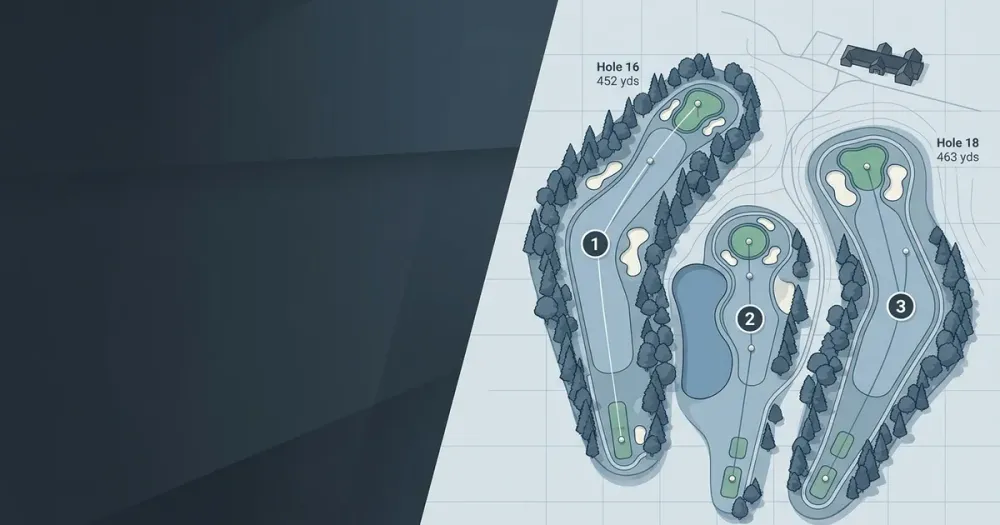
Sunday at Aronimink Golf Club promises high stakes and tension as the 2026 PGA Championship approaches what could be a playoff finish. With 22 players starting within five shots of the leader, Alex Smalley, the leaderboard is unusually packed. Golf fans should brace for the playoff format that comes into play when scores tie after 72 holes — a three-hole aggregate playoff over holes 10, 17, and 18, followed by sudden death on hole 18 if needed.
The Three-Hole Aggregate: How It Works and Why It Counts
The PGA Championship’s playoff format is designed to test a player’s consistency and nerve across varied challenges. Unlike the sudden-death formats common elsewhere, the three-hole aggregate requires players to tackle three distinct holes in sequence: a mid-length par-four, a demanding par-three, and the finishing par-four or par-five, depending on course setup.
At Aronimink, the selected holes (10, 17, and 18) offer a mix of risk-reward shots and strategic demands that reward versatile skill sets. This format means a player can’t rely on a single moment of brilliance but must execute over multiple holes — a subtle but crucial difference that influences how players approach the final rounds and the playoff itself.
Why the Format Matters in a Bunched Leaderboard
With names like Jon Rahm, Ludvig Aberg, Rory McIlroy, and Scottie Scheffler all within striking distance of the lead, the playoff format’s nuances come into sharp focus. It’s not just about who can hit the longest drives or sink the most putts; it’s about managing pressure across holes that demand different shots under fatigue and tension.
How it works: If players remain tied after the three-hole aggregate, they move to sudden death on the 18th hole until one player wins outright. This layered approach tests endurance and shotmaking, reflecting the PGA Championship’s intent to crown a champion who’s proven resilience and breadth of skill.
Historical Context: Past Playoffs Inform Tactics
Playoffs at the PGA Championship aren’t frequent but are memorable. The last one was in 2022 when Justin Thomas edged Will Zalatoris at Southern Hills, showcasing how clutch putting and nerve can prevail. Before that, it was 2011 at Atlanta Athletic Club when Keegan Bradley triumphed over Jason Dufner.
Those playoffs were sudden-death only, but the three-hole aggregate format has been in place for years at the PGA Championship, emphasizing how Aronimink’s layout will amplify strategic play. Players aware of this history might adjust their golf equipment choices, such as selecting irons that offer control over distance or putters that perform consistently on fast greens.
What This Means for Fans and Players Alike
Sunday’s setup at Aronimink promises a gripping conclusion. With so many players in contention and a playoff format that rewards versatility, fans should expect swings in momentum and high drama. For players, understanding the playoff holes’ unique challenges means planning their golf tips and strategies around precision and patience rather than aggression alone.
The PGA Championship 2026 playoff format Aronimink also underlines the importance of course knowledge—knowing how to navigate key holes under pressure can be the difference between winning a major and falling short. This is why players often arrive early to study golf courses and refine their approach shots, especially for complex holes like Aronimink’s closing trio.
Why the Three-Hole Aggregate Is a Tactical Puzzle
Unlike a sudden-death playoff where one mistake can end the tournament, the aggregate format offers a small margin for recovery. Players can’t afford to play conservatively on all three holes, nor can they gamble recklessly on any. It turns playoff golf into a nuanced game of balancing risk and reward across different types of shots — something that often separates the best from the rest in golf rankings.
For example, hole 17 at Aronimink is a demanding par-three that tests accuracy and club selection, especially with tricky wind patterns. Hole 18 typically demands a well-placed tee shot to set up an approach. Mastery over these holes requires not just skill but the right golf equipment tailored for shot-shaping and distance control.
Understanding this playoff format can influence how players prepare their bags, from selecting the right wedges to choosing putters optimized for fast greens, crucial in a major championship setting where every stroke counts.
What to Watch Next
As the final round unfolds, keep an eye on how players position themselves heading into the last stretch at Aronimink. Their approach to holes 10, 17, and 18 will hint at who is mentally and strategically ready for a potential playoff. The way players adjust their golf tips and equipment choices under pressure could determine who lifts the Claret Jug.
The PGA Championship 2026 playoff format Aronimink is not just a procedural detail; it shapes the drama and strategy of golf’s toughest test. Fans and players alike will see how this format influences outcomes in real time.
According to Golf.com, this playoff format has long been a part of the PGA Championship’s identity, underscoring how major tournaments can blend tradition with competitive fairness. For a broader view, explore our coverage of golf majors coverage and results.
Source: according to Golf.com
All facts and quotes are credited to their originating outlets. Learn more about our sourcing policy.