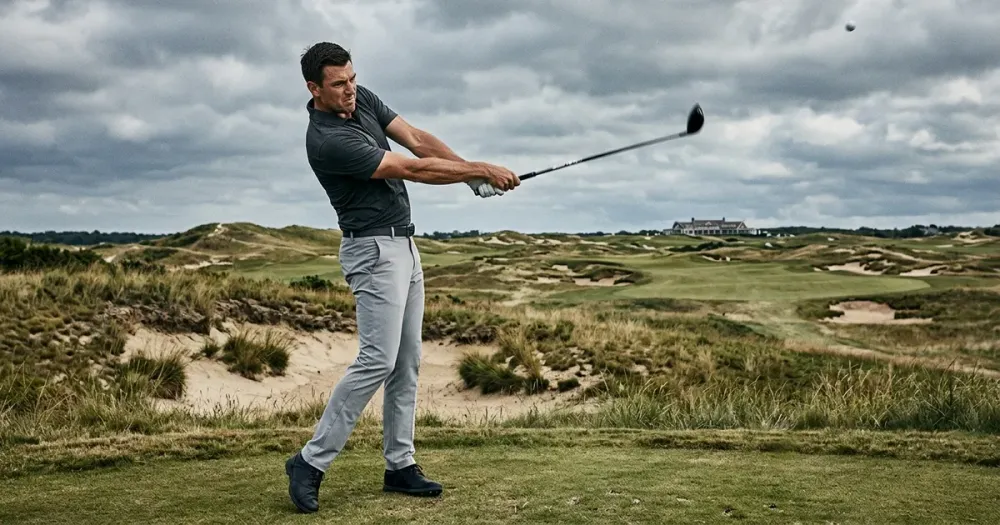
Rory McIlroy’s promising start to his second round at the 126th U.S. Open quickly unraveled when he bogeyed three straight holes from 10 to 12 at Shinnecock Hills. Those mistakes, marked by misjudged approach shots in tricky wind and soft turf conditions, crystallized how this course demands an unforgiving precision. The sequence wasn’t just a rough patch—it exposed the razor-thin margin for error that defines the U.S. Open’s brutal challenge.
From Momentum to Missteps: The 10th to 12th Holes
McIlroy turned in 2-under 33 on the front nine, setting a solid foundation. But that momentum stalled entering the back nine. On the par-4 10th, a critical wedge shot from 79 yards went awry. Choking down the lob wedge to avoid chunking on soft ground, McIlroy instead bladed the ball over the green, forcing a bogey. "Honestly, I was a little too close to the green," he admitted. The decision to play conservatively ironically led to an aggressive error.
On the par-3 11th, McIlroy tried to keep the ball airborne against the wind with a pitching wedge, aiming for safety. Yet the shot carried farther than expected, ending up 57 feet beyond the hole. A long, imprecise chip followed, leading to another bogey. Then at the 12th, despite a booming 345-yard drive, McIlroy’s approach again overshot the target, resulting in another long chip and a third consecutive bogey.
The Fine Line of Strategy at Shinnecock Hills
These errors highlight the delicate balance players must strike at Shinnecock. McIlroy’s cautious approach—choking down on wedges, avoiding aggressive pin hunting—reflects the course’s demand for smart, controlled golf. "You can’t go chasing pins around here," he said. "You can’t try to be too aggressive, because once you do that ... today for me was a prime example." The 11th and 12th holes illustrated how even slight overaggression can quickly lead to costly mistakes.
Shinnecock’s soft turf and swirling winds complicate club selection and shot execution. McIlroy’s decision to clip the ball rather than take a divot on the 10th was designed to avoid chunking, but the delicate execution proved unforgiving. The course’s conditions force players to constantly adapt, making every shot a test of judgment as much as skill.
Why McIlroy Believes the Leaderboard Remains Fluid
Despite falling seven shots behind Wyndham Clark after 36 holes, McIlroy remains confident that the leaderboard can shift. He recalled Brooks Koepka’s five-shot deficit at the 2018 U.S. Open at the same venue, where weather and course conditions kept the competition open. "If there’s a course where you feel like you still have a chance if you’re seven back going into the weekend like I am, it’s definitely this one," McIlroy said.
Shinnecock’s difficulty and changing conditions mean no lead is safe. The course penalizes mistakes but also rewards patience and strategic play. McIlroy’s birdies on 13 and 14 showed he could still capitalize when executing well, though a double bogey on 15 reminded how quickly fortunes can change.
LIV Golf Rory McIlroy U.S. Open Shinnecock Analysis: What It Reveals About Elite Play
McIlroy’s round offers a window into how Shinnecock tests even the game’s best. The course demands precision in approach shots, a keen read on wind, and a conservative mindset that still requires aggressive execution when the moment calls for it. Misjudging distances or conditions by a few yards can cascade into bogeys or worse.
His shot choices—choking down wedges, aiming for the center of greens, and avoiding risky pin hunts—reflect a strategic posture that many players adopt here. Yet the soft turf and wind can still undermine even cautious plans, as McIlroy’s three-hole bogey stretch shows. This underscores how Shinnecock’s setup challenges decision-making as much as shot-making.
What to Watch Next
As McIlroy prepares for the weekend rounds, the key pressure point will be his ability to tighten up approach shots and chip closer to the hole. Eliminating the kind of misjudgments that led to his mid-round bogeys will be critical if he wants to mount a serious charge. Meanwhile, weather and course conditions will continue to shape scoring opportunities, making every round a high-stakes chess match at Shinnecock Hills.
According to All The Golf, McIlroy’s experience highlights the U.S. Open’s punishing difficulty and why strategic precision is the difference between contention and struggle on this iconic course. For a broader view, explore our coverage of golf majors coverage and results.
Source: according to All The Golf
All facts and quotes are credited to their originating outlets. Learn more about our sourcing policy.