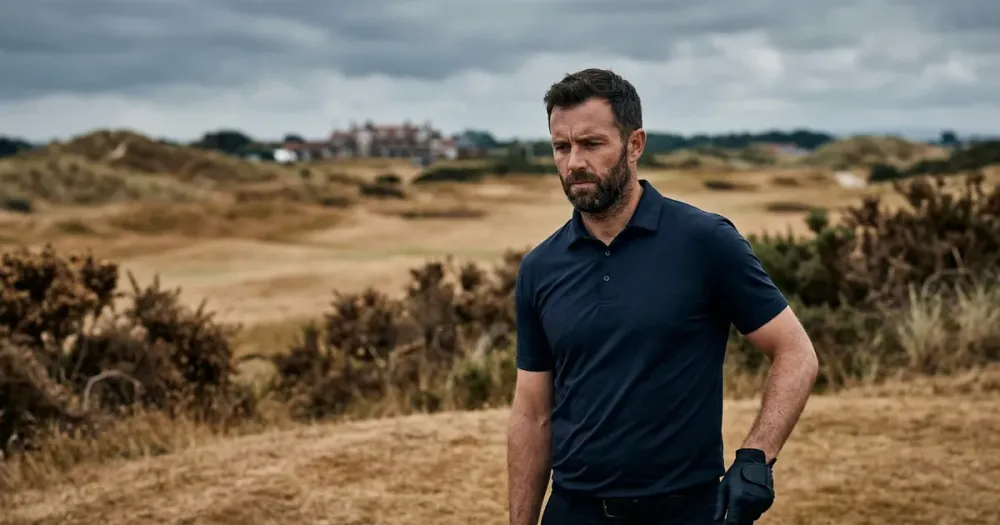
The sun beats down relentlessly on Royal Birkdale, turning fairways from their usual lush green to a dry, hard brown. It’s Monday afternoon, just days before the 2026 Open Championship begins, and the course looks almost unrecognizable. The grass crunches underfoot, the fairways bounce unpredictably, and the usual softness of the greens has turned firm and fast. In this unexpected landscape, players face a puzzle: how to tame a course that feels more desert than seaside links.
This stark shift in Royal Birkdale’s condition isn’t just a visual oddity. It has immediate consequences for how professionals approach one of golf’s toughest tests. Normally, links courses reward precision and wind mastery, but here, the dry, rock-hard turf demands creativity and adaptability. Shots that roll endlessly require players to rethink club selection and shot shape. The course has become a different beast — one that could dramatically reshape scoring and tournament dynamics.
When Brown Means Challenge: Royal Birkdale’s 2026 Open Championship Conditions
The color draining from Royal Birkdale’s fairways and greens is the result of an unusually long, rainless summer. Unlike the typical deep greens of Kentucky Bluegrass carpeted courses or even the rich hues found on many links, this year’s Open venue presents a tough, brown canvas. According to coverage from All The Golf, this is the driest and firmest the course has been seen in recent memory, with no rain forecast to soften the ground before the tournament’s start.
That dryness translates to an unpredictable playing surface. Balls bounce and roll in ways unfamiliar to players used to softer conditions. The firm turf also means shots can skip through fairways and rough, forcing players to be creative. Traditional strategy, which often means flighting the ball low and controlling spin, must be adjusted. Players might opt for more running shots or embrace riskier approaches, knowing the ball’s behavior will be less consistent.
A New Competitive Twist: The Open’s First On-Site Pre-Major Qualifier
Adding another layer of complexity, the 2026 Open Championship introduced an unprecedented qualifying event held right on Royal Birkdale’s grounds the Monday before the tournament. This “Last Chance Qualifier” offered players who narrowly missed initial entry a final shot at making the field. The competition brought fresh energy and tension, with hundreds of fans following the drama closely as hopefuls battled for one coveted spot.
Joe Dean, a former truck driver turned aspiring pro, emerged victorious with a two-under-par performance. But beyond the individual win, the R&A scored a success by injecting competitive golf into what is usually a quiet pre-major day. This new format challenges not only the established pros but also adds unpredictability to the tournament lineup, highlighting how the Open continues to evolve.
Rethinking Preparation: The Practice Range Shift and Its Impact
Royal Birkdale’s historic layout means its practice facilities have always been a logistical puzzle. This year, players are practicing at Hillside Golf Club, nearby but separate from the main venue. This setup reflects the modern demands of tournament logistics and offers players a slightly different environment to prepare for the challenging course conditions.
Interestingly, Hillside is the home course of Tommy Fleetwood, the tournament’s native favorite. Practicing there could provide subtle advantages or at least comfort for some players. The shifting practice environment underscores how every detail—from where players warm up to how they adapt to the course’s dryness—could influence performance.
Why Royal Birkdale’s 2026 Open Championship Conditions Matter Now
The combination of unprecedented dry, brown conditions and the new qualifying event signals a potential shift in the Open Championship’s challenge. It’s no longer enough to master tradition; players must master adaptability. The course’s firm turf transforms shot-making decisions, while the qualifier reshuffles the competitive deck.
For fans and players alike, these elements promise a tournament that rewards innovation and resilience. In a sport that values precision, Royal Birkdale’s 2026 conditions throw in uncertainty and creativity as key factors. The results could redefine what it takes to win at one of golf’s oldest and most revered venues.
What to watch next: As the championship unfolds, attention will turn to how players adjust their strategies to these firm conditions, particularly in the critical early rounds. Observing who embraces the course’s quirks successfully could offer early clues about the eventual champion. The next ranking update will also reflect how this unique Open impacts the broader golf landscape. For a broader view, explore our coverage of golf majors coverage and results.
Source: according to All The Golf
All facts and quotes are credited to their originating outlets. Learn more about our sourcing policy.