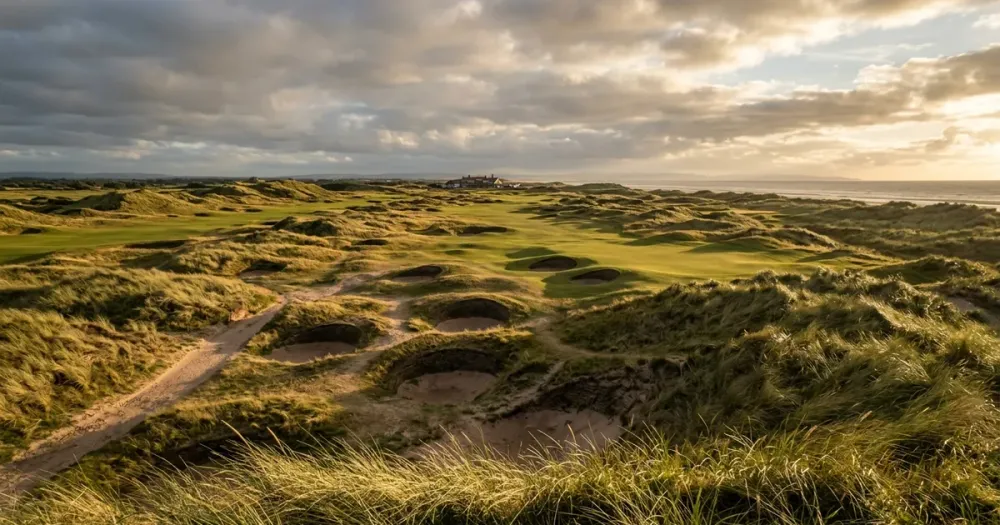
The roar of the crowd fades, replaced by the sharp crack of a well-struck ball slicing through the coastal air. It’s the 2017 Open Championship at Royal Birkdale, and Jordan Spieth is locked in a fierce duel on the inward nine, every shot a tightrope walk between disaster and glory. The unforgiving sand dunes and hundreds of penal pot bunkers dotting the course loom like silent sentinels, ready to punish even the slightest misstep. Spieth’s precision and strategic mastery, rather than sheer power, carried him to victory that day. Fast forward to July 2026, and the stage is set to test another generation of champions under the same brutal conditions.
The Money Trail Is Not the Point. The Incentive Is
Royal Birkdale Golf Club, perched on the windswept coast of the Irish Sea, offers a classic links golf experience that’s as punishing as it is beautiful. The course is a Par 70, stretching roughly 7,200 yards, with fairways narrow and flat, bordered by towering sand dunes reaching up to 50 feet. What really defines Birkdale are its hundreds of pot bunkers—small but deeply penal traps that demand pinpoint accuracy off the tee and on approach shots. These bunkers, combined with the course’s subtle green undulations and slower speeds, force players into a delicate balance of risk and caution.
Why This Rule Changes Who Gets Access
Unlike many modern courses favoring length, Birkdale mixes hole lengths to challenge every facet of a player’s game. Six Par 4s range from 400 to 450 yards, while three are under 400 yards and three stretch beyond 500 yards. The Par 3s include two over 200 yards, and the Par 5s test stamina with one exceeding 600 yards. The coastal winds, ever-present and unpredictable, add another layer of complexity, influencing club choice and shot shape. Players who can adapt their strategy to these shifting conditions gain a distinct edge, often overshadowing those with raw power or recent form.
Royal Birkdale Open Championship 2026 Course Analysis: A Test of Precision and Strategy
The 2026 Open Championship will see Scottie Scheffler return as defending champion after his triumph at Royal Portrush last summer. Scheffler’s status as favorite, with odds around +550, reflects his all-around skill. Yet history shows that mastering Birkdale’s nuances can trump raw talent. Jordan Spieth’s 2017 victory and Matt Kuchar’s runner-up finish that year are reminders that course management and links experience are critical. Many leading players on the 2017 leaderboard had success at similar venues like Harbour Town and Royal Troon, underscoring the importance of versatility and strategic play on coastal courses with small greens and narrow fairways.
The Detail Most Fans Will Miss
Beyond the glaring hazards, the course’s layout subtly encourages a versatile game. The large sand dunes don’t just separate holes visually; they create elevation changes from tee to green, demanding careful shot planning. The fairways’ flatness belies their narrowness, punishing errant drives with deep rough and heather grass. Players like Shane Lowry, known for his wind mastery and links success—including his 2019 Open Championship win at Royal Portrush—are prime examples of golfers whose games translate well here. Lowry’s odds at 40-1 reflect respect for his accuracy, while others like Russell Henley and Harris English bring consistent approach and driving accuracy that suit Birkdale’s demands.
What This Means for Strategy and Betting
Royal Birkdale’s unique challenges influence the strategic calculus players and bettors must consider. Accuracy off the tee is paramount; the narrow fairways mean that even long hitters must prioritize precision to avoid the maze of pot bunkers and sand dunes. Approach shots to the small, undulating greens require deft touch and careful reading of the wind. The slower green speeds, a defensive measure against severe coastal winds, further complicate putting strategy. These factors affect betting odds by elevating the value of players with proven links experience and strong course management over those relying on distance or recent hot streaks.
As the Open Championship tees off on July 16, 2026, all eyes will be on how contenders navigate Birkdale’s punishing terrain. The course won’t just crown the best player of the week but the one who masters its brutal bunkers, subtle greens, and coastal winds. The 2026 edition promises drama reminiscent of Spieth’s 2017 triumph—moments where precision and strategy intersect to decide golf’s oldest major.
With the Genesis Scottish Open serving as the final rehearsal, players will fine-tune their approach before facing Birkdale’s relentless test. Watching how Scottie Scheffler and challengers like Shane Lowry respond to the course’s demands will be crucial. The next ranking update and early rounds of the Open will reveal who truly understands the brutal beauty of Royal Birkdale and who will buckle under its pressure. For a broader view, explore our coverage of golf majors coverage and results.
Source: as reported by All The Golf
All facts and quotes are credited to their originating outlets. Learn more about our sourcing policy.