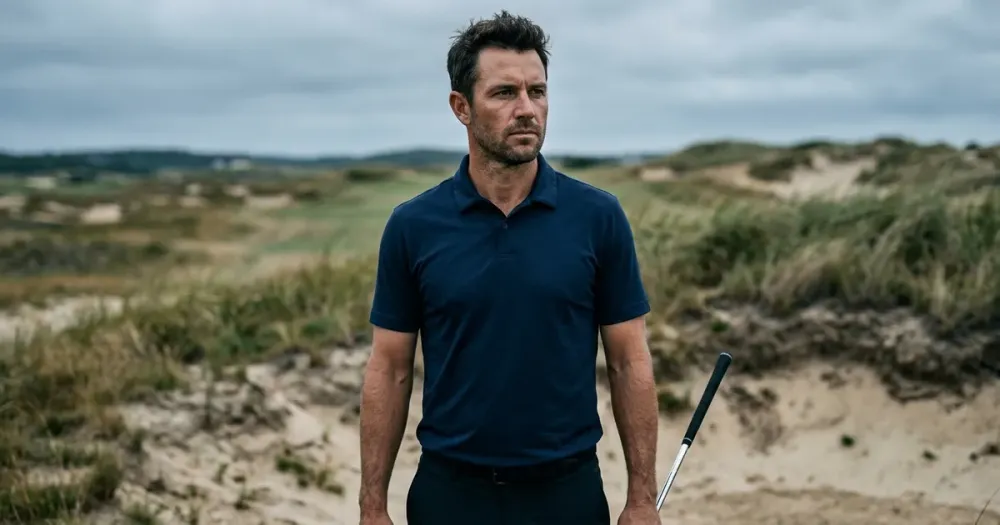
On the par-5 16th hole at Shinnecock Hills, Scottie Scheffler faced a pivotal moment. Wyndham Clark, leading the U.S. Open, had just teed off into thick fescue, seemingly offering Scheffler a rare opening. Positioned perfectly in the fairway, Scheffler’s response was a driver shot struck off the deck that veered into the rough. Clark, undeterred, hit a remarkable recovery back to the fairway and then sank a birdie putt. With that, the lead extended to five strokes, effectively extinguishing Scheffler’s hopes of mounting a comeback. This moment crystallized the subtle but critical pressure Scheffler failed to apply throughout the final round, stalling his bid to complete the career Grand Slam in 2026.
Scheffler entered Sunday trailing Clark by six shots but was the standout among a cluster of players tied for second. He had the best chance to close the gap and seize momentum in the final pairing. Yet, despite beating Clark by two strokes on the day with a 1-over 71, Scheffler never got closer than three shots behind. Key holes like the par-3 seventh highlighted his struggle; needing two bunker shots and a 15-foot putt just to save bogey, Scheffler remained stuck in neutral. This inability to convert crucial moments kept him from mounting a serious charge against Clark’s stubborn resilience.
Clark’s underrated scrambling—what Scheffler termed “escapability”—frustrated every attempt to apply pressure. Even as Clark faltered at times, the Texan’s ability to recover and maintain composure forced Scheffler to play catch-up rather than force the pace. This dynamic turned the final round into a test of patience and precision, a test Scheffler could not pass.
Looking deeper, Scheffler’s fate was shaped well before Sunday’s drama. His slow start over the first two and a half days, compounded by a costly double bogey on the eighth hole after a three-putt from 30 feet, effectively put the tournament out of reach early. He made the turn at 3-over, and after the opening day, found himself eight shots behind Clark. While two months earlier at the Masters he overcame a 12-shot deficit to nearly win, this time the sharpness and early momentum were missing.
Reflecting on the performance, Scheffler said, “It’s just little things here and there.” This understatement captures the psychological and tactical nuances that defined his day. It wasn’t outright poor play but rather the failure to capitalize on openings and exert the necessary pressure on Clark that ultimately delayed Scheffler’s quest for the career Grand Slam. The missed opportunity on the 16th hole, in particular, was emblematic of those fine margins.
Why the 16th Hole Defined Scheffler’s Day
The 16th at Shinnecock Hills stands as a classic risk-reward par-5, where aggressive play can flip a leaderboard in moments. Clark’s errant tee shot left him in deep rough, a precarious position. Scheffler, in the fairway, held the advantage. Yet, instead of pressing forward, his mis-hit driver off the deck landed in trouble. Clark’s recovery shot, a masterclass in short-game skill, not only salvaged the hole but set up a birdie that pushed his lead beyond reach. This exchange highlighted a critical psychological edge Clark held and Scheffler lacked.
Pressure Application: A Subtle but Decisive Factor
Scheffler’s inability to apply consistent pressure on Clark wasn’t due to a lack of skill—it was a matter of timing and execution under duress. Clark’s scrambling and poise under pressure forced Scheffler into reactive play rather than proactive aggression. The U.S. Open’s notoriously demanding setup at Shinnecock amplifies such nuances, where mental toughness can outweigh raw power. Scheffler’s day was marked by those “little things” — marginal misses and missed chances that collectively tell a story of a leader unable to seize the moment.
Early Struggles That Set the Tone
Unlike his near-miraculous run at the Masters earlier in the year, Scheffler never found the early momentum here. A slow start, including a double bogey on the eighth, created a deficit he never fully erased. The cumulative effect of these early stumbles was a psychological burden that shaped his final round strategy and performance. By the time he was paired with Clark on Sunday, the chase was already uphill.
Scottie Scheffler Career Grand Slam 2026: What’s Next?
Scheffler’s quest for the career Grand Slam will have to wait until next year’s U.S. Open at Pebble Beach. The 30-year-old world No. 1 celebrated his birthday at Shinnecock with mixed emotions—close but not close enough. His reflections on the missed opportunities and “little things” offer a window into the fine margins that separate champions from challengers at golf’s highest level. The challenge going forward is not just technical but mental: learning to apply sustained pressure when the stakes are highest.
For fans and analysts alike, the upcoming tournaments will provide crucial insight into whether Scheffler can recalibrate and overcome these subtle barriers. The next U.S. Open looms as a defining test for his legacy and an opportunity to rewrite the narrative.
According to All The Golf, Scheffler acknowledged the difficulty of these moments but remains focused on the future. His career Grand Slam hopes are intact but require sharper execution and pressure application in key moments.
What this means: Scheffler’s performance at Shinnecock underscores that in major championship golf, success often hinges on subtle psychological battles and precise shot execution under pressure. The difference between winning and falling short can be a single recovery shot or a missed opportunity, not just overall skill or power. For a broader view, explore our coverage of golf majors coverage and results.
Source: according to All The Golf
All facts and quotes are credited to their originating outlets. Learn more about our sourcing policy.