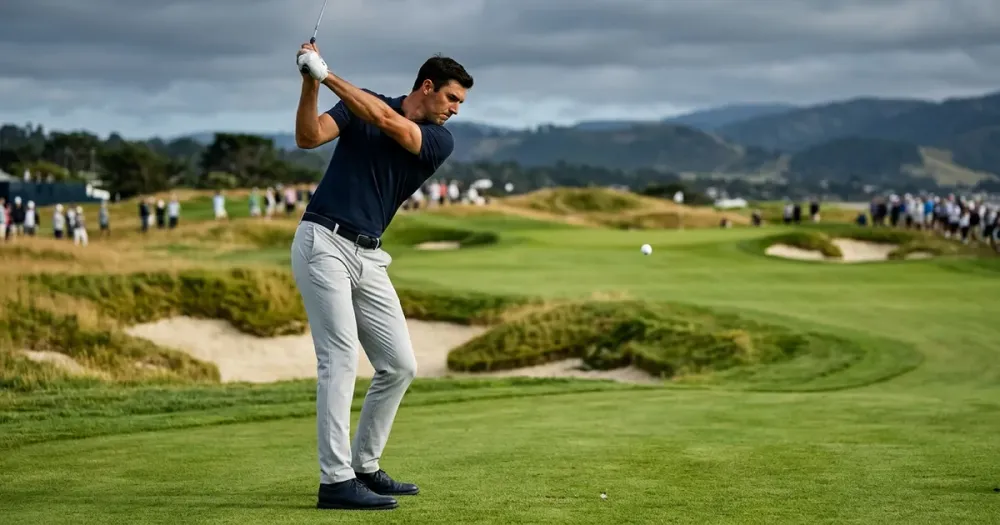
Scottie Scheffler ended the first round of the 2026 U.S. Open at Shinnecock Hills with a 72, a score that left him frustrated and reflecting on a recurring challenge: his sluggish starts in major tournaments. For a player who has climbed to the pinnacle of the golf world, becoming No. 1 and winning as often as anyone since Tiger Woods, this early-round stumble is more than a hiccup. It’s a problem that threatens his pursuit of the career grand slam.
The stakes here are clear. Majors like the U.S. Open demand precision and momentum from the start. Falling behind early, as Scheffler did by shooting eight strokes worse than champion Wyndham Clark’s opening 64, forces a catch-up mode that narrows his window for victory. This isn’t the first time 2026 has seen Scheffler struggle to find the sharpness in those crucial opening rounds. It’s a pattern that has kept him from seizing leads and dictating his own pace in tournaments.
Why Early Rounds Matter More Than You Think
In golf’s toughest tests, the first round sets the tone. A strong start can build confidence and allow a player to manage risk with a cushion. For Scheffler, however, the early rounds have been a blind spot. Despite his season-long excellence and consistent top finishes, he often finds himself playing from behind—chasing the leaderboard rather than controlling it.
This struggle isn’t just about numbers; it’s about the mental edge. Scheffler himself admitted after the U.S. Open, "At the end of the day, I don’t know exactly what it is," highlighting how the lack of early sharpness has been a puzzle he’s trying to solve. Self-inflicted errors in those opening rounds compound the issue, preventing him from building the leads he needs to close out majors.
The Cost of Falling Behind at the U.S. Open
The U.S. Open is arguably the sternest test in golf. It’s a tournament where early momentum can be the difference between challenging for the title and watching from the sidelines. Scheffler’s 72 on Thursday was a missed opportunity to establish that momentum. While his final-round 71 was solid, it wasn’t enough to erase the early deficit against Clark.
History shows just how brutal the U.S. Open can be for even the greatest players chasing career slams. Phil Mickelson, for example, made 34 attempts without winning. Jordan Spieth and Tom Watson each faced multiple near misses despite their talent. Scheffler’s challenge is no different: the margin for error is razor-thin, and early round struggles only tighten that margin.
What’s Behind Scheffler’s Early Round Issues?
While Scheffler’s overall game is elite, his first-round form seems to elude him. This is likely a mix of tactical missteps and mental pressure. Early rounds require a blend of aggression and caution, but Scheffler’s errors suggest a lapse in finding that balance. It’s a blind spot that stands out especially because it clashes with his usual ability to perform under pressure.
Given Scheffler’s steady improvement since turning professional and his frequent wins, this recurring first-round difficulty is puzzling. It’s a pattern that has kept him from many 36-hole or 54-hole leads, limiting his chances to control tournament outcomes before the final stretch.
Hope on the Horizon: Pebble Beach and Beyond
Looking ahead, Scheffler’s familiarity with courses like Pebble Beach offers a glimmer of hope. That venue suits his game and may provide the environment to break out of this early-round slump. However, the longer these struggles persist, the more pressure and doubt will mount around his grand slam ambitions.
For now, Scheffler remains focused on the fundamentals. As reported by All The Golf, he described being "good to be kind of back in the arena [and not] on the outside looking in," suggesting he’s ready to confront this challenge head-on. But the clock ticks. Unlike regular tour events, majors come once a year. The opportunities to complete the career grand slam are limited, and the margin for early-round mistakes is vanishingly small.
What This Means for Fans and the Game
Scheffler’s early round struggles in 2026 highlight a critical lesson: even the best can be undone by small lapses that snowball into larger hurdles. For fans, understanding this nuance adds depth to watching the majors. It’s not just about final scores or headline wins but about how players navigate the pressure cooker from the first tee shot.
Why it matters now is simple. Scheffler is at a crossroads where his legacy is still being written. The grand slam remains within reach, but only if he can master the opening rounds. That’s the battleground where his 2026 U.S. Open story is unfolding.
As he moves forward, all eyes will be on how he adjusts his mental and tactical approach early in tournaments. The next major, at Pebble Beach, will be a defining test—one that could either solidify his place among the legends or deepen the mystery of his early-round conundrum. For a broader view, explore our coverage of golf majors coverage and results.
Source: as reported by All The Golf
All facts and quotes are credited to their originating outlets. Learn more about our sourcing policy.