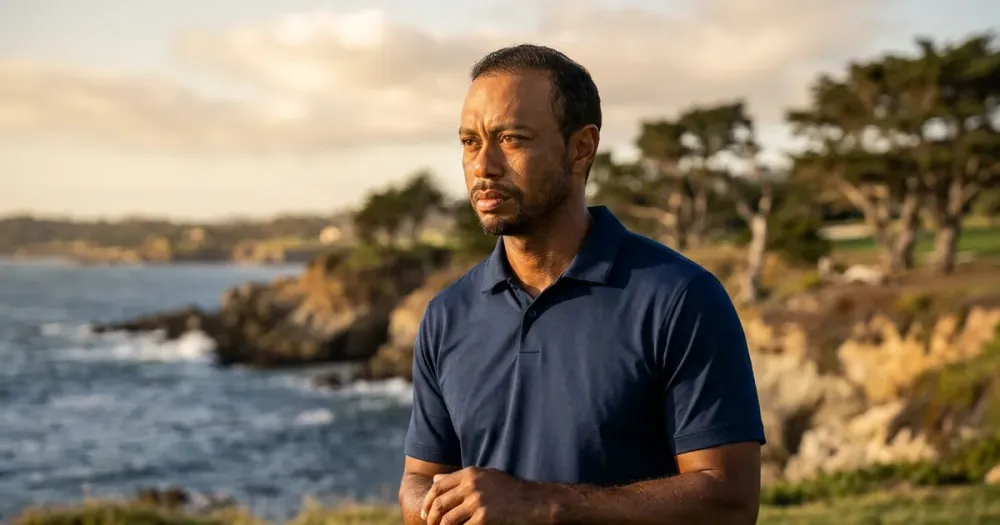
Picture the final round at Pebble Beach in 2000. The air is thick with disbelief, not from a sudden collapse or a dramatic surge, but from a quiet awe. Fellow competitors like Ernie Els and Rocco Mediate weren’t just watching a tournament unfold; they were witnessing a masterclass in dominance that felt almost otherworldly. Every shot Tiger Woods played seemed flawless, unmissable, as if the course itself bent to his will.
That Sunday, Woods didn’t just win—he redefined what it means to dominate a major championship. His 15-shot victory margin remains the largest in the history of majors, but the numbers only scratch the surface. For the players who shared the course with him, it was a psychological and physical gulf that separated Woods from the field, a gulf that transformed golf’s competitive landscape.
The Unseen Psychological Wall
Ernie Els recalls that week with a mix of respect and disbelief. “Playing with a guy the way Tiger played that whole week, but especially on that Sunday, I don’t believe he really missed a shot,” Els said. For him and others, Woods’ performance was not just about technical skill but an unshakable mental fortress. The intensity Woods carried from the first tee to the 18th hole never wavered, even with a commanding lead. “He kept that up all the way through 18 holes, even winning by 12, 15, whatever it was,” Els reflected.
Physical and Mental Prowess: A Perfect Storm
Rocco Mediate, another competitor from that week, likened the experience to “playing Red Rover against a rhinoceros.” He noted Woods’ combination of mental and physical strength as unparalleled. “Mentally he was ridiculous, but physically he was also ridiculous too,” Mediate said. The shots Woods executed weren’t just impressive; they were shots that seemed impossible and yet were routine for him during that week. This blend of physical fitness and mental focus created a level of play that was simply untouchable.
More Than a Score: A New Standard for Greatness
Woods’ victory was more than a record-setting score; it was a statement about the potential ceiling in professional golf. Stuart Appleby, competing that week, described the feeling as witnessing someone who “conquered” the course while still pushing relentlessly. This wasn’t a player coasting on a lead; it was a relentless force setting a new benchmark for excellence.
Justin Leonard, who finished tied for 16th, captured the sense of humility Woods’ dominance inspired. “When it gets firm, the greens get really firm, and the rough is as deep as it is — you know, it can make you feel pretty human. Tiger wasn’t a lot of weeks, but certainly not that week.” Woods made the brutal conditions look effortless, further underscoring the gap between him and his peers.
Why Tiger Woods 2000 U.S. Open Pebble Beach Still Matters
More than two decades later, many casual fans recall the 2000 U.S. Open as a historic blowout. But the true significance lies in how that week changed golf’s narrative. Ernie Els put it succinctly: “I knew the game changed especially that day. He obviously won some big events before that, but that was seriously the changing of the guard in sports. Lucky to have been around to see that from up close.”
This performance elevated Tiger Woods from a rising star to a transcendent figure. It shifted expectations about the mental toughness, physical conditioning, and unwavering focus required to dominate golf’s biggest stages. The ripple effects of that week still influence how players prepare, compete, and envision greatness.
The Detail Most Fans Overlook
While the 15-shot victory is often cited, the psychological impact on the field and the sport’s culture is less frequently discussed. Woods’ relentless intensity, even with a massive lead, set a new standard for how to approach competition. It wasn’t just about winning; it was about overwhelming the field so completely that doubt never had a chance to settle. This detail—how Woods maintained pressure beyond necessity—is a key insight into his legacy.
As All The Golf reported, the echoes of that week still resonate among those who played alongside him. Their reflections reveal that Woods’ dominance was as much a mental masterpiece as a physical one, a combination rarely seen in any sport.
Looking Ahead: The Next Test of Greatness
As the golf world continues to evolve, the shadow of Woods’ 2000 U.S. Open performance looms large. The upcoming major championships will test whether current and future stars can match the mental and physical mastery he displayed at Pebble Beach. Observers and fans alike will be watching to see if anyone can replicate that level of dominance, or if Woods’ 2000 triumph remains the gold standard for generations.
The next major is more than a tournament; it’s a chance to see if the bar set by Woods can be raised or even approached. That ongoing challenge keeps the 2000 U.S. Open not just a historic footnote but a living benchmark in professional golf.
Understanding what happened at Pebble Beach in 2000 reveals why Tiger Woods’ performance transcends mere numbers. It shows the power of combining mental fortitude with physical excellence under the harshest conditions. For fans and players alike, that week remains a defining moment in golf history. For a broader view, explore our coverage of golf majors coverage and results.
Source: as reported by All The Golf
All facts and quotes are credited to their originating outlets. Learn more about our sourcing policy.