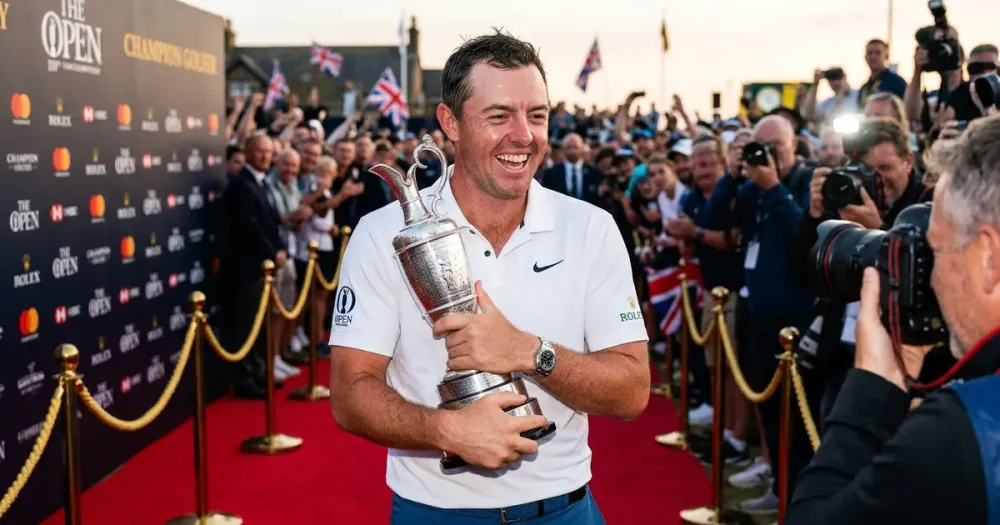
Next week’s Cadillac Championship, one of the PGA Tour’s $20 million Signature Events, is facing notable field issues. Despite being a highly coveted free-for-all spot, the event’s lineup is missing several top-ranked players, including Rory McIlroy and Xander Schauffele. This absence isn’t just about individual choices; it signals deeper challenges in the PGA Tour’s scheduling and player participation dynamics.
When Sponsor Exemptions Become Strategic Moves
The Cadillac Championship field typically includes the top 50 players from the previous year, recent winners, and those performing best this season, along with four sponsor exemptions. These exemptions, however, often serve as strategic placeholders rather than fixed invites. Players who qualify on merit prefer not to rely on sponsor exemptions, both for optics and career momentum. When a player qualifies outright, sponsors can extend invitations to additional favorites, expanding the field’s talent pool.
A recent example is Max Homa at the RBC Heritage, who initially occupied a sponsor exemption slot but earned his place by performing well at the Masters. This allowed RBC to invite other popular players, balancing meritocracy with sponsor preferences.
Cadillac Championship’s New Place on the Calendar Creates Challenges
The tournament’s new status as a Signature Event at Trump National Doral introduces fresh scheduling conflicts. Positioned directly before another Signature Event, the Truist Championship at Quail Hollow, and two weeks ahead of the PGA Championship, the Cadillac Championship feels like an unexpected addition to players’ calendars. Many top pros, including McIlroy—who is skipping a Signature Event for the second time this season—see playing three consecutive weeks, culminating in a major, as too demanding.
Top Players Opting Out Highlights the Scheduling Puzzle
Players like McIlroy, Schauffele, Bob MacIntyre, Ludvig Aberg, and Matt Fitzpatrick, all ranked within the world’s top 15, are choosing to skip the event. This marks the most significant voluntary talent withdrawal from a Signature Event to date. The hesitation reflects a broader issue: top pros typically aim to play 22 to 26 events annually, balancing performance with rest. The challenge is fitting the most lucrative and prestigious tournaments into this limited schedule without overlap or burnout.
The Domino Effect on Tour Dynamics and Fans
This scheduling dilemma trickles down through the Tour’s ecosystem. For instance, Scottie Scheffler will defend titles at the CJ Cup Byron Nelson and PGA Championship but won’t compete alongside McIlroy in any of the three Signature Events between the Masters and PGA Championship. Fans and broadcasters miss out on marquee matchups, and the Tour’s commercial appeal hinges on these star appearances. The current calendar arrangement makes such encounters increasingly rare during crucial parts of the season.
What This Means for the Future of Tour Scheduling
The PGA Tour faces a complex Rubik’s Cube of sponsor commitments, player preferences, and event placement. The Cadillac Championship 2026 field issues underscore the need for a more coherent calendar strategy that respects players’ workload limits while maximizing fan engagement. Moving forward, the Tour will likely avoid placing Signature Events back-to-back before majors to ensure top players participate consistently.
In plain terms: the Tour’s schedule isn’t broken, but it’s strained. Making it work means aligning events so top players don’t have to choose between rest and competing in high-stakes tournaments.
Inside the Numbers: How Sponsor Exemptions Influence Field Composition
One often overlooked element is the unpublished priority ranking sponsors maintain for exemptions. This list lets sponsors juggle invites dynamically, especially when players qualify on merit late in the week. The flexibility helps maintain field quality but also adds unpredictability. For Cadillac Championship, only two sponsor exemptions—Joel Dahmen and Max Greyserman—are confirmed so far, with two more pending. This incomplete field reflects the wider uncertainty about who will commit amid schedule congestion.
Why the Cadillac Championship Field Issues Matter Beyond Miami
These field challenges aren’t just about one tournament; they reveal tensions in how the PGA Tour manages its elite events amid player demands and commercial pressures. The growing number of Signature Events with massive purses complicates players’ seasonal planning. Without recalibration, the Tour risks diluting star power at its biggest stops, affecting everything from ticket sales to TV ratings.
The Cadillac Championship 2026 field issues illustrate that even with deep pockets and top courses, the Tour must balance timing and player willingness. The stakes are high—not only for the event’s success but for sustaining the PGA Tour’s competitive and financial health.
Source: according to All The Golf, as reported by Sean Zak at Golf.com.
What to Watch Next
Keep an eye on the final sponsor exemption announcements Sunday evening and how many top players confirm participation. The Tour’s response to this scheduling tension will also be critical in the coming months, especially how it adjusts the calendar to prevent star players from skipping major events. Fans should watch for potential shifts in the placement of Signature Events ahead of the PGA Championship to see if the Tour can solve this field dilemma. For a broader view, explore our coverage of PGA Tour news and results.
All facts and quotes are credited to their originating outlets. Learn more about our sourcing policy.