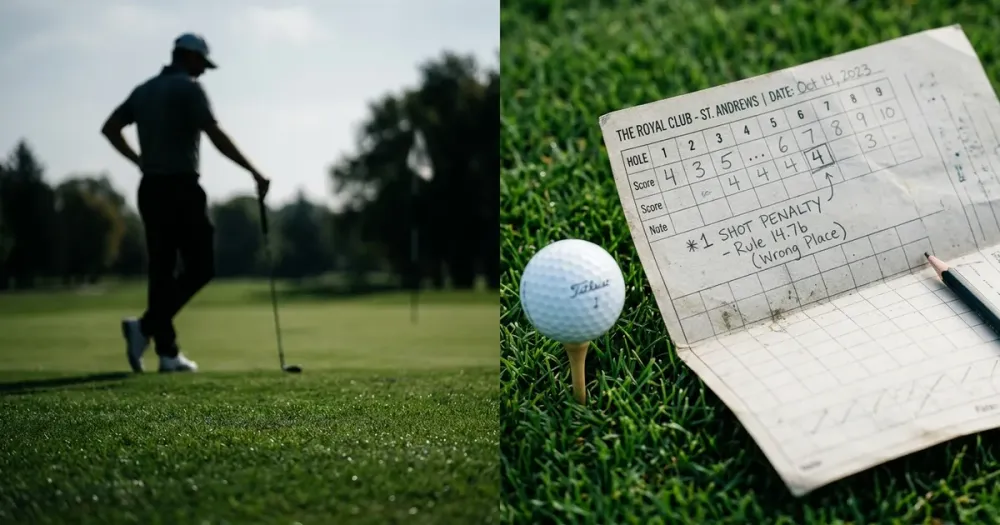
During the final round of the 2026 PGA Tour’s Cadillac Championship at Trump National Doral, Cameron Young found himself leading by five shots when an unusual moment unfolded—he called a rules penalty on himself. On the second hole, Young believed his ball had moved when he placed his iron behind it and took a partial backswing. Not entirely sure if he caused the movement, Young called over an official and accepted a one-shot penalty under Rule 9.2b(2), which addresses when a player is deemed to have caused ball movement.
The stakes here were significant: a five-shot lead and the pressure of closing out a PGA Tour event. Yet Young’s decision to report the infraction himself, despite uncertainty, drew praise and sparked discussion about honesty and rules enforcement in professional golf.
The Nuances of Rule 9.2b(2): When Is a Player Responsible?
Rule 9.2b(2) states that a player is responsible for causing ball movement only if it is "known or virtually certain" that they caused it. This means more than a reasonable suspicion; it requires conclusive evidence or at least a 95% likelihood based on all reasonably available information. In Young’s case, he wasn’t completely sure but admitted to touching the grass, after which the ball moved slightly forward.
This rule has sparked debate among players and officials because it asks for a high standard of certainty to penalize a player. If there’s doubt, the ball is presumed to have moved due to natural forces like gravity. However, Young erred on the side of caution, accepting the penalty rather than leaving it unaddressed.
Integrity on Display: Why Young’s Call Resonated
On the Golf Channel broadcast, analysts and officials weighed in, highlighting the rarity of such self-reporting. Mark Dusbabek, a rules official, explained that if a player places a club behind the ball and the ball moves, it’s reasonable to assume the player caused it. Smylie Kaufman noted that many players would "protect the field" by calling the penalty and maintaining honesty.
Roger Maltbie’s remark summed up the sentiment: "Makes you proud to be a golfer. He’s the only guy that knew it." Young’s choice to reveal the infraction, rather than conceal it, showed a commitment to the spirit of the game, especially when it could have gone unnoticed.
What This Means: The Impact on Golf’s Culture and Future Rules Enforcement
This incident underscores how the PGA Tour’s rules and their interpretation still rely heavily on player integrity. With golf’s complex regulations and slow play concerns, players face split-second decisions that might affect outcomes by a stroke or more. Young’s example sets a high bar, reminding pros and amateurs alike that the game’s honor system remains vital.
Why it matters here: the penalty didn’t cost Young his lead, but it reinforced trustworthiness in a sport where rules can be obscure and enforcement subjective. Fans and fellow competitors get a real-time lesson in accountability, beyond the usual leaderboard drama.
How Young’s Decision Aligns with Golf’s Historical Standards
Historically, golf has been unique among professional sports for its self-policing nature. From Bobby Jones to Tiger Woods, players have faced moral choices about rules infractions. Young’s call fits into this tradition but stands out given the high stakes and ambiguous evidence. His willingness to accept a penalty amid uncertainty is a reminder that golf’s defining character is honesty, even when it’s inconvenient.
Golf IQ: The Technical Angle on Ball Movement at 165 Yards
In a situation like Young’s, where the ball is struck from the fairway and then shifted slightly by club contact, the key is to determine if the clubhead caused that movement. At around 165 yards, iron shots demand precision, and players often set up with their club behind the ball to avoid accidental movement. If the ball moves during the setup, the player must judge if it was caused by their touch or by natural forces. Young’s acceptance of the penalty after reviewing available information aligns with the strict standard the rules require.
What to Watch Next: Can This Moment Influence Future PGA Tour Rules Calls?
Looking ahead, the spotlight on Young’s self-penalty raises questions about how often players will call penalties on themselves in high-pressure situations. Will this encourage a culture shift toward greater transparency? Or will players hesitate, fearing lost shots or tournament wins? The next few months of the PGA Tour season will reveal if Young’s choice becomes a benchmark or remains a rare act of integrity. For a broader view, explore our coverage of PGA Tour news and results.
All facts and quotes are credited to their originating outlets. Learn more about our sourcing policy.