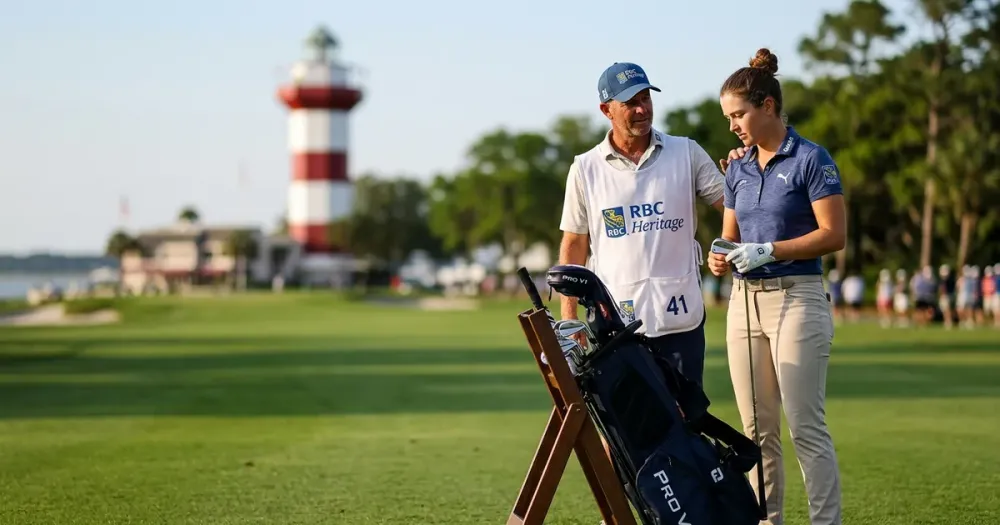
Collin Morikawa opened up about a fear that’s rarely voiced on the PGA Tour: the fear of injury derailing his career during a week of competition. At the 2026 RBC Heritage, the world-class player admitted, "I’ve never been this scared in my life" to step up and play. That’s not just a throwaway line—it’s a glimpse into the stakes facing Morikawa as he navigates a delicate back injury that’s already cost him three weeks and a withdrawal from the Players Championship.
This isn’t just about a single tournament payday, though the $3.6 million first-place prize at Harbour Town Golf Links would certainly be welcome. It’s about trust—trust in his own body to withstand the rigors of a packed schedule that includes three signature events and two majors over six weeks. Morikawa’s cautious approach reflects the fine line between chasing glory and preserving a career.
Back Trouble Shadows Morikawa's Game at RBC Heritage 2026
Morikawa’s back problems first emerged in the gym rather than on the course, but the impact has been clear. After a sharp twinge during a practice swing on the second hole at TPC Sawgrass forced an early exit at the Players Championship, he missed a crucial three weeks. Yet at Augusta National, he rallied with 11-under over three rounds, finishing tied for seventh, hinting at resilience despite discomfort.
At Harbour Town, Morikawa has kept himself in contention, posting a bogey-free 67 in the first round and following with a 68 on Friday. Still, he admitted swinging at roughly 50 percent effort, prioritizing longevity over ferocity. "It’s hard to trust the body right now," he said. "There’s just no trust, and that’s the hardest thing, to say go fire at the shot when you’re trying to play in a tournament." The mental toll of managing pain and performance simultaneously is a nuance often overlooked in golf rankings and general coverage.
Playing It Safe on One of Golf’s Flattest Tests
Harbour Town Golf Links is known as a flat, manageable course—a reason Morikawa decided to play despite his fears. "I thought about not playing, but Harbour Town is one of the flat test courses out here," he explained. His strategy has been to "dink it around, slap it," favoring control over power to avoid aggravating his injury. This approach offers insight into how elite players adapt their game plans according to physical limitations, a lesson that could inform golf tips for amateurs grappling with injury or inconsistency.
Trust and Timing: The Real Battle Off the Tee
Morikawa’s struggle isn’t just physical; it’s a battle for confidence in his body. He’s had to recalibrate his expectations, settling for incremental progress rather than peak performance. "I want to be very healthy," he said, "I don’t want to be limping around and being scared of taking a golf ball out of a hole or teeing it up." His recent weeks have helped him slowly overcome this fear, but the question remains: how much can he push before the risk outweighs the reward?
This cautious mindset is a contrast to the usual aggressive style Morikawa is known for, underlining how injury can reshape even the most technically sound golfers' swings and strategies. It also highlights how golf equipment choices and swing mechanics might be adjusted to protect vulnerable areas without sacrificing competitiveness.
What This Means for Morikawa’s Season and Beyond
The next six weeks form a gauntlet featuring major tournaments where every shot counts toward career-defining moments and rankings. Morikawa’s ability to manage his injury will influence not just his chances at Harbour Town but his performance in upcoming events that define the season’s hierarchy. The balance between rest and competition is critical, and his plan to spend time at home tweaking his swing and rehabilitation shows a strategic approach to longevity.
Understanding Morikawa’s predicament sheds light on how professional golfers juggle injury risks without sacrificing their spot in the fiercely competitive LPGA and PGA Tour ecosystems. It also raises awareness about how injury fears can influence choices about where and when to play, a factor fans and analysts often underestimate.
As reported by Golf.com, Morikawa’s candidness about his fear and physical limits offers a rare, humanizing perspective on pro golf's grueling demands.
What to Watch Next
Morikawa’s weekend performance at the RBC Heritage will reveal how well he’s managing the injury and fear combination. Fans should keep an eye on whether he can maintain his pace and whether his swing shows signs of loosening up or tightening down under pressure. His decisions post-Heritage—whether to rest or push forward—will also signal his readiness for the upcoming majors and help predict his trajectory in the golf rankings as the season unfolds. For a broader view, explore our coverage of PGA Tour news and results.
Source: as reported by Golf.com
All facts and quotes are credited to their originating outlets. Learn more about our sourcing policy.