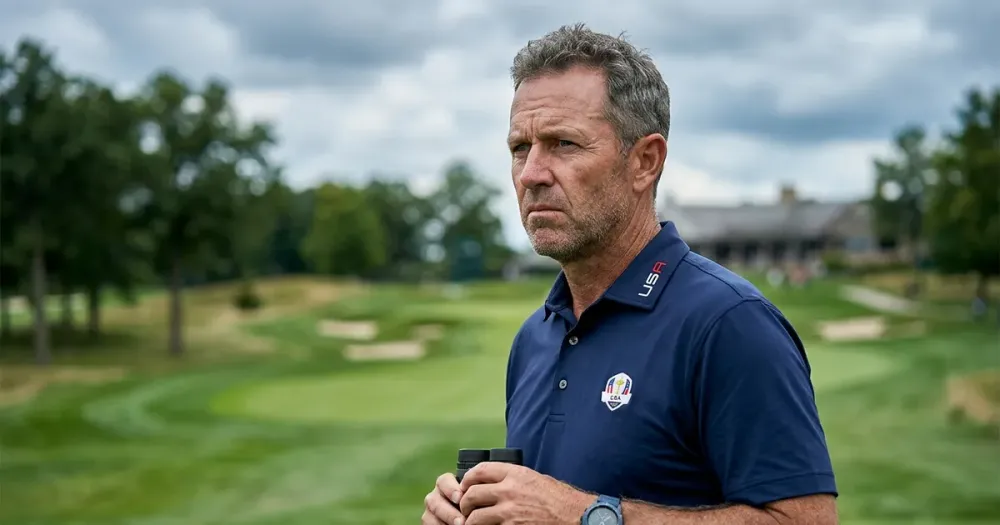
Brandt Snedeker wasn’t just standing on Medinah’s 15th green on Presidents Cup Sunday. He was pacing like a man caught between a chess match and a high-wire act. His phone flickered in and out of his pocket, his hand shielding whispered commands into his radio. At times, he shouted encouragement to his players, then hushed back into secrecy with his assistants. Moments like these capture why the role of Team USA’s PGA Tour captain is less a coveted honor and more a relentless grind of impossible choices under a microscope.
The stakes? Immense. Every decision, from who plays with whom to when stars sit on the bench, ripples through the entire team — affecting careers, reputations, and ultimately, the trophy. Snedeker’s tense vigil while watching Russ Henley on the 15th hole, isolated from teammates as the crowd shifted focus to the 18th, was a vivid portrait of the captain’s lonely burden.
The Pressure Behind Team USA PGA Tour Captain Challenges
The captaincy isn’t just about strategy; it’s a high-pressure balancing act. You’re managing egos, form, and chemistry, all while knowing every move will be second-guessed by fans, media, and players alike. The depth of talent on the American squad, usually a blessing, turns into a curse when it creates lineup dilemmas that have no perfect answers. Do you bench a rookie struggling early, or stick with a veteran who has a history of clutch performances? Do you pair best friends hoping chemistry translates into points, or mix things up to spark momentum? Snedeker faced these exact puzzles at Medinah.
Take rookie Chris Gotterup, who showed flashes early but faltered, posting a social media shoutout to teammate Cam Young that underscored bonding—and the pressure to justify lineup decisions. Then there’s the dilemma of sitting the best player since Tiger Woods in alternate shot matches because his form dipped. It’s a brutal calculus, made worse by the fact that every choice is scrutinized in real time.
Why This Role Is a Thankless Grind
Unlike the European side, where players left off the roster rarely become a story, American snubs spark headlines and player frustration, as seen with J.J. Spaun’s disappointment during Snedeker’s captaincy. The constant spotlight and second-guessing wear on captains. Zach Johnson and Keegan Bradley’s previous stints ended in public pain—Bradley described his Ryder Cup captaincy aftermath as "the darkest time of my life." These roles can haunt those who take them, long after the trophies are shelved.
Snedeker’s own reflections after the win revealed the weight of responsibility: "I was surprised [about how stressful it was]," he admitted. "You think you know, but you don’t until you’ve done it." The captain’s decisions ripple beyond the course—affecting players’ families and lives. That’s the real pressure few outside the inner circle fully grasp.
The Strategic Complexity Beneath the Surface
Success isn’t just about picking good pairings—it’s a mental chess game with opponents who study your moves relentlessly. The International team, guided by veterans like Geoff Ogilvy and Trevor Immelman, closely monitored European captain Luke Donald’s strategies to crack the American blueprint. Snedeker’s daily pairing sessions showed how opponents anticipated and countered his plans. This level of strategic warfare adds another layer of stress.
Moreover, the captain has to manage internal team dynamics. Pairing best friends like Scottie Scheffler and another top player seemed logical but didn’t yield results, challenging assumptions about chemistry and performance. The captaincy is a constant test of judgment under pressure with no clear playbook.
How the Role Shapes Legacy and Why It Matters Now
For many, a captaincy is one of the last public roles before the twilight of a playing career. It’s a chance to craft a legacy beyond personal stats. Jim Furyk, Snedeker’s successor, now faces an even steeper climb heading into the next Presidents Cup in Ireland. How Snedeker will be remembered isn’t just about the victory but the grueling process behind it, one that almost broke him before triumph.
Understanding Team USA PGA Tour captain challenges sheds light on why few players truly want the job, despite its prestige. It’s a thankless, exhausting role filled with relentless scrutiny and second-guessing. That tension is part of what makes team events so compelling—and so brutal.
What to Watch Next
All eyes now turn to Jim Furyk as he prepares to lead Team USA at the 2027 Presidents Cup in Ireland. The pressure to build on Snedeker’s victory while managing similar challenges looms large. How Furyk navigates lineup decisions, player dynamics, and strategic matchups will reveal whether he can escape the captaincy’s darker legacy or join the ranks of those haunted by it.
For fans and players alike, the next captaincy cycle will be a fascinating test of leadership under fire—one that offers no easy answers but plenty of drama.
All The Golf reported these insights from Medinah, capturing the raw intensity behind the scenes. For a broader view, explore our coverage of PGA Tour news and results.
Source: All The Golf reported
All facts and quotes are credited to their originating outlets. Learn more about our sourcing policy.