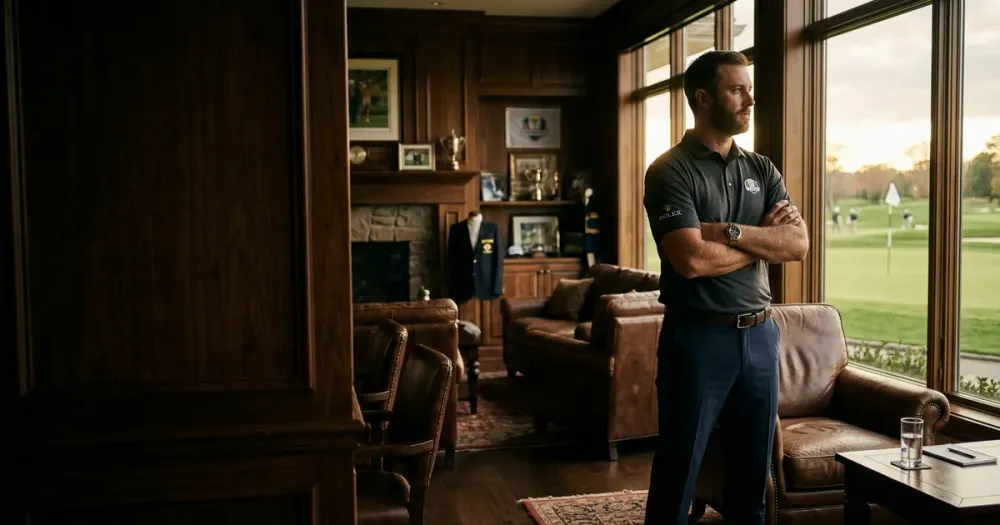
It was the kind of moment that lingers in the air long after the final putt drops. On the last day of the 2025 Ryder Cup at Bethpage Black, the U.S. team fell just short, losing 15-13 to Europe. Keegan Bradley, the captain, stood with a quiet weight in his eyes — a mix of exhaustion, heartbreak, and the raw sting of defeat. Around him, teammates shuffled off the course, voices low, faces glazed with disbelief. But it was Bradley who carried the deepest wound, visibly burdened by the outcome and the immense responsibility he bore.
The Invisible Load of Ryder Cup Captaincy
Bradley’s journey to that moment began long before the first tee shot was struck in September 2025. When the PGA of America tapped him to lead the U.S. squad back in June 2024, it marked a turning point in his career. The invitation wasn’t just an honor; it became an all-consuming mission. Bradley’s days and nights blurred into one continuous mental chess game: deciding pairings, analyzing opponents, weighing course setups, and battling the relentless question of how to win. Golfers often speak about the mental grind, but the captaincy at the Ryder Cup represents a rare breed of pressure — the sort that seeps into your bones.
“I went to sleep thinking about the matches and woke up thinking about them,” Bradley admitted. That singular focus was both his strength and his undoing. As the event unfolded, every decision felt heavier than the last. The stakes weren’t just trophies or medals; they were pride, national honor, and the intangible weight of legacy. And when the scoreboard finally showed a narrow loss, the blow wasn’t just professional — it was deeply personal.
What Losing Feels Like When You Wear the Captain’s Hat
Bradley’s experience is far from unique in the annals of Ryder Cup history. Names like Zach Johnson, Padraig Harrington, and Jim Furyk have all wrestled with the aftermath of defeat in this fierce contest. Yet Bradley’s candidness about the emotional toll stands out. “You win, it’s glory for a lifetime,” he said. “You lose, it’s ‘I’m going to have to sit with this for the rest of my life.’ There’s no part of me that thinks I’ll ever get over this.”
That’s a brutal truth few outside the golf world fully grasp. The Ryder Cup isn’t just another tournament; it’s an all-or-nothing battlefield where the margins between victory and heartbreak are razor-thin. For Bradley, the memories of the 15-13 loss are still fresh months later. He’s haunted not only by the score but by what it represents: the weight of leadership, the sacrifices made, and the knowledge that every decision was scrutinized under a global microscope.
Finding His Feet Again on the PGA Tour
Returning to the PGA Tour after such a crushing loss is a test of resilience. Bradley’s recent performances at the Players Championship reveal the ongoing battle. His opening round was a rough five-over 77, marred by a quadruple-bogey nine on the infamous par-5 11th hole, where a wayward tee shot found a tree and vanished. It was a stark reminder of how brutal golf courses like TPC Sawgrass can be, even for seasoned pros.
Yet, Bradley didn’t fold. His second round delivered a six-under 66, highlighted by an eagle and multiple birdies on the back nine, pushing him back into the red and comfortably past the cutline. “This course is as stressful as any we play in the world,” he said. “Every shot is brutal. I’m really proud of the way I played today. I really needed this round.”
That fight, that refusal to surrender, is what fans see when they watch Bradley swing. It’s the same drive that made him a Ryder Cup captain in the first place. But beneath the surface, the mental load lingers. Bradley has missed the cut in his previous two starts and has just one top-30 finish this season. The grind to regain confidence and form is real, and it’s complicated by the emotional baggage the Ryder Cup loss carries.
Why Bradley’s Story Matters in Today’s PGA Tour Landscape
Bradley’s saga sheds light on a rarely discussed side of professional golf: the leadership pressure and its aftermath. Captains often step away from playing, but Bradley’s path is different. He’s among the few who must reconcile a high-profile defeat while still competing at the highest level. That dual challenge is a unique strain, one that tests mental toughness beyond golf tips or equipment tweaks.
Understanding this context helps fans appreciate the human element behind the golf rankings and leaderboard numbers. It’s easy to forget that Ryder Cup captains face scrutiny not just from fans but from themselves. And that can shape their careers in profound ways, influencing how they approach golf courses and tournaments long after the Ryder Cup fades from memory.
The Quiet Details That Reveal Bradley’s Fight
Watching Bradley at the Players Championship, you notice the micro-moments that tell the real story. After sinking a tough eight-footer late in his second round, his smile cracked through the tension — a brief release in a season clouded by pressure. When asked about the mental freedom post-captaincy, Bradley hesitated, then opened up. “It’s been difficult,” he confessed. “I’m still heartbroken. Trying my best to separate myself and move on, but it’s hard. I think about the guys a lot, and I’m still in the process of getting past all that.”
His honesty cuts through the usual sports veneer. There’s no quick fix in golf or life for this kind of loss. Bradley’s journey reminds us that behind every shot on the PGA Tour is a player navigating complex emotions, balancing passion with pain, and fighting to find his way back.
What to Watch Next: The Road Ahead for Bradley
As Bradley moves forward in the 2026 season, all eyes will be on how he handles the mounting pressure to qualify for the next Ryder Cup team — not as a captain, but as a player. His next challenges will come at upcoming PGA Tour events where consistency is key, and every cut made inches him closer to redemption. Will Bradley’s resilience carry him past the shadow of that Ryder Cup loss? Or will the weight of leadership linger? That tension promises to be one of the most compelling storylines in golf this year.
For now, Bradley’s fight is a potent reminder that golf is not just about swing mechanics or golf equipment. It’s about the human stories behind the scores — the triumphs, the heartbreaks, and the relentless pursuit of a second chance.
Source: as reported by Golf.com
All facts and quotes are credited to their originating outlets. Learn more about our sourcing policy.