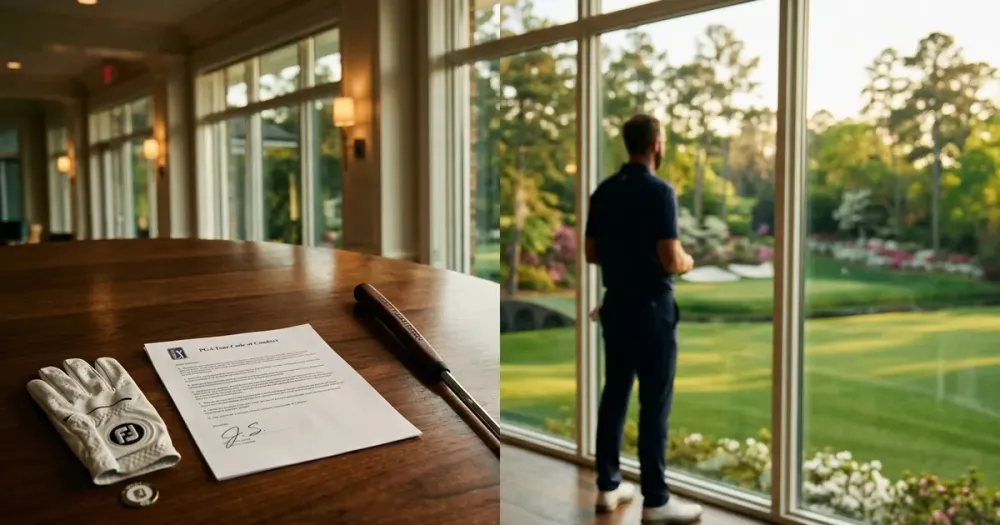
Before Rory McIlroy’s clutch putt sealed his second straight Masters win, the golf world was buzzing about Sergio Garcia’s heated outburst at Augusta National. After a poor tee shot on the second hole, Garcia slammed his driver into the turf and then a cooler, ultimately snapping the club’s head. The incident earned him a code-of-conduct warning, a new disciplinary measure debuting at this year’s Masters. Max Homa addressed the incident Wednesday at the RBC Heritage, calling such behavior a “bad look” for professional golf and underscoring the tension between frustration and sportsmanship on tour.
Why Max Homa’s Perspective Matters in Golf’s Conduct Debate
Homa’s comments come at a crucial moment as the PGA Tour rolls out a new code of conduct policy this year, which escalates penalties up to disqualification after multiple violations. This policy debuted at the Masters and is expected to be adopted by the other majors. Homa, who tied for ninth at the Masters, acknowledged that golf is an emotional game where frustration sometimes boils over. However, he stressed that breaking clubs or damaging the course reflects poorly on players, painting them as spoiled rather than professional.
“I don’t like when people break clubs,” Homa said, speaking generally but clearly referencing Garcia’s incident. “Beating up a golf course is probably worse because we all have to play it. Those kinds of antics make us look very spoiled.”
Balancing Frustration and Professionalism in a High-Stakes Sport
Homa’s candid admission about his own frustrations—he’s been caught throwing clubs and using strong language—adds nuance to the conversation. He tries to be mindful about when and where his emotions show, especially around younger fans. "I say a lot of bad words. I try not to do it where kids can hear," he explained. His awareness highlights the delicate balance players must strike between genuine emotional expression and maintaining the sport’s image.
Golf’s format, steeped in tradition and etiquette, doesn’t always leave room for anger. Yet, the physical and mental demands of the game—especially on challenging courses like Augusta National—can test even the most composed pros. Homa’s insight reveals how subjective reactions to such outbursts can be, especially when viewed live on television versus in private practice rounds.
Code of Conduct: What It Means for Players and Fans
The new policy, which was quietly introduced this year, aims to raise standards and inspire younger generations to emulate better behavior. Beyond just penalizing club-throwing, it also addresses pace-of-play and other on-course issues. Homa sees these discussions as positive steps toward improving the game’s public perception.
“It’s never a bad thing to have that conversation being had,” Homa said. “Between that and pace-of-play, there’s things we can address. We want to inspire the next generation to be better than us, so we need to be held to a higher standard.”
What Sergio Garcia’s Outburst Reveals About Pressure in Major Championships
Garcia finished 52nd out of 54 players who made the cut, reflecting a tough week where frustration boiled over. His apology on social media acknowledged regret but didn’t erase the visual impact of the meltdown. Under Rules of Golf, his damaged driver couldn’t be replaced due to the abuse, which added another layer of consequence to the outburst.
This incident and Homa’s reaction underscore the tension between individual emotions and professional expectations in golf’s elite ranks. The sport’s high stakes, especially in majors and prominent tournaments, create pressure cookers where composure is as valuable as skill.
Why This Matters: Understanding the Stakes Behind Golfers’ Conduct
In pro golf, players’ actions extend beyond the leaderboard. Their behavior influences fan engagement, sponsorship deals, and the sport’s reputation worldwide. Homa’s comments on Sergio Garcia outburst highlight how even subtle shifts in conduct policy can ripple across the entire tour. This isn’t just about one player’s frustration; it’s about setting a standard that balances authenticity with professionalism.
For players and fans alike, understanding how disciplinary rules work and why they matter helps clarify golf’s evolving culture. The code of conduct is a reminder that every shot, every reaction, is part of a larger narrative about respect—for the game, the courses, and each other.
As reported by All The Golf, Homa’s perspective offers a grounded look at the emotions behind the headlines and the practical consequences for pro golfers.
What to watch next: With the code of conduct now in play, the upcoming PGA Tour events and majors will test its enforcement and players’ adaptability. Will Homa’s call for higher standards translate into fewer outbursts? The next few tournaments will provide a clear answer as the tour balances tradition, emotion, and discipline. For a broader view, explore our coverage of PGA Tour news and results.
Source: as reported by All The Golf
All facts and quotes are credited to their originating outlets. Learn more about our sourcing policy.