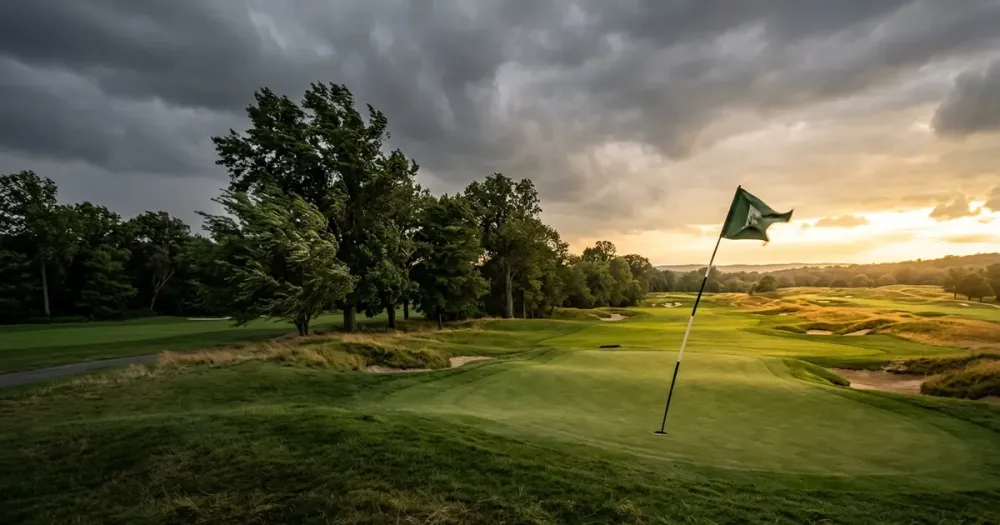
Scottie Scheffler, the world No. 1 golfer, encountered one of the toughest hole locations he’s ever seen during the second round of the PGA Championship at Aronimink Golf Club. The 215-yard par-3 14th hole featured a pin placed on a narrow spine, offering an exceptionally small target area. With winds gusting up to 20 mph, the setup tested even the best players' patience and precision.
Scheffler described the pin as "one of the craziest" he’s ever faced, comparing it to a microphone perched on a high point. His experience underscores a larger theme at this PGA Championship: the extreme difficulty of the pin placements across Aronimink’s greens. The PGA of America deliberately pushed hole locations to new extremes, creating a scoring environment that has left the leaderboard tightly packed and scores hovering near par.
Why Aronimink’s Pin Locations Are a Different Kind of Challenge
The pin locations at Aronimink aren’t just tough—they're "absurd," as Scheffler put it. The PGA of America has set up the course with pins perched on slopes and narrow ledges, demanding pinpoint accuracy from tee to green. Scheffler noted that these placements rival those of historically challenging venues like Oakmont and Shinnecock Hills, the latter being next month’s U.S. Open site.
Scores have reflected this demanding setup. Scheffler’s 1-over 71 in round two left him at 2 under for the tournament, a solid effort given the conditions and pin difficulty. The wind and slopes make getting close to the hole a rare feat, and holing putts is even rarer. This has kept the leaderboard unusually tight compared to recent PGA Championships, where winning scores often dipped well below par.
How This Affects Strategy and Player Performance
What this means is that players must balance aggression with caution. Scheffler praised the challenge but questioned whether pushing pin locations to such extremes is the best test of golf—acknowledging that it might lead to winning scores over par purely because of setup, not skill.
Chris Gotterup, who posted the tournament’s lowest round so far with a 5-under 65, credited a free-swinging approach and skillful shot flighting in the wind for his success. Yet even he admitted that some pins were "on the edge of impossible." The demanding setup has also extended round times beyond five and a half hours, as players grapple with precise target zones and tricky conditions.
What Makes Aronimink’s Setup Stand Out in Golf History
The tight clustering of scores and the difficulty of the setup have drawn comparisons to some of the toughest tests in golf history. Scheffler referenced Oakmont and Shinnecock Hills—courses known for punishing U.S. Open setups. Aronimink’s combination of wind, slopes, and aggressive pin placements pushes players’ short-game skills and mental toughness to the limit.
This difficulty contrasts sharply with the past two PGA Championships, which saw winning scores of 21 under and 11 under. Aronimink’s scoring environment signals a distinct shift back toward punishing setups that reward precision and patience over power.
Scottie Scheffler’s Perspective on Tough Golf Tests
Scheffler expressed respect for hard tests of golf, recognizing that increasing difficulty adds to the game’s challenge. Yet he also highlighted the balancing act: golf is already the hardest sport in the world, and setting up a course to be arguably "too hard" might not always produce the best competition or spectator experience.
He suggested the possibility that the PGA of America could design a course where the winning score might be over par solely due to pin locations, posing a unique question about what defines the "best" test of golf.
What This Means for Fans and the Weekend Ahead
For golf fans, understanding the Scottie Scheffler Aronimink pin locations difficulty helps explain the tight leaderboard and the slow pace of play. The demanding conditions require players to rely heavily on short game skills and precise shot-making. It also means patience is paramount—both for players and viewers.
Looking ahead, the weekend promises to showcase who can adapt best to this punishing setup. The winner will likely be the player who balances aggression with caution, controls nerves, and masters the demanding pin placements. As Scheffler noted, "somebody always figures it out."
According to All The Golf, this setup has produced arguably the hardest pin placements seen recently on tour, making the PGA Championship at Aronimink a fascinating study in course design and player adaptability. For a broader view, explore our coverage of PGA Tour news and results.
Source: According to All The Golf
All facts and quotes are credited to their originating outlets. Learn more about our sourcing policy.