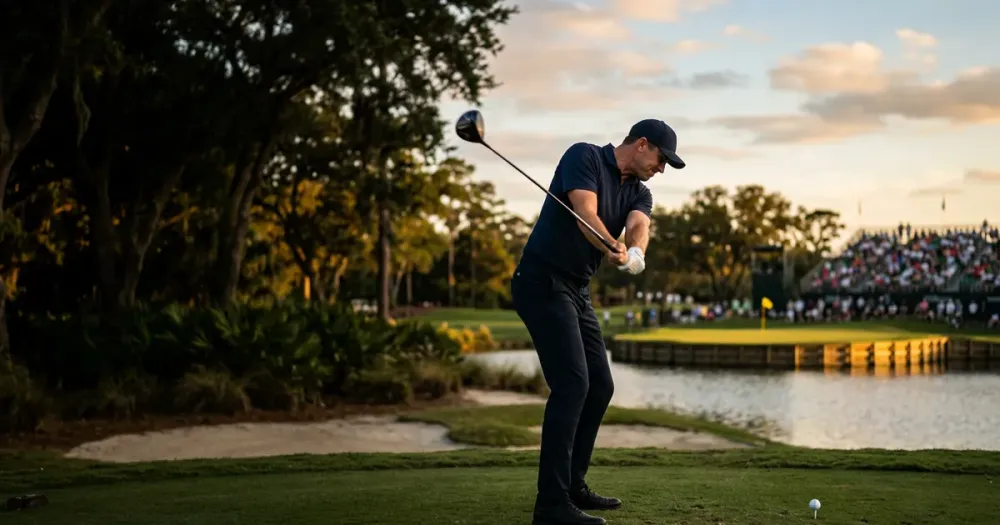
Scottie Scheffler stood soaked and determined on the muddy range at TPC Sawgrass, relentlessly hitting shot after shot long after his round had ended. The rain drenched his white hat, black vest, and blue pants, but he barely noticed. Under the watchful eyes of his longtime swing coach Randy Smith and caddie Ted Scott, the world No. 1 was locked in, trying to fix a problem that had plagued him throughout the day at The Players Championship.
His even-par 72 left him five shots behind the early leader Maverick McNealy, a respectable score but one that masked deeper struggles. Most notably, Scheffler’s tee shots kept drifting right, a pattern that repeated itself seven times during his round. Seven fairways hit but seven misses all going the same way. It was a curious and concerning trend for a player known for precision off the tee.
Driver Choices and the Cost of Trust
The root of Scheffler’s woes wasn’t a sudden loss of skill but a switch in his equipment. After using TaylorMade’s new Qi4D driver at the Arnold Palmer Invitational just a week earlier, Scheffler reverted to his trusted Qi10 model for The Players. The newer driver promised better spin consistency and a slightly higher clubhead speed, advantages that on paper should have helped his game. But in practice, it felt different.
“I’ve seen some improvements in the new driver; like my spin is much more consistent,” Scheffler said after his round. “It’s actually a touch faster than my driver. But the way I play, I always hit so many different types of shots and the one last week felt like it was going a little left on me, and when I want to hit my peeler, a lot of times I would hit it out of the middle of the face and it would start drawing on me, so I think that’s a little bit today why the ball started going way right.”
In other words, the new club demanded a level of trust and feel that Scheffler hadn’t yet fully developed. On challenging holes like Nos. 14, 7, and 16 at TPC Sawgrass, where missing left could be disastrous, that hesitation translated to a tendency to miss right instead. His confidence in the older driver remains strong, rooted in a track record of success including nine wins in 2024, among them the Masters and Olympic gold.
Finding Silver Linings Amid Struggles
Despite the errant tee shots, Scheffler’s overall game showed encouraging signs. He gained strokes on the field with his approach shots and putting, areas that often separate the great from the good on the PGA Tour. A highlight came on the par-5 ninth hole, where Scheffler executed a textbook birdie: tee shot down the left side, layup to 70 yards, wedge to within two feet. It was a tidy sequence that suggested his swing still had its sharp edges.
“It’s nice finishing that way versus the other way,” he remarked, referring to ending the round on a positive note. This mix of ups and downs paints a picture of a player still very much in control, even if the driver issues cast a shadow.
Pressure, Precision, and the PGA Tour Gauntlet
The Players Championship is often called the “fifth major” for good reason. Its demanding course and deep field push players to their limits. For Scheffler, maintaining sharpness amid such pressure is crucial. He admitted to small mistakes that cost him strokes late in the round, including a mental error on the seventh hole and a bad lie in the rough on the eighth. These details matter when the margin for error is razor-thin.
“I mean, it’s easier hitting it from the fairway than it is from the rough,” Scheffler said. “I played from the rough a lot today.” Yet, he managed to salvage respectable iron shots and navigate the course strategically. It’s a reminder that even world No. 1s face tough days, and overcoming them requires more than just raw talent.
What This Means for Scheffler and the PGA Tour
Scheffler’s driver dilemma highlights a broader truth in professional golf: equipment changes can disrupt rhythm and confidence. On the PGA Tour, where margins are minimal, such shifts can influence tournament outcomes and rankings. For fans and fellow players, watching how Scheffler adapts offers insight into the delicate balance between technology and technique.
Golf tips and equipment choices matter, but so does the trust a player places in their gear. Scheffler’s experience underscores that even the world’s best wrestle with that trust. His willingness to switch back to the Qi10 driver shows an adaptive mindset, prioritizing comfort and consistency over novelty.
Looking Ahead: The Road to Recovery and Redemption
As The Players Championship moves forward, all eyes will be on Scheffler’s tee box. Can he regain the confidence to wield the new driver effectively, or will he stick with the tried-and-true? The answer will shape not only his performance at TPC Sawgrass but potentially his momentum heading into upcoming events.
Golf fans should watch how he handles the pressure, particularly on holes where accuracy off the tee is non-negotiable. The driver issues serve as a reminder that even the game’s elite must constantly adjust, refine, and overcome challenges to stay atop the golf rankings.
According to Golf.com, Scheffler’s situation provides a rare glimpse into the intersection of equipment, mentality, and performance at the highest level of golf.
Source: as reported by Golf.com
All facts and quotes are credited to their originating outlets. Learn more about our sourcing policy.