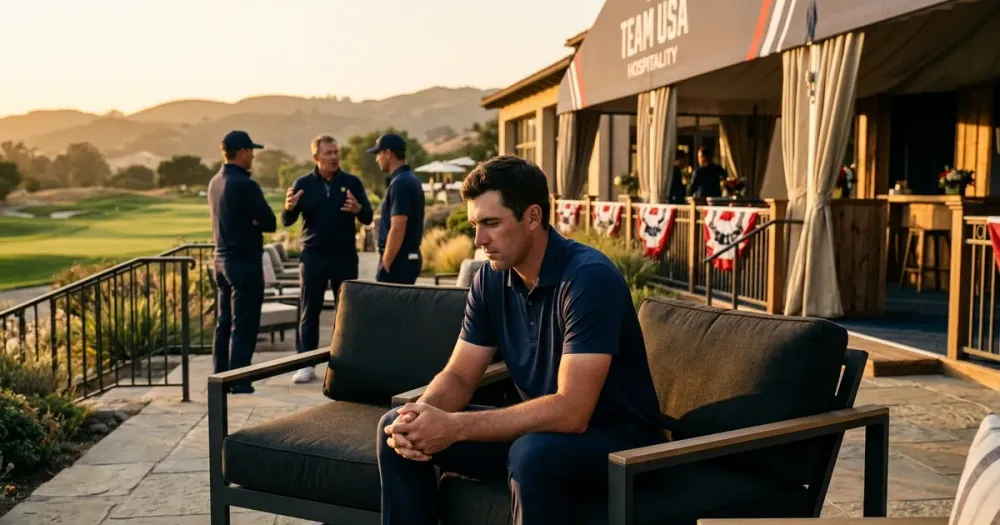
Saturday afternoon at the 2026 Presidents Cup brought an unexpected scene: Scottie Scheffler, World No. 1 and U.S. team leader, sat on the first tee with his shirt untucked, casually munching on chips and sharing laughs with family and support staff. This relaxed image sharply contrasted with his usual competitive intensity and underscored the shock of Team USA captain Brandt Snedeker’s decision to bench Scheffler mid-foursomes session.
With the International team leading 8.5-5.5, Snedeker’s choice to remove Scheffler from play during a critical moment raised eyebrows. It was a gamble that highlighted the complex balance between individual performance, team dynamics, and strategic timing in high-stakes golf events.
Why Bench the World No. 1 Mid-Match?
Scheffler’s stature as arguably the most dominant World No. 1 since Tiger Woods makes the benching startling. He had been a stalwart presence, playing all five sessions in both the 2024 Presidents Cup and 2025 Ryder Cup. Yet his alternate-shot (foursomes) record tells a different story: a puzzling 1-8-0 across Ryder and Presidents Cups. Despite his overall excellence, Scheffler’s struggles in this format likely factored heavily into Snedeker’s choice.
Snedeker described the decision as difficult, explaining, “I feel like Scottie’s got the weight of the world on his shoulders, carrying Team USA, and it’s time for us to carry him for a session.” The timing was particularly intriguing, as the decision came with several holes still left in the match Scheffler was playing alongside Sam Burns. Burns’ eventual comeback win (2 and 1) suggests the call might have been made before the full picture emerged.
The Tactical Impact of Timing
Making a benching decision mid-session, especially while a match is active, is rare and raises questions about communication and momentum. Scheffler reportedly learned of the decision only during his post-match interview, indicating limited advance notice. This could affect a player’s rhythm and mindset, especially someone who thrives on competition.
Resting Scheffler for the afternoon session while relying on players like Burns, Wyndham Clark, and Cameron Young to play all five sessions reflects a strategic shift. The U.S. team hoped this would conserve Scheffler’s energy for the all-important singles matches, where his individual firepower could swing the overall outcome.
Broader Leadership Pressures and Evolving Captaincy
Scheffler’s benching shines a light on the immense pressure top players face in team golf events. Captains must balance respect for star power with the cold calculus of winning points. This move reflects a modern captaincy approach that prioritizes matchups, current form, and format-specific strengths over reputation alone.
The fact that Scheffler’s partner, Burns, posted stronger strokes-gained stats during the week further underscores the nuanced decisions captains must make. It also spotlights how alternate-shot formats can expose vulnerabilities even in elite players.
What This Means Going Forward
Team USA’s ability to rebound in singles hinges partly on how Scheffler responds to this rest and the psychological message it sends. Will the break recharge him or disrupt his momentum? Meanwhile, the International team’s commitment to playing five players through all sessions reveals contrasting stamina strategies.
As the Presidents Cup progresses, Snedeker’s bold, data-informed decisions will be scrutinized. Scheffler’s benching is more than a lineup tweak; it’s a statement about adapting leadership under pressure and the evolving tactics in professional team golf.
The next test arrives with the singles matches. That’s when Scheffler’s energy and focus — refreshed or rattled — could be decisive for Team USA’s quest to close the gap and reclaim the Cup. For a broader view, explore our coverage of PGA Tour news and results.
Source: as reported by All The Golf
All facts and quotes are credited to their originating outlets. Learn more about our sourcing policy.