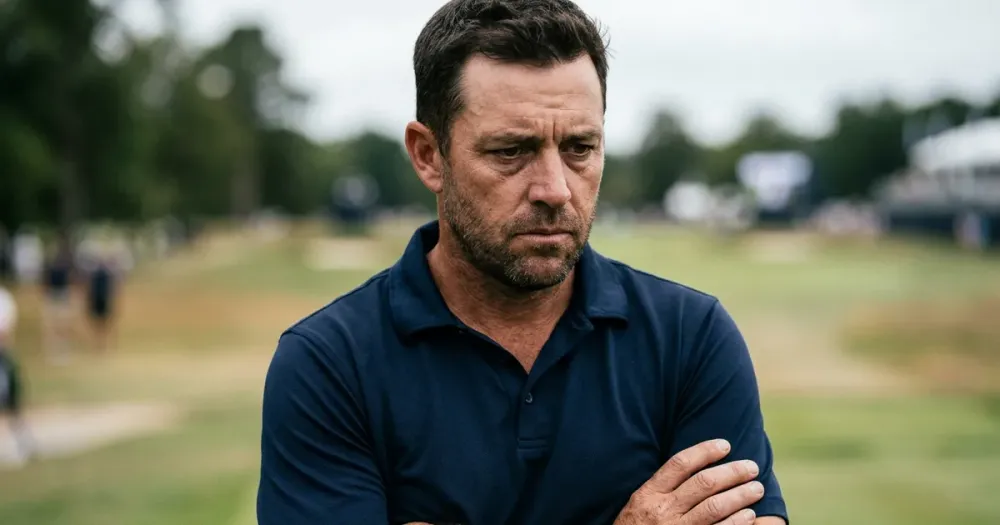
Trey Mullinax’s six-month suspension from the PGA Tour abruptly halts the momentum of a player who has already tasted victory on golf’s biggest stage. This penalty, announced in late July 2026, is more than a personal setback—it underscores the PGA Tour’s intensified commitment to enforcing its Anti-Doping Policy. For a Tour winner with a solid professional record, the suspension disrupts his career trajectory and signals to all players that the rules are non-negotiable.
The PGA Tour’s approach to anti-doping has long been strict, but Mullinax’s case demonstrates that even established players face serious consequences. The stakes are high: suspensions affect playing status, sponsorships, and reputation. As the Tour works to maintain fairness and integrity, this case sends a clear warning that ignorance is no defense in the eyes of the governing body.
The Tough Penalty for a Familiar Name
On July 30, 2026, the PGA Tour confirmed that Trey Mullinax violated its Anti-Doping Policy by testing positive for a substance banned under the World Anti-Doping Agency (WADA) regulations. The Tour imposed a six-month suspension, effective immediately, making Mullinax eligible to compete again on January 16, 2027. While the Tour’s statement was notably sparse on specifics, it described the infraction as a breach of the ban on performance-enhancing substances.
Mullinax is no newcomer to the professional ranks. He boasts one PGA Tour victory—the 2022 Barbasol Championship—and two wins on the Korn Ferry Tour. Despite this solid resume, his recent form has been uneven; in 2025, he made 23 starts but finished 150th in the FedEx Fall standings, earning conditional status for 2026. This season, his appearances have been limited to just two events, both missed cuts.
Taking Responsibility Amid Uncertainty
In his statement responding to the suspension, Mullinax accepted full responsibility, emphasizing that he did not intentionally seek any competitive advantage. He attributed the positive test to using a medication for a preexisting condition—diagnosed during his college years—that he failed to report or get approved under the Tour’s anti-doping rules. Mullinax did not name the medication but stressed, “My lack of knowledge is not an excuse.”
This candid admission highlights the tension between player responsibility and the zero-tolerance framework the Tour enforces. Mullinax’s acknowledgment that it was his duty to understand and comply with the policy underscores the strict liability nature of doping regulations in professional golf.
Why This Enforcement Matters More Than Ever
The PGA Tour’s handling of Mullinax’s case is consistent with its recent track record of enforcing anti-doping rules without leniency. The last known violation involved Byeong Hun An in 2023, who tested positive due to an over-the-counter cough syrup containing a banned substance. Both cases reflect the Tour’s firm stance on any breach, regardless of intent or the player’s status.
Maintaining strict standards is crucial for golf’s credibility. Unlike sports with widespread doping issues, golf’s relatively clean image is a vital asset. The Tour’s willingness to suspend a player like Mullinax, who is a recognized winner but not a superstar, sends a message that no one is exempt and that policy enforcement is serious and consistent.
The Detail Most Fans Might Miss
One subtle but important aspect is how the Tour’s anti-doping policy aligns with WADA standards but applies a zero-tolerance policy that leaves very little room for error. Players must seek approval before using any medication that might contain banned substances, even if prescribed for legitimate medical reasons. Mullinax’s case exemplifies how failure to navigate this process can lead to significant penalties, regardless of intent.
This reinforces a key strategic insight for players and their teams: compliance is as much about education and vigilance as it is about the substances themselves. The PGA Tour’s policy demands proactive communication and careful management of all treatments.
What to Watch Next
As Mullinax serves his suspension, the PGA Tour and its players will closely observe how the policy is enforced moving forward. The upcoming 2027 season will test whether players adapt to avoid similar pitfalls. For Mullinax, the return to competition will be a critical moment to reestablish his standing amid evolving expectations around conduct and compliance. His performance and conduct in early 2027 tournaments will be under heightened scrutiny, setting a precedent for others.
Meanwhile, the Tour’s ongoing commitment to strict anti-doping enforcement will continue shaping player behavior, tournament integrity, and fan trust. This case is a reminder that the margins of professional golf extend far beyond the fairways and greens. For a broader view, explore our coverage of PGA Tour news and results.
Source: as reported by All The Golf
All facts and quotes are credited to their originating outlets. Learn more about our sourcing policy.