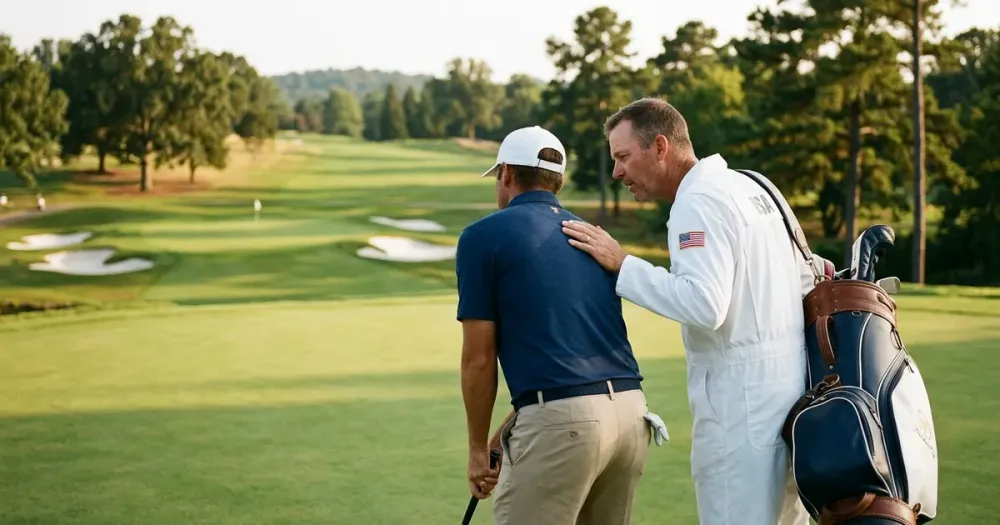
On Sunday at the 2026 Presidents Cup in Medinah, the U.S. team delivered a commanding performance in the singles matches, winning 9.5 points to the International team’s 2.5. This dominant display in one-on-one match play echoed past American strengths in similar formats, underscoring the country’s historical ability to excel when playing their own ball head-to-head. But while the Sunday surge was impressive, it also highlighted a paradox: the U.S. team’s inconsistent results in alternate-shot and fourball formats earlier in the week exposed vulnerabilities that could haunt them at next year’s Ryder Cup in Ireland.
Sunday Singles: American Strength in Match Play Spotlighted
American golfers have long demonstrated a knack for clutch performances in singles matches during team competitions. From the 1999 Ryder Cup at The Country Club near Boston, where the U.S. rallied with an 8.5-3.5 Sunday shellacking, to last year’s effort at Bethpage, their Sunday dominance is a recurring theme. At Medinah, the 9.5 to 2.5 point advantage on Sunday was a key factor in the final 17-13 victory for the U.S., reaffirming the nation’s prowess in direct, individual match play settings.
This dynamic matters because singles matches are the ultimate test of individual skill under pressure, and the U.S. team’s ability to perform here often fuels dramatic comebacks and final-day triumphs. Yet, as 2027 Ryder Cup captain Jim Furyk knows, relying solely on Sunday heroics is a risky strategy.
Team Formats Expose the U.S. Weakness
Despite the Sunday success, the U.S. struggled in the team formats of foursomes and fourballs during the Presidents Cup. These formats require cohesion, strategy, and complementary pairings—areas where the Americans have shown inconsistency. The inability to consistently field winning teams in these sessions has been a recurring issue, one that may prove costly on the tighter and more traditionally European-style courses expected at Adare Manor.
The challenge is not just tactical but mental. Playing alternate-shot requires trust and rhythm between partners, something that the U.S. team has historically found more challenging than their International counterparts, especially on foreign soil. This contrast between individual brilliance and collective coordination underlines a core issue heading into 2027.
Jim Furyk’s Captaincy: Lessons and Bold Decisions Ahead
Jim Furyk returns as the U.S. Ryder Cup captain after leading a struggling team in 2019 and serving as an assistant at this year’s Presidents Cup. The Medinah event offered Furyk valuable insights, particularly regarding player selection and pairings. The bold choice by 2025 captain Keegan Bradley to pick rookie Jackson Koivun over veteran J.J. Spaun paid dividends, with Koivun posting a 2-0-1 record. Furyk faces similar decisions next year, balancing experience and form.
Moreover, Furyk witnessed the impact of strategic benching when Scottie Scheffler was rested Saturday and returned to clinch a crucial Sunday singles win. Managing players’ energy, chemistry, and confidence will be crucial, especially given the U.S. has not won a Ryder Cup on European soil since 1993.
Furyk’s emphasis on players enjoying the competition and embracing the team atmosphere could be key to unlocking better alternate-shot performances. His comments, including, “I love these events — they’re the favorite parts of my career,” suggest a focus on culture and mindset as much as skill.
Historical Context and Ryder Cup Stakes
The Ryder Cup has long been a grueling test of not just golf skill, but team strategy and nerve. The U.S. team’s dry spell in Europe, dating back to ‘93, reflects the difficulty of adapting to different courses, climates, and styles of play. The Presidents Cup’s Medinah course, a venue of past Ryder Cups, offered a preview of challenges ahead. The U.S. must sharpen its alternate-shot game and adjust to the traditional Irish links-style courses to reclaim the Cup.
LPGA Tour Team Match Play Dynamics: A Useful Parallel
While the focus here is on the men’s game, parallels can be drawn to the LPGA Tour team match play dynamics, such as seen in events like the Solheim Cup. Both tours confront the challenge of blending individual excellence with cohesive team play under match play pressure. Success hinges on chemistry and pairing strategies, not just individual rankings or power. Understanding these dynamics enriches how fans and analysts view international competitions and captaincy decisions.
As All The Golf reports, these team events provide a unique stage where players must toggle between their solo strokes and a shared mission, making alternate-shot and fourball formats distinct from everyday stroke play.
What to Watch Next
Looking ahead, all eyes will be on Furyk’s selection and pairing decisions as the Ryder Cup approaches. The U.S. team must find ways to translate their Sunday singles dominance into consistent results across all formats. How Furyk manages player roles, prepares for the Irish course conditions, and fosters team cohesion will define whether the U.S. can finally break their European drought. Meanwhile, early arrival in Ireland and mental preparation to handle jetlag will also be critical factors.
The 2027 Ryder Cup presents not just an opportunity for redemption but a test of whether lessons from the Presidents Cup can evolve into a winning blueprint against a formidable European squad. For a broader view, explore our coverage of PGA Tour news and results.
Source: as reported by All The Golf
All facts and quotes are credited to their originating outlets. Learn more about our sourcing policy.