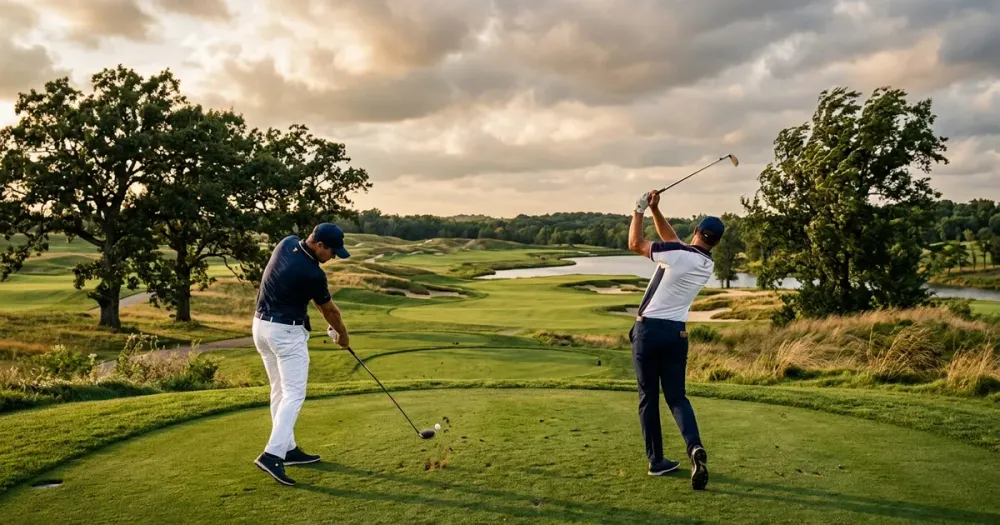
At Medinah Country Club, a question has lingered over the 2026 Presidents Cup: why do American golfers thrive here while struggling in the Ryder Cup? The formats are nearly identical — 12 Americans versus 12 opponents in match play — yet the U.S. has dominated the Presidents Cup while falling short against Europe in recent Ryder Cups. The stakes are high, with pride, legacy, and international bragging rights on the line.
Golf stars, captains, and analysts alike admit the answer isn’t simple. Scottie Scheffler suggested there could be "100 reasons," while others like Brandt Snedeker and Geoff Ogilvy called the question “great” and “interesting.” Understanding this puzzle is crucial for the PGA Tour and fans who crave consistency from American teams on the global stage.
The Talent Gap: Rankings Tell Part of the Story
Talent matters, and world golf rankings offer a window into the competitive landscape. Over the past three Ryder and Presidents Cups, Americans have held the edge in average world ranking. For instance, in the 2024 Presidents Cup, the U.S. averaged a ranking of 11.9 compared to the International team’s 34.25. Meanwhile, the Europeans boast a stronger ranking average (around 28) than the Internationals (about 45), but still trail the Americans.
However, rankings alone don’t explain the full picture. While Europeans have produced eight top-10 players in recent Cups, the Internationals have had only one—Hideki Matsuyama in 2024. Yet, the U.S. success against the Internationals in the Presidents Cup contrasts with their Ryder Cup struggles against Europe, despite the Europeans’ better rankings.
Experience and Frequency: Playing as a Team Matters
Match play and team events are a rarity on the PGA Tour, making experience invaluable. Europeans and Internationals often have more cumulative Ryder or Presidents Cup appearances than Americans, partially because the U.S. plays a team event annually, while Europe and the International side compete every other year. This suggests continuity and familiarity can boost performance, but the U.S. team’s relative inexperience hasn’t stopped their Presidents Cup dominance.
LIV Golf’s Complex Role
The emergence of LIV Golf has added a new layer. LIV players can compete in Ryder Cups but not in Presidents Cups, as the latter is run solely by the PGA Tour, which restricts LIV involvement. This affects team composition: the International team misses stars like Cameron Smith and Louis Oosthuizen, while the U.S. has been without players such as Bryson DeChambeau. This dynamic likely influences team chemistry and competitiveness across these events.
Course Setup and Conditions: Nature’s Unpredictable Impact
Home captains often attempt to tilt course conditions to favor their teams, but weather and course conditions can disrupt plans. Brandt Snedeker, U.S. captain at Medinah, acknowledged that rain has altered the course setup, much like the softened Bethpage Black last year. These factors level the playing field, underscoring that performance ultimately depends on players adapting and competing.
Snedeker emphasized, "You try to do everything you can to stack the odds in your favor, but at the end of the day, the guys have got to go out there and do it." That speaks to the unpredictable nature of golf and the importance of individual execution beyond preparation.
Leadership and Analytics: The Subtle Influences
Captains play a nuanced role. Europe’s Luke Donald has earned praise for meticulous preparation, down to details like shampoo choice, while U.S. captains have faced more scrutiny. Jack Nicklaus once summarized captaincy simply: "Just show up, keep up and shut up." Decision-making, lineup strategy, and managing team morale are delicate but vital components.
Analytics have become part of the game, with Europe leading in data use and the U.S. investing in teams like Justin Ray and Hunter Stewart to enhance strategy. Yet, Snedeker notes that while stats help in a 10,000-round model, match play’s short format demands trusting instincts and observations during volatile, short-lived matches.
Selection Systems and Team Culture
The U.S. revamped its Ryder Cup selection to focus solely on current-year performances, contrasting with Europe and the Presidents Cup’s use of two-year data, and the International team’s reliance on world rankings. These differences shape team composition and chemistry.
Moreover, team unity, often intangible, matters. International player Ryan Fox pointed to Europe’s long-standing team cohesion as a model for the Internationals, highlighting the importance of a collective goal. Whether the U.S. teams achieve similar unity remains an open question.
The Bottom Line: Golf’s Unpredictable Magic
Ultimately, match play is volatile. Players can peak or falter, and a combination of talent, experience, course conditions, selection, leadership, and culture all mix into a complex formula. As Scottie Scheffler put it, there may be "100 reasons" for the American teams’ divergent fortunes.
Brandt Snedeker summed it up: “Every team is different. The makeup of every team is different. The bonding in every team is different. So trying to navigate that is really, really difficult.”
For the PGA Tour and fans, the next Ryder Cup looms in 2027 with a revamped U.S. selection system and fresh challenges. Watching how the U.S. team adapts—balancing individual brilliance with team dynamics—will be key. The puzzle of American golf’s contrasting team success is far from solved, making the upcoming competitions must-see events.
According to All The Golf, this ongoing debate reveals how subtle factors beyond world rankings shape team outcomes on golf’s biggest stages. For a broader view, explore our coverage of PGA Tour news and results.
Source: According to All The Golf
All facts and quotes are credited to their originating outlets. Learn more about our sourcing policy.