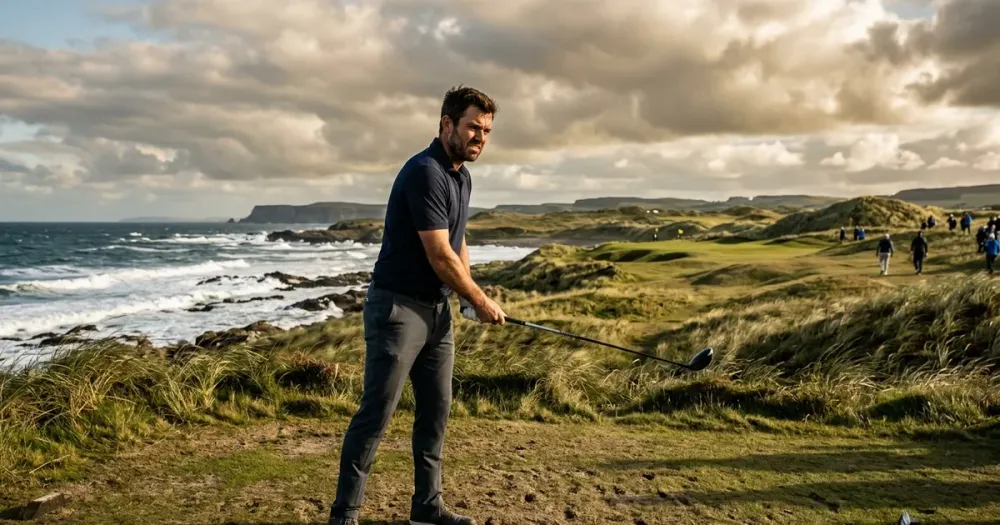
Robert MacIntyre’s opening round at the 2026 Alfred Dunhill Links Championship was marked by moments that no golfer wants to encounter during competition: distractions that disrupt focus and force costly pauses. At Carnoustie, one of golf’s most hallowed venues, MacIntyre found himself repeatedly sidetracked by the buzzing of a TV drone flying alarmingly close. The drone’s presence wasn’t just an annoyance—it directly influenced his play, leading to a mis-hit and a rare break in concentration at critical points.
As MacIntyre prepared to hit his shot on the 8th hole, he noticed the drone’s proximity and noise. He even asked the drone operator twice to adjust its position. Despite this, the drone remained close enough to distract him, causing him to step off his shot and lose his rhythm. The result was a “bad shot,” a rare slip for the two-time PGA Tour winner. Later, on the 18th green, MacIntyre again stepped off a putt due to the drone's distracting presence, underscoring the ongoing challenge players face balancing focus with broadcast demands.
Drone Distractions: A Modern Dilemma on Historic Courses
The Alfred Dunhill Links Championship, a unique tournament spanning St. Andrews, Carnoustie, and Kingsbarns, is steeped in tradition. Yet, the advance of broadcast technology has introduced new complications. Drones offer viewers dramatic aerial shots and intimate coverage that blimps or stationary cameras couldn’t provide at such a low cost. For fans at home, this is a boon. But for players like MacIntyre, the tradeoff can be costly.
MacIntyre expressed his frustration in a post-round interview with BBC Sport. He acknowledged television’s vital role in golf's ecosystem, emphasizing its financial and promotional importance. However, he argued that drones flying too close to players, especially in windy conditions like those on Thursday at Carnoustie, threaten the delicate mental balance required to perform.
“I get that TV is everything, money, everything. But they don’t need to be so close,” MacIntyre said. “My camera’s got enough zoom from how close they were to be able to see the golf shot.” He described the drone’s noise in gusty winds as “like a revving of a car,” a persistent irritation at the moment when focus is paramount.
Balancing Broadcast Innovation with Player Focus
This situation highlights a growing tension in professional golf between enhancing viewer experience and protecting player concentration. Unlike many sports, golf demands intense precision and mental resilience. A sudden drone buzzing nearby can break a player’s concentration, potentially costing strokes and changing tournament outcomes.
MacIntyre’s experience is not isolated. He previously raised concerns about drones during the 2024 RBC Canadian Open, where his objections led to the drone being grounded for the final round. That event saw him capture his first PGA Tour victory, showing how critical uninterrupted focus can be.
What makes MacIntyre’s comments especially relevant is his position as a rising star on the tour. His willingness to speak openly about broadcast intrusions gives weight to a debate that could shape future rules on drone operation during tournaments. The key question is how to maintain the benefits of modern technology without compromising the integrity of play.
Robert MacIntyre Drone Distraction 2026 Dunhill Links: What This Means for Golf
The 2026 Dunhill Links Championship serves as a case study in the delicate balance between technological innovation and traditional sporting focus. As drone usage becomes more prevalent in golf broadcasts, tour officials may need to consider stricter guidelines on drone proximity and behavior, especially under challenging weather conditions.
For players, the issue goes beyond annoyance—it’s about preserving the mental space needed to execute shots under pressure. For broadcasters and organizers, the challenge is to deliver compelling coverage without compromising player performance.
MacIntyre’s direct experience and candid remarks could accelerate conversations on drone policies in golf, potentially leading to revised standards that respect both the game’s heritage and the evolving media landscape.
Looking Ahead: The Next Test for Player Focus
After his drone-related frustrations on Thursday, MacIntyre responded well in Round 2 at Kingsbarns, starting with four early birdies and moving into contention. This resilience shows his ability to compartmentalize distractions, but it also underscores how fragile concentration can be when external factors intervene.
The spotlight now shifts to upcoming tournaments and governing bodies to see if drone operations will be adjusted in response to player feedback. The next major events will test whether lessons from the 2026 Dunhill Links lead to meaningful changes in how drones are managed on course.
For fans, understanding this tension deepens appreciation of what goes into every professional shot. It’s not just skill and strategy—it’s also navigating the evolving environment of modern golf coverage, where the technology meant to bring the game closer can sometimes pull focus away.
As reported by All The Golf, MacIntyre’s experience at the 2026 Dunhill Links Championship unearths a growing issue in pro golf: how to balance cutting-edge broadcast innovation with the unyielding demands of player focus. For a broader view, explore our coverage of PGA Tour player profiles and rankings.
Source: as reported by All The Golf
All facts and quotes are credited to their originating outlets. Learn more about our sourcing policy.