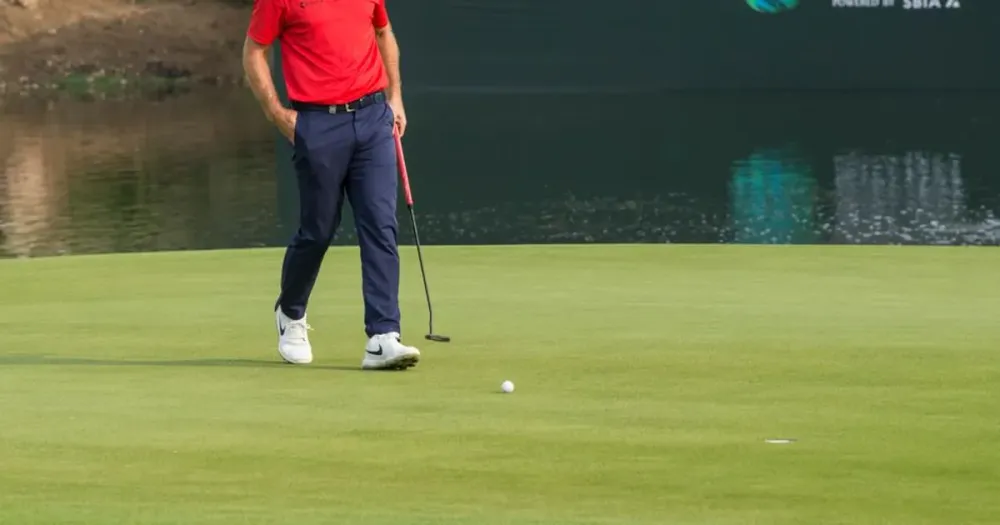
When Rory McIlroy first saw the close-up replay of his wedge tamping down grass behind his ball on the 12th hole at the 2026 Abu Dhabi Aldar Championship, the moment crystallized into more than just a rules infraction. The video evidence showed the grass flattened and not springing back, a clear breach of Rule 8.1b, which prohibits improving the lie by pressing down on growing natural objects. For McIlroy, this two-shot penalty wasn’t just about the score; it was a rare, pivotal test of his commitment to the integrity of the game and his own mental resilience.
McIlroy had finished his opening round thinking he posted a solid 68, highlighted by six birdies and a strong push to climb the Race to Dubai standings. Instead, after a lengthy review by rules officials, his score shifted to 70, due to the penalty on the 12th hole—where his approach shot had landed in a tricky divot near a steep hill. The penalty turned what was originally a double-bogey 6 into a quadruple-bogey 8, significantly impacting his round.
Understanding the Rory McIlroy rules breach Abu Dhabi Aldar 2026 in detail
Video footage showed McIlroy’s wedge pressing down on long grass behind his ball as he assessed his lie. The grass remained flattened, violating Rule 8.1b, which explicitly forbids players from moving or bending natural objects such as grass to influence their lie or swing area. This rule aims to preserve fairness, preventing players from creating better playing conditions than what nature provides.
McIlroy acknowledged the video showed the infraction but disputed any intention to improve his lie. He explained he was merely trying to gauge the lie of his ball within the divot, not to gain an advantage. "I don’t feel like I pressed down," he said, emphasizing his respect for the rules and the spirit of the game. Despite disagreeing with the ruling, he accepted the penalty to avoid any perception of wrongdoing.
The psychological toll of a rare rules penalty on an elite player
For a golfer of McIlroy’s stature, rules penalties are uncommon and carry a weight beyond the strokes lost. Such moments can disrupt focus, shake confidence, and alter momentum—precisely when mental clarity is most crucial. Being penalized on a hole where he was already struggling amplified the challenge, potentially increasing internal pressure.
McIlroy’s composed response—acknowledging the ruling while asserting his integrity—reflects a seasoned professional’s approach to adversity. It highlights how top players must manage not only physical execution but also psychological resilience amid scrutiny and unexpected obstacles.
Broader implications for rules enforcement in professional golf
The McIlroy incident underscores how video review technology is increasingly influencing tournament dynamics. With high-definition replays and multiple camera angles, officials can detect subtle violations that might previously have gone unnoticed. This raises debates about player intent versus outcome, and how rules enforcement balances fairness with the spirit of the game.
As video evidence becomes more prevalent, players face heightened scrutiny over actions that may be accidental or unintentional. McIlroy’s case exemplifies this tension—caught by technology yet contested on intent, illustrating the evolving landscape of rules interpretation at elite levels.
McIlroy’s mindset and what this means for his Abu Dhabi challenge
Despite the penalty setback, McIlroy expressed confidence in his overall game after Day 1, noting he "hit my irons nice, drove the ball well," and was ready to move forward. With 54 holes left and a Race to Dubai title on the line, maintaining composure will be key.
The willingness to accept a penalty while disputing intent reveals McIlroy’s dual focus on integrity and competitive drive. It’s a reminder that in professional golf, upholding the rules—even when they sting—is part of what separates the greats from the rest.
Why the Rory McIlroy rules breach Abu Dhabi Aldar 2026 moment matters now
This episode is a timely reflection of how golf’s rules and technology intersect, affecting not just scores but player psychology and tournament narratives. It invites fans and players alike to consider the nuances of intention, fairness, and scrutiny in modern golf.
McIlroy’s handling of the situation—balancing acceptance with a clear stance on his integrity—adds depth to his competitive story and sets a tone for the remainder of the season.
What to watch next
As McIlroy continues his pursuit of a record-tying eighth Race to Dubai title, all eyes will be on how he manages pressure and avoids further penalties in the coming tournaments. His ability to rebound mentally from this rare rules breach could define his late-season form and ultimately his legacy. For a broader view, explore our coverage of PGA Tour player profiles and rankings.
Source: as reported by All The Golf
All facts and quotes are credited to their originating outlets. Learn more about our sourcing policy.