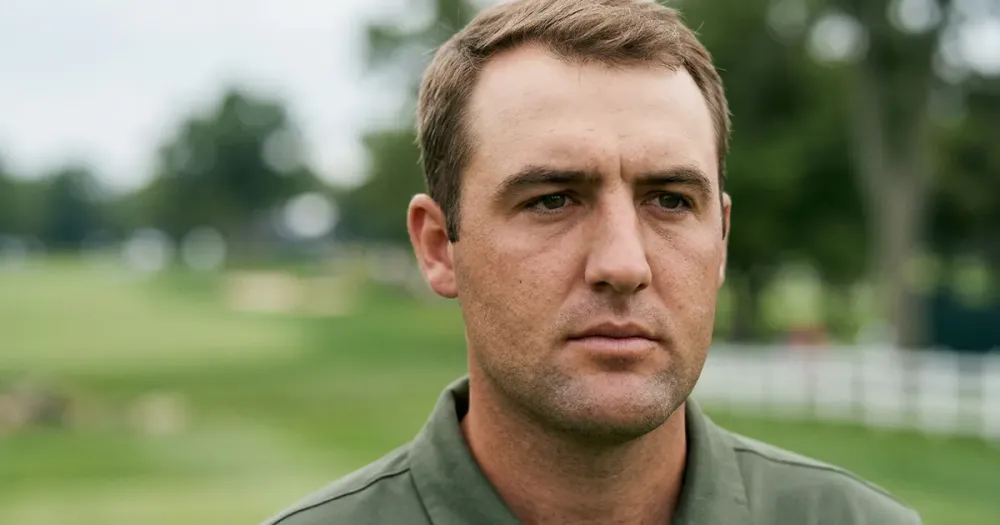
Brandt Snedeker’s confession might surprise you: pairing Scottie Scheffler in team match play isn’t as straightforward as it looks. The U.S. Presidents Cup captain recently laid bare a tension that often hides beneath the surface when elite players team up. “I think there’s an inherent — not fear for the guy they’re playing with, but a feeling of I’m letting him down,” Snedeker said. “He’s the best player in the world. He’s so good at everything; no matter what I do isn’t going to be good enough.”
That’s the crux of the Scottie Scheffler Presidents Cup pairing challenge. Scheffler’s extraordinary all-around game—long, straight drives; generational iron play; solid chipping and underrated putting—sets a sky-high bar. Instead of easing the pressure on his partners, it can raise their anxiety, creating a unique dynamic that complicates the captain’s job.
Partners Feel the Weight of Playing With a Generational Talent
Snedeker knows this firsthand. Back in his Ryder Cup rookie year, he was paired with Jim Furyk, then in his prime. “I kept thinking, no matter what I do, I’ll never hit it as straight as he does; this is not going to go well,” Snedeker recalled. “So every time I hit a tee ball, I was freaking out a little bit.” That sense of being “outmatched” or not measuring up to a superstar teammate can subtly undermine confidence and chemistry.
This psychological pressure isn’t unique to Scheffler. Historically, great players like Tiger Woods and Phil Mickelson have faced similar challenges in team formats. Woods’ Ryder Cup partner play record is an astonishing 9-19-1, and Mickelson sports a losing Ryder Cup record overall. Even the highly anticipated pairing of Woods and Mickelson in one Ryder Cup remains a cautionary tale about star power not translating directly into dominant team success.
The Strategic Puzzle of Match Play and Player Chemistry
What makes match play different from regular stroke play is the intensity of each hole and the need for synergy in formats like foursomes and fourballs. Scheffler himself recognizes this. “It’s totally different than playing a regular tournament over the course of 72 holes,” he said. “Over 18 holes, anything can happen. Anything can happen in alternate shot. And best ball you can get away with a lot more; it’s all about making birdies.”
His candid admission that he sometimes tries too hard during these intense weeks offers insight into the mental balancing act required. “As a hypercompetitive person, I think sometimes I can probably try too hard,” Scheffler said. “If you look at my putting stats over the course of my career, arguably what made me struggle the most in 2023 was probably trying too hard.”
He also refuses to blame partners for the mixed record, saying, “I always feel confident in my partners. If we didn’t step up on the first tee and feel confident, those guys wouldn’t be standing there with me.” This humility underscores the complexity: it’s not just about raw talent but how personalities and mental states mesh under pressure.
Finding the Right Fit: Personality and Comfort Matter
Captain Snedeker’s approach highlights that pairing Scheffler isn’t just a numbers game. “Trying to find someone who can handle that [pressure] and be themselves and not try to be someone else is super important,” he explained. “These guys are elite athletes because they’re unique. So trying to find the best way of matching them personality-wise, matching them up with guys they feel comfortable with is our challenge as captains.”
For example, Russell Henley, who has partnered with Scheffler before, acknowledges the intimidation factor but credits their off-course connection for easing the partnership. “Because I’ve spent so much time with Scottie, and Scottie and Sam [Burns] have had me over to their house over the years since they’ve been on Tour and our wives are friends, I feel like I’m more comfortable with Scottie than I would be if they put me with Tiger,” Henley said.
Sam Burns, another likely Scheffler partner, also hinted at the pairing with a knowing smile: “His name starts with an S.” Burns emphasized the honor of playing alongside the world No. 1. “Anybody on this team would be very excited to play with the No. 1 player in the world,” he said.
Why This Matters for the Presidents Cup and Beyond
The Scottie Scheffler Presidents Cup pairing challenge shines a light on how team golf is about more than just putting the best players together. It’s a study in psychology, chemistry, and strategy under pressure. For captains like Snedeker, the task is less about just stacking talent and more about managing personalities and mental dynamics to unlock collective performance.
Understanding this adds a new layer to how fans should view team match play events. The tension between individual brilliance and team cohesion can shape outcomes as much as any swing or putt.
As the Presidents Cup approaches, the spotlight will be on how these pairings unfold. Will Scheffler’s partners rise to his level or buckle under the weight? The answer could define the U.S. team’s fate.
What to Watch Next: Keep an eye on the official team pairings announcement and early matches in the Presidents Cup. How Scheffler and his partner handle the psychological pressure in their first sessions could set the tone for the entire event.
According to All The Golf, this underappreciated psychological factor is quietly shaping team strategies and could explain why even the best players sometimes struggle in match play formats.
Why it matters: The Scottie Scheffler Presidents Cup pairing challenge reveals that pairing superstars isn’t just about skill but managing pressure and personality. It’s a subtle factor that influences team chemistry and results in one of golf’s most intense formats. For a broader view, explore our coverage of PGA Tour player profiles and rankings.
Source: according to All The Golf
All facts and quotes are credited to their originating outlets. Learn more about our sourcing policy.