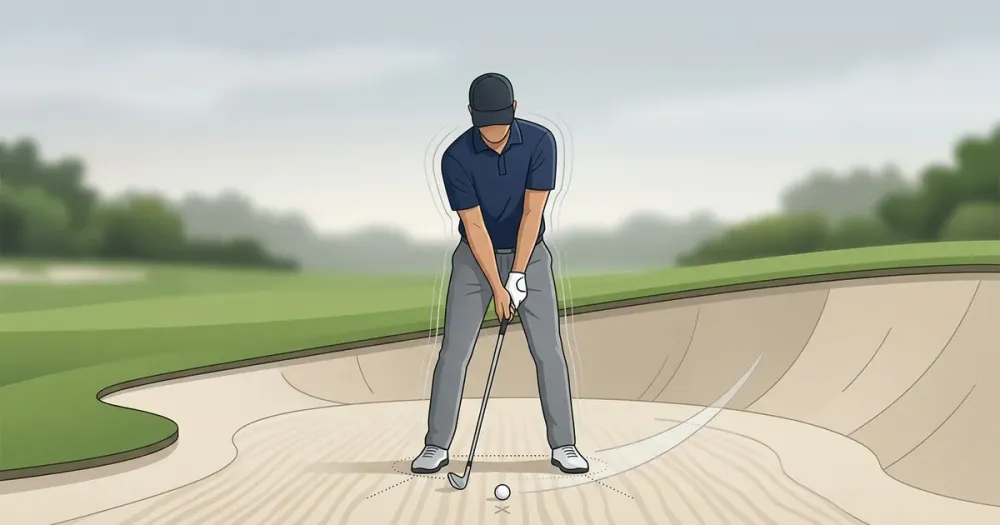
Picture this: a mid-handicap golfer stands hesitantly in a greenside bunker, gripping the club tightly, eyes fixed nervously on the sand. The fear of a costly mistake — a chunked shot or a wild ball flight — weighs heavy. This moment of bunker anxiety is a common scene on courses everywhere. But David Armitage, a bunker expert who literally wrote the book on sand play, offers a clear, actionable fix to turn that fear into confidence with his straightforward method for how to hit better bunker shots golf.
Quick Tip: Key Takeaways to Improve Your Bunker Game
- Use a square stance and a moderately open clubface to increase predictability.
- Shift your chin, sternum, and belt buckle slightly forward over the ball to control low point.
- Dig your feet in consistently and maintain weight forward (70-75%) throughout the swing.
The Mistake: Fear and the Traditional Setup That Fails
Most amateurs lose about half a stroke every time they hit from a bunker. The root cause? Anxiety paired with a flawed setup. The classic advice—open your stance wide, open the clubface dramatically, and swing along your feet line—demands strength and precise timing, but often leads to unpredictable ball flight. When your feet point left and the clubface is wide open, you sacrifice directional control. Armitage notes, "It’s going to be unpredictable how the ball is going to start." This unpredictability fuels fear and inconsistency.
Why It Happens: Strength Over Technique and Confused Body Positions
This traditional method asks players to rely on brute force to blast the ball out of the sand. Yet many amateurs lack the clubhead speed and strength to make it work consistently. More importantly, the extreme open stance and face make it tough to aim. The low point of the swing becomes erratic because the upper body and lower body are often out of sync, causing the club to dig or skim unpredictably. Armitage highlights that many golfers move their lower body forward but leave the upper body behind, shifting the low point backward—a critical setup error.
The Fix: David Armitage’s Step-by-Step Setup and Swing
Armitage’s approach, inspired by Seve Ballesteros, favors simplicity and repeatability over force. Follow these steps to improve your bunker shots:
- Square Your Stance: Position your feet parallel to the target line rather than open. This orientation improves directional control and helps the clubhead track predictably through the sand.
- Open the Clubface Moderately: Open the wedge face to about 2 o’clock (for right-handers). This exposes the bounce—the sole’s angled portion that glides over the sand—allowing the club to slide through rather than dig in.
- Wide, Low Stance: Take a wider stance than your driver setup. Dig your feet lightly into the sand to establish a solid base and consistent feel for the lie. This stance lowers your center of gravity and stabilizes your swing.
- Forward Body Shift: Move your chin, sternum, and belt buckle slightly forward over or just ahead of the ball. A mirror check can help: your spine should tilt away from the target by about 5 degrees, and your sternum should be directly above or slightly in front of the ball. Avoid pushing only your lower body forward, which disrupts the swing low point.
- Weight Forward: Start with 70-75% of your weight on your lead foot and maintain or increase this through the backswing and downswing. This forward pressure encourages a steeper, more vertical club path.
- Controlled Swing Path: Swing the club up and down with a vertical angle of attack, entering the sand roughly two inches behind the ball. Focus on hitting a divot slightly left of your target line to ensure clean contact and consistent launch.
- Maintain Trail Elbow Position: At the top of your backswing, keep your trail elbow below your lead elbow. This promotes a controlled swing arc and prevents excessive lifting or scooping.
Phil Mickelson, known for his short game mastery, uses a similar 12-yard standard bunker shot, emphasizing a consistent setup and vertical swing path to control distance and trajectory.
The Drill: Rake Line Drill for Precision and Consistency
One of Armitage’s favorite drills to improve bunker shots involves a simple rake. Place a rake flat in the sand about two inches behind your golf ball’s position. The goal: when you swing, your club should not hit the rake. If you sway or shift backward during your swing, you’ll catch the rake, providing immediate feedback.
Practice this drill slowly, focusing on maintaining weight forward and a vertical swing path. Start without a ball to build muscle memory, then progress to hitting balls once your motion feels consistent.
This drill helps you develop the correct angle of attack and body stability, essential elements for reliable bunker shots. It also reduces anxiety by giving you a clear physical cue to monitor your swing.
Why This Matters Now
Bunker play remains one of golf’s toughest challenges, especially for mid-handicap players. With tournament pressure and competitive rounds on the horizon, mastering this skill can shave strokes and boost confidence. David Armitage’s method offers a straightforward, repeatable approach that any golfer can adopt immediately without complicated swing overhauls.
For those serious about improving, focusing on setup details and simple drills like the rake line drill can transform your bunker moments from dreaded to dependable.
What to Watch Next
Keep an eye on your upcoming rounds and practice sessions to test this setup and drill. The next opportunity to measure progress will be in how often you escape bunkers with a manageable shot, not just a lucky break. Watch for improvements in directional control and confidence, particularly in tournament play or when pressure mounts near the green.
Mastering bunker shots is a gateway to lower scores and less frustration. The next step is making these techniques part of your regular practice routine. For a broader view, explore our coverage of golf tips and game improvement guides.
Source: according to All The Golf
All facts and quotes are credited to their originating outlets. Learn more about our sourcing policy.