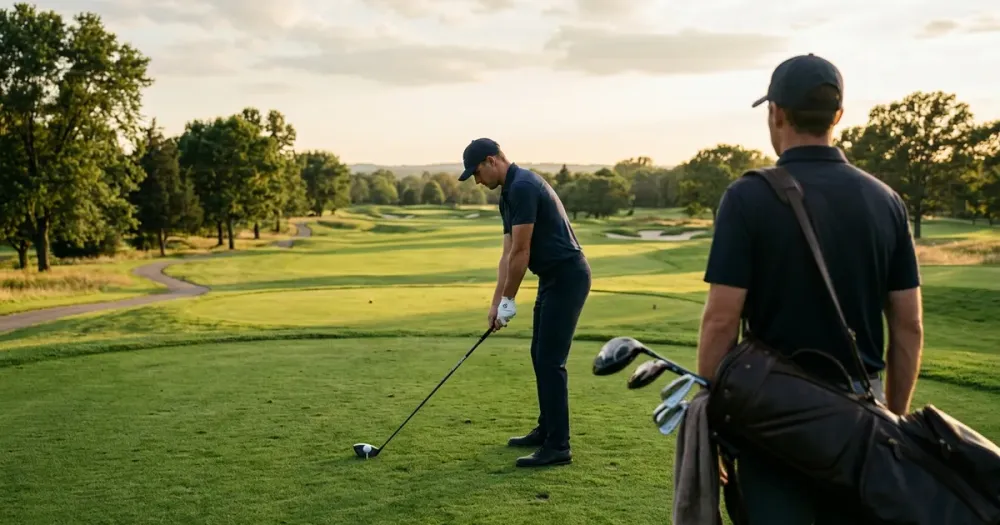
About 18 months ago, Rory McIlroy faced a challenge that even elite golfers dread: his driving game began to falter. For someone whose tee shots have long been a cornerstone of his success, this decline was more than a minor hiccup—it threatened to erode his competitive edge. Instead of chasing flashy fixes, McIlroy and his coach Michael Bannon took a methodical approach and went back to the fundamentals that built his swing in the first place. This reset in 2026 not only revived his confidence but also transformed the way he drives the ball, offering lessons that golfers of all levels can apply.
Why a Return to Basics Mattered for McIlroy’s Driving
In golf, the address position is often overlooked because it seems so simple. Yet, as McIlroy discovered, it’s one of the easiest parts of the swing to let slip into bad habits—even after tens of thousands of swings. Under Bannon’s guidance, McIlroy focused on reactivating his setup with precision: a flat back formed by bending forward from the hips without slouching, a wider-than-shoulder-width stance for stability, and arms hanging freely in front of the body to allow an unhindered swing path. These elements create a biomechanically efficient base, enabling consistent power generation and clean ball striking.
How Address Position Shapes the Swing Path and Power
The flat-back posture prevents a “hump” or reverse curve in the spine, which can restrict rotation and limit the ability to generate torque. A wide base, slightly more than shoulder width, acts like a solid foundation, especially for a fast swinger like McIlroy. It prevents excessive lateral movement or loss of balance during the aggressive downswing. The arm position is crucial too: by flexing the knees and tilting the upper body about 30 degrees toward the ball, McIlroy achieves a ready stance comparable to a soccer goalie’s alertness—stable yet primed for explosive movement.
One-Piece Takeaway: Setting the Swing on the Right Plane
McIlroy’s second key lies in the first two feet of his swing. His “one-piece takeaway” involves pushing the club straight back along a plane parallel to his toe line, keeping hands and clubhead aligned as if tracing an invisible wall. This controlled start prevents the need for corrective reroutes that often cause mis-hits. He consciously keeps his hips still during this phase to avoid whipping the club inside the plane, helping maintain a swing path that favors solid contact. The left shoulder’s active movement away from the target also helps keep the swing on track and prevents over-the-top moves that can send shots offline.
Turn and Load: Harnessing Power Without Losing Control
Flexibility allows McIlroy to rotate his shoulders well past 90 degrees, but he’s learned that over-rotation can disrupt impact. So, his backswing stops when his left shoulder reaches his chin, a checkpoint that balances power and control. Maintaining a straight left arm while folding the right prevents excessive shoulder turn. Meanwhile, a slight hip rotation after the takeaway, paired with a flexed right knee, loads energy into the right side. This stored power is critical for generating the explosive speed McIlroy is known for, especially when attacking long par 5s.
Why These Fundamentals Matter for Every Golfer
McIlroy’s story underscores a timeless truth in golf: even the best players must revisit basics to sustain or regain top form. The biomechanics of the address position, takeaway, and backswing checkpoints aren’t just abstract coaching points—they directly influence swing sequencing, tempo, and ultimately, the ball flight. For amateurs struggling with inconsistency off the tee, adopting McIlroy’s setup cues can improve stability and swing path, leading to more accurate and longer drives.
Most importantly, these fundamentals build muscle memory and confidence. When McIlroy says his driver, iron, and wedge swings are on autopilot again, it means these checks are deeply ingrained. That mental freedom to trust your swing without overthinking is often the difference between a good shot and a great one.
Applying Rory McIlroy Driving Tips 2026 to Your Game
Golfers looking to enhance their tee shots should focus on replicating McIlroy’s address position: flat back, feet spread slightly wider than shoulder width, and arms hanging naturally in front of the body. Practicing a one-piece takeaway where the clubhead and hands move back in unison along a consistent plane will help establish a reliable swing path. Finally, a controlled shoulder turn stopping at the left shoulder under the chin and a loaded right side can generate power without sacrificing control.
These are not quick fixes but foundational elements that encourage repeatability and confidence. McIlroy’s approach is a reminder that sometimes the best way forward is to revisit where it all began.
As reported by All The Golf, this focus on fundamentals has kept McIlroy’s driving stats consistent despite the pressures of the pro tour. His renewed feel for the driver is a testament to the power of resetting with discipline and understanding the mechanics behind the moves.
What to watch next: McIlroy’s performance in the upcoming PGA Tour events will be a key test of how this fundamentals reset holds under competitive pressure. Observers will be keen to see if this refined setup translates into more consistent tee shots and better scoring opportunities as the season progresses. For a broader view, explore our coverage of golf tips and game improvement guides.
Source: as reported by All The Golf
All facts and quotes are credited to their originating outlets. Learn more about our sourcing policy.